
Rhodococcus erythropolis PR4

Gram-positiveRodNon-motileAerobe

Kingdom

Bacillati

Phylum

Actinomycetota

Class

Actinomycetes

Order

Mycobacteriales

Family

Nocardiaceae

Genus

Rhodococcus

Description

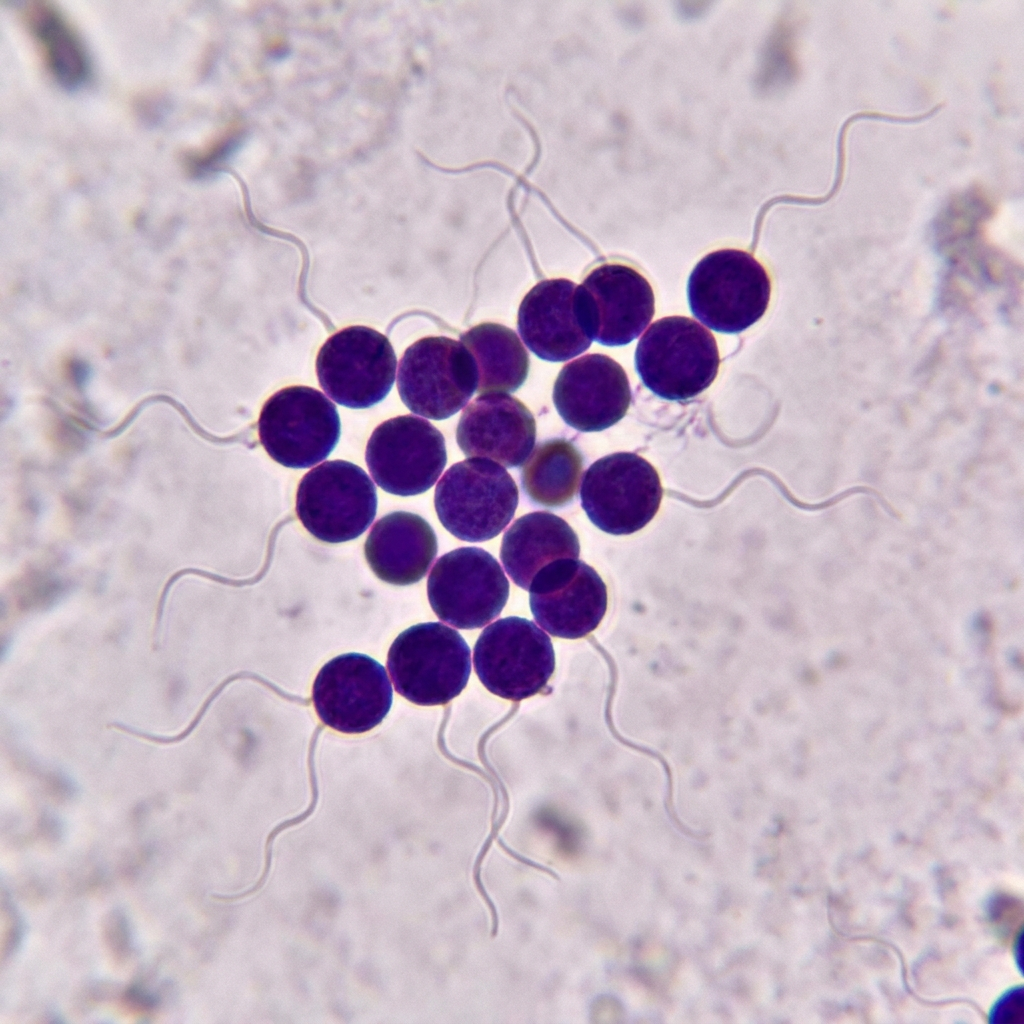
Rhodococcus erythropolis PR4 is a Gram-positive, rod-shaped bacterium that thrives optimally at mesophilic temperatures and functions as a chemoheterotroph. This versatile microbe is often found in diverse environments, including soil, water, and even contaminated sites, where it utilizes organic substances as a source of carbon and energy. As a facultative anaerobe, R. erythropolis PR4 can grow in the presence or absence of oxygen, although it prefers aerobic conditions for optimal metabolism. The Gram-positive nature of R. erythropolis PR4 is characterized by its thick peptidoglycan layer, which provides structural integrity and resistance to certain antibiotics. The rod shape of this bacterium contributes to its efficient motility and allows it to readily colonize various substrates. It is categorized as a mesophile, indicating its preference for moderate temperature ranges, typically between 20-45°C, making it well-adapted to terrestrial environments. As a chemoheterotroph, R. erythropolis PR4 derives energy from the oxidation of organic compounds, which allows it to thrive in nutrient-rich environments. Its facultative anaerobic capabilities enable it to switch metabolic pathways depending on the oxygen availability, providing it an advantage in fluctuating habitats. Rhodococcus erythropolis PR4 is especially notable for its bioremediation potential, as it can degrade a variety of environmental pollutants, including hydrocarbons and heavy metals. This ability makes it a focal point of research in environmental microbiology, particularly for applications in cleaning up oil spills and other forms of contamination. Additionally, it has been studied for its role in industrial biotechnology, where it can be used to produce valuable compounds through bioconversion processes. With its unique metabolic versatility and ecological significance, R. erythropolis PR4 exemplifies a remarkable microbe capable of adapting to and thriving in diverse environments.

Taxonomy

KingdomBacillati
PhylumActinomycetota
ClassActinomycetes
OrderMycobacteriales
FamilyNocardiaceae
GenusRhodococcus
SpeciesRhodococcus erythropolis
StrainPR4

Profile

Physiology
Gram staining propertiesPositive
ShapeRod
MobilityNo
Flagellar presenceNot Available
Number of membranes1
Ecology, Host, and Life Cycle
Oxygen requirementsAerobe
Optimal temperature20
Temperature rangeMesophilic
HabitatMultiple
Biotic relationshipFree living
Host(s)Not Available
Cell arrangementFilaments
SporulationNonsporulating
Energy sourceNot Available
PathogenicityNo

Genome Summary

Rhodococcus erythropolis PR4


Gene Summary

Adenine Count

1228564 bp

Thymine Count

1227188 bp

Guanine Count

2029592 bp

Cytosine Count

2030966 bp

Genome Length

6516310 bp

Protein-coding Genes

5982 genes

Non-Coding Genes

135 genes

# of Chromosomes/Plasmids

4

Genes

NameLocus TagUniProtStrandCoordinatesMolecular Weight
sigma factor-like helix-turn-helix dna-binding proteinRER_RS01400Not Available+65 - 45414043.6
glutaredoxin-like protein nrdhRER_RS01405Not Available+491 - 7188163.73
dnab-like helicase n-terminal domain-containing proteinRER_RS01410Not Available+760 - 128719102.6
hypothetical proteinRER_RS33335Not Available+1284 - 14576201.93
hypothetical proteinRER_RS01415Not Available+1547 - 247334568.9
helix-turn-helix domain-containing proteinRER_RS32630Not Available-2549 - 28189931.93
hypothetical proteinRER_RS01425Not Available-2843 - 314210663.4
hypothetical proteinRER_RS01430Not Available+3303 - 371915048.3
hypothetical proteinRER_RS01435Not Available+3709 - 429321119.9
membrane proteinRER_RS01440Not Available+4319 - 45227197.09

Displaying genes 1 – 10 of 6525 in total

Pathways

0 pathways

No pathways found

No metabolic pathways have been associated with this bacterium yet.
Metabolites

2006 records
Metabolite IDMetabolite nameStructureCAS number
BASm0000025(4R,7R)-4-isopropenyl-7-methyloxepan-2-oneC10H16O2Chemical structure of (4R,7R)-4-isopropenyl-7-methyloxepan-2-oneNot available
Average168.236Da
Monoisotopic168.1150298Da
BASm0000173(R)-3-Hydroxybutyric acidC4H8O3Chemical structure of (R)-3-Hydroxybutyric acid625-72-3
Average104.0473Da
Monoisotopic104.047344122Da
BASm0000237(R)-4'-phosphopantothenateC9H18NO8PChemical structure of (R)-4'-phosphopantothenateNot available
Average299.2149Da
Monoisotopic299.0770031Da
BASm00002502,5-didehydro-D-gluconateC6H7O7Chemical structure of 2,5-didehydro-D-gluconate53736-12-2
Average191.1156Da
Monoisotopic191.019177578Da
BASm00002512-dehydropantoateC6H9O4Chemical structure of 2-dehydropantoateNot available
Average145.1333Da
Monoisotopic145.050083776Da
BASm00002532-oxopent-4-enoateC5H5O3Chemical structure of 2-oxopent-4-enoateNot available
Average113.093Da
Monoisotopic113.024417601Da
BASm00002603alpha,7alpha-dihydroxy-12-oxo-5beta-cholanateC24H37O5Chemical structure of 3alpha,7alpha-dihydroxy-12-oxo-5beta-cholanateNot available
Average405.556Da
Monoisotopic405.264647871Da
BASm0000377(S)-malateC4H4O5Chemical structure of (S)-malateNot available
Average132.0716Da
Monoisotopic132.005873238Da
BASm00004283-oxoadipateC6H6O5Chemical structure of 3-oxoadipateNot available
Average158.11Da
Monoisotopic158.022620453Da
BASm00005166-deoxyerythronolide BC21H38O6Chemical structure of 6-deoxyerythronolide BNot available
Average386.5228Da
Monoisotopic386.2668389Da

Displaying 1–10 of 2006 metabolites