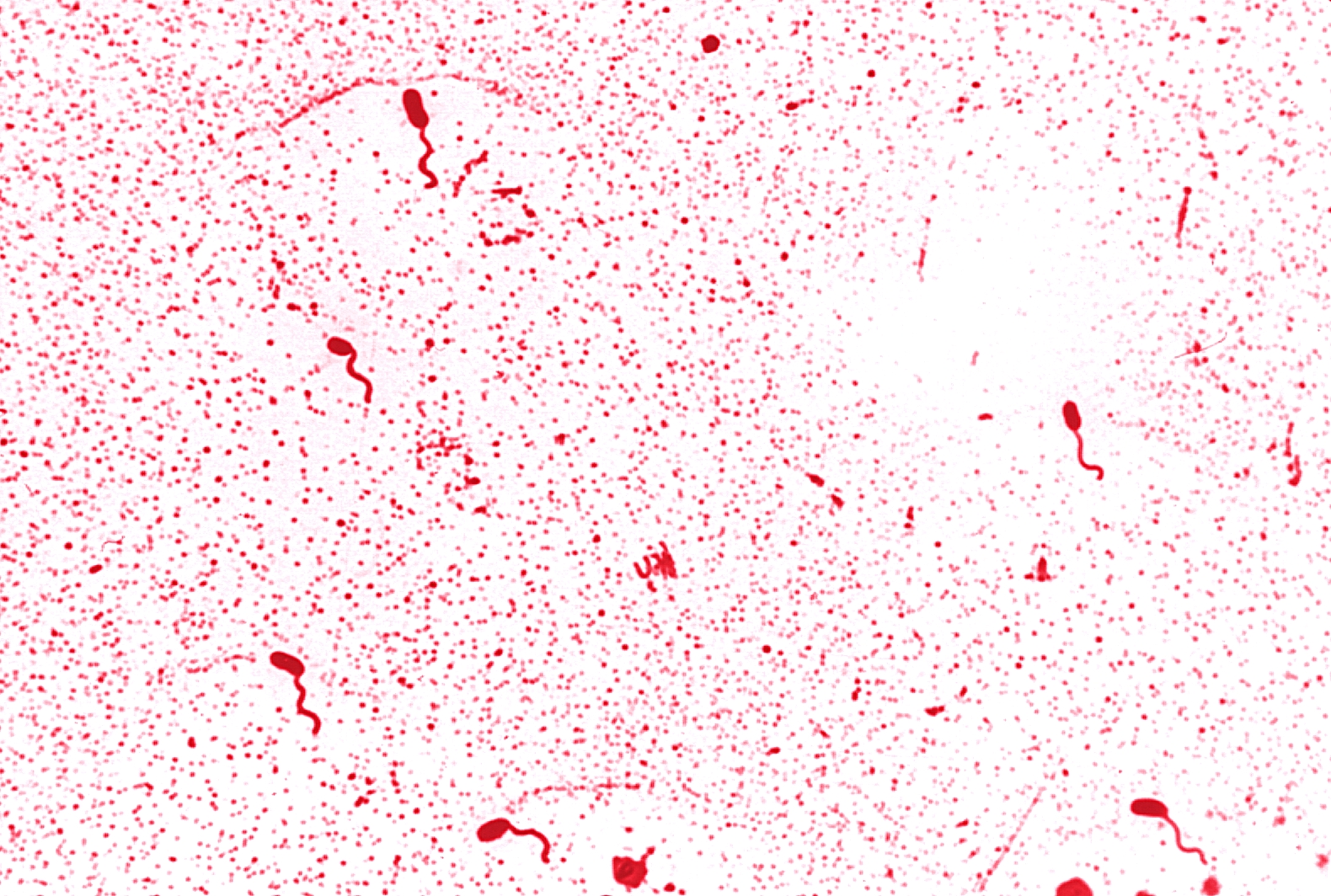
Vibrio cholerae O395

Gram-negativeRodNon-motileFacultative anaerobe

Kingdom

Pseudomonadati

Phylum

Pseudomonadota

Class

Gammaproteobacteria

Order

Vibrionales

Family

Vibrionaceae

Genus

Vibrio

Description

Vibrios are facultatively anaerobic bacteria that are metabolically similar to the Enterobacteriaceae. They are ubiquitous to oceans, coastal waters, and estuaries. The best known species is Vibrio cholerae, which can cause severe diarrheal illness in humans.The genus Vibrio consists of Gram-negative straight or curved rods, motile by means of a single polar flagellum. Vibrios are capable of both respiratory and fermentative metabolism.Classic cholera is characterised by an abrupt onset of vomiting and profuse watery diaorrhea. Fluid losses can be significant (up to 20 L/day) and hypovolemic shock and metabolic acidosis can cause death within a few hours of onset, especially in children. Mortality, in untreated cases, is as high as 60%. In the past 180 years, 7 pandemics were reported, usually of Bengali origin, with the latest pandemic originating in Indonesia in 1961 and moving to the Western hemisphere. In 1991, a cholera outbreak in Peru and 20 other countries in the Western hemisphere accounted for over 600,000 cases with 5000 deaths.The complete genome of Vibrio cholerae consists of two circular chromosomes. The majority of recognisable genes for essential cell functions (e.g., DNA replication, transcription, translation, etc.) and pathogenicity (e.g., toxin, surface antigens, and adhesion) are located on the large chromosome. The small chromosome contains a large percentage of hypothetical genes, more genes that appear to have origins other than the Proteobacteria and a gene capture system (integron island) that suggests this may have been a megaplasmid captured by an ancestral Vibrio species.The Vibrio cholerae genome sequences provide a starting point for understanding how a free living, environmental microorganism is also a human pathogen.(From http://www.ebi.ac.uk/2can/genomes/bacteria.html) (BacMap)

Taxonomy

KingdomPseudomonadati
PhylumPseudomonadota
ClassGammaproteobacteria
OrderVibrionales
FamilyVibrionaceae
GenusVibrio
SpeciesVibrio cholerae
StrainO395

Profile

Physiology
Gram staining propertiesNegative
ShapeRod
MobilityNo
Flagellar presenceYes
Number of membranes2
Image of Vibrio cholerae O395
Image source: Wikipedia/Wikimedia
Ecology, Host, and Life Cycle
Oxygen requirementsFacultative anaerobe
Optimal temperature20
Temperature rangeMesophilic
HabitatMultiple
Biotic relationshipFree living
Host(s)Not Available
Cell arrangementSingles
SporulationNonsporulating
Energy sourceHeterotroph
PathogenicityYes

Genome Summary

Vibrio cholerae O395


Gene Summary

Adenine Count

785525 bp

Thymine Count

793642 bp

Guanine Count

721693 bp

Cytosine Count

723209 bp

Genome Length

3024069 bp

Protein-coding Genes

2566 genes

Non-Coding Genes

227 genes

# of Chromosomes/Plasmids

1

Genes

NameLocus TagUniProt IDStrand OrientationGene Start/EndProtein Molecular Weight
Putative ci repressorVC0395_RS08590Not AvailableNegative689144 - 68988127901.3
Transcriptional regulatorVC0395_RS08595Not AvailablePositive690034 - 6902588565.23
TransposaseVC0395_RS08600Not AvailablePositive690270 - 69227375721.0
Transposase bVC0395_RS08605Not AvailablePositive692300 - 69324434824.2
Hypothetical proteinVC0395_RS08610Not AvailablePositive693252 - 6934768166.37
TransposaseVC0395_RS08615Not AvailablePositive693486 - 69392616139.8
Hypothetical proteinVC0395_RS08620Not AvailablePositive693936 - 69430114158.2
hypothetical proteinVC0395_RS08625Not AvailablePositive694276 - 6944707295.63
Hypothetical proteinVC0395_RS08630Not AvailablePositive694457 - 69507122802.2
Hypothetical proteinVC0395_RS08635Not AvailablePositive695081 - 69535310622.9

Displaying genes 1 – 10 of 2793 in total

Pathways

0 pathways

No pathways found

No metabolic pathways have been associated with this bacterium yet.

Metabolites

235 records
Metabolite IDMetabolite nameStructureCAS number
BASm0000217alpha-ribazoleC14H18N2O4Chemical structure of alpha-ribazoleNot available
Average278.3037Da
Monoisotopic278.126657074Da
BASm00002512-dehydropantoateC6H9O4Chemical structure of 2-dehydropantoateNot available
Average145.1333Da
Monoisotopic145.050083776Da
BASm0000377(S)-malateC4H4O5Chemical structure of (S)-malateNot available
Average132.0716Da
Monoisotopic132.005873238Da
BASm0000387(6R)-5,10-methylene-5,6,7,8-tetrahydrofolateC20H21N7O6Chemical structure of (6R)-5,10-methylene-5,6,7,8-tetrahydrofolateNot available
Average455.432Da
Monoisotopic455.1564286Da
BASm0000989GlycerolC3H8O3Chemical structure of Glycerol56-81-5
Average92.0938Da
Monoisotopic92.04734412Da
BASm0001697(S)-4,5-dihydroxypentane-2,3-dioneC5H8O4Chemical structure of (S)-4,5-dihydroxypentane-2,3-dioneNot available
Average132.1146Da
Monoisotopic132.042258744Da
BASm0001717fumarateC4H2O4Chemical structure of fumarateNot available
Average114.0563Da
Monoisotopic113.9953086Da
BASm0001845nicotinateC6H4NO2Chemical structure of nicotinateNot available
Average122.1015Da
Monoisotopic122.0242034Da
BASm0001865diphosphateHO7P2Chemical structure of diphosphateNot available
Average174.95Da
Monoisotopic174.9213971Da
BASm0001921(S)-3-methyl-2-oxopentanoateC6H9O3Chemical structure of (S)-3-methyl-2-oxopentanoate1460-34-0
Average129.1339Da
Monoisotopic129.0551692Da

Displaying 1–10 of 235 metabolites

Health Effects

No health effects information available for this bacterium.