Kingdom
Bacillati
Phylum
Bacillota
Class
Clostridia
Order
Eubacteriales
Family
Clostridiaceae
Genus
Clostridium
Description
Taxonomy
| Kingdom | Bacillati |
|---|---|
| Phylum | Bacillota |
| Class | Clostridia |
| Order | Eubacteriales |
| Family | Clostridiaceae |
| Genus | Clostridium |
| Species | Clostridium botulinum |
| Strain | CDC_1436 |
Profile
| Physiology | |
|---|---|
| Gram staining properties | Positive |
| Shape | Rod |
| Mobility | Yes |
| Flagellar presence | Yes |
| Number of membranes | 1 |

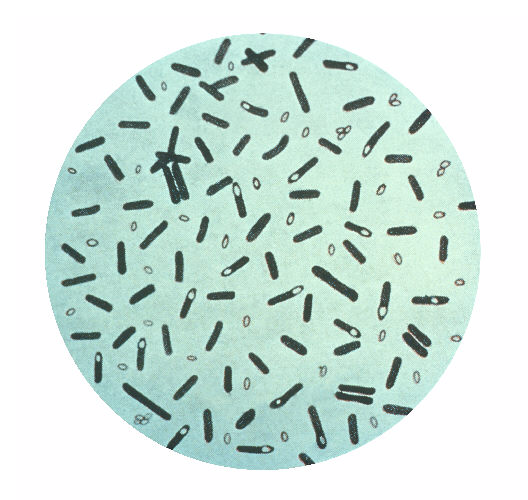
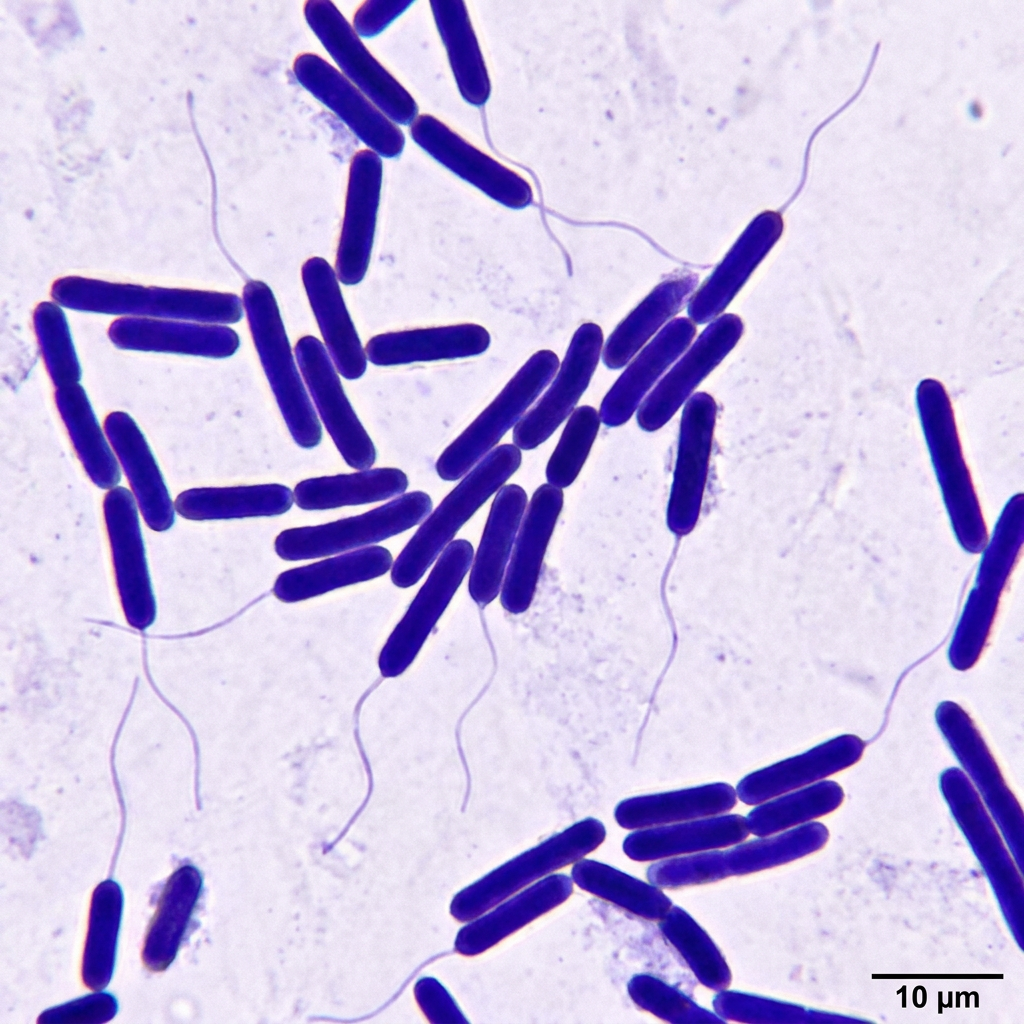
Image source: Wikipedia/Wikimedia
| Ecology, Host, and Life Cycle | |
|---|---|
| Oxygen requirements | Anaerobe |
| Optimal temperature | 37 |
| Temperature range | Mesophilic |
| Habitat | Multiple |
| Biotic relationship | Free living |
| Host(s) | Not Available |
| Cell arrangement | Pairs - Singles - Chains |
| Sporulation | Not Available |
| Energy source | Chemoorganotroph |
| Pathogenicity | Not Available |
Genome Summary
Clostridium botulinum CDC_1436
Gene Summary
Adenine Count
Not Available
Thymine Count
Not Available
Guanine Count
Not Available
Cytosine Count
Not Available
Genome Length
Not Available
Protein-coding Genes
Not Available
Non-Coding Genes
Not Available
# of Chromosomes/Plasmids
1
Genes
| Name | Locus Tag | UniProt | Strand | Coordinates | Molecular Weight |
|---|---|---|---|---|---|
| penicillin-binding transpeptidase domain-containing protein | T259_RS23765 | Not Available | + | 43 - 1116 | 40960.2 |
| hypothetical protein | T259_RS19950 | Not Available | + | 1277 - 1549 | 10748.7 |
| hypothetical protein | T259_RS19955 | Not Available | + | 1580 - 2305 | 27579.8 |
| hypothetical protein | T259_RS19960 | Not Available | - | 2433 - 2894 | 18051.3 |
| hypothetical protein | T259_RS19965 | Not Available | + | 3049 - 3978 | 35650.2 |
| hypothetical protein | T259_RS22840 | Not Available | + | 4071 - 4229 | 6450.44 |
| hypothetical protein | T259_RS19970 | Not Available | + | 4277 - 4579 | 11868.3 |
| hypothetical protein | T259_RS19975 | Not Available | + | 4608 - 5030 | 16468.8 |
| hypothetical protein | T259_RS19980 | Not Available | + | 5098 - 5433 | 12964.4 |
| hypothetical protein | T259_RS22845 | Not Available | + | 5491 - 5637 | 5616.57 |
Pathways
0 pathways
No pathways found
No metabolic pathways have been associated with this bacterium yet.