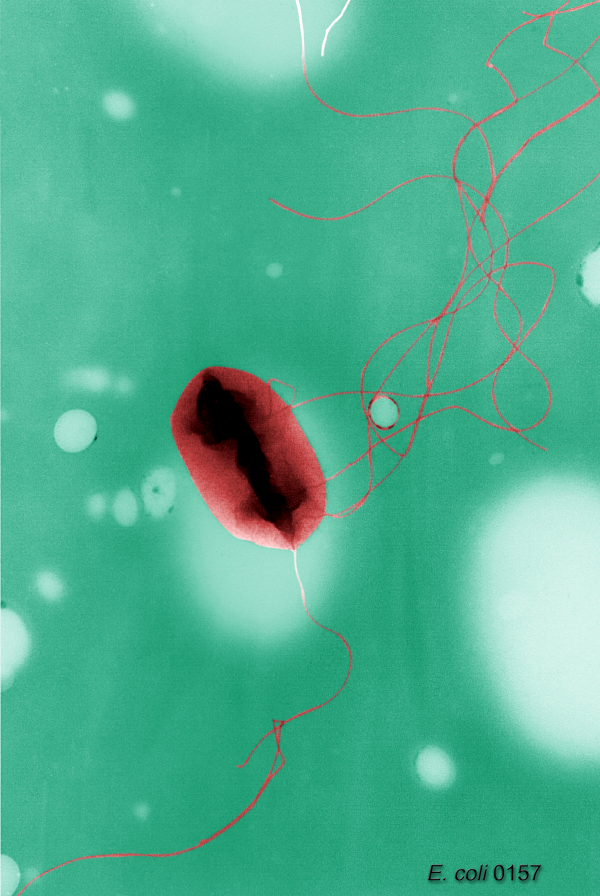
Escherichia coli O103:H2 str. 12009

Gram-negativeRodMotileFacultative anaerobe

Kingdom

Pseudomonadati

Phylum

Pseudomonadota

Class

Gammaproteobacteria

Order

Enterobacterales

Family

Enterobacteriaceae

Genus

Escherichia

Description

Escherichia coli O103:H2 str. 12009 is a Gram-negative bacterium characterized by its rod shape, a temperature preference for mesophilic conditions (optimal growth at 37°C), and is classified as a heterotroph. This microbe is a facultative anaerobe, capable of thriving in both aerobic and anaerobic environments. As a Gram-negative organism, E. coli O103:H2 str. 12009 possesses a thin peptidoglycan layer surrounded by an outer membrane, which contains lipopolysaccharides. This structure plays a crucial role in its pathogenicity and resistance to certain antibiotics. Its rod-shaped morphology allows for motility, aided by flagella, which facilitates colonization and biofilm formation on various surfaces. Being mesophilic, this strain optimally grows at human body temperature, making it well-suited for life in the intestinal tract of warm-blooded animals, including humans. As a heterotroph, E. coli O103:H2 str. 12009 relies on organic compounds for energy and carbon sources, primarily deriving nutrients from the host's gut environment. As a facultative anaerobe, it can grow in the presence or absence of oxygen. This adaptability enables it to survive in different habitats, including the intestines, where it can exploit a variety of organic substrates. Beyond the gut, E. coli can be found in various environments, such as soil, water, and food sources, which increases its potential to enter the food chain and impact human health. In terms of pathogenicity, E. coli O103:H2 is notable for its association with foodborne illness outbreaks, particularly those linked to contaminated beef and leafy greens. Strain O103:H2 produces Shiga toxin, leading to hemolytic uremic syndrome (HUS) in severe cases, emphasizing the importance of food safety and hygiene practices to prevent infections caused by this strain.

Taxonomy

KingdomPseudomonadati
PhylumPseudomonadota
ClassGammaproteobacteria
OrderEnterobacterales
FamilyEnterobacteriaceae
GenusEscherichia
SpeciesEscherichia coli
Strain12009

Profile

Physiology
Gram staining propertiesNegative
ShapeRod
MobilityYes
Flagellar presenceYes
Number of membranes2
Image of Escherichia coli O103:H2 str. 12009
Image source: Wikipedia/Wikimedia
Ecology, Host, and Life Cycle
Oxygen requirementsFacultative anaerobe
Optimal temperature37
Temperature rangeMesophilic
HabitatHostAssociated
Biotic relationshipFree living
Host(s)Homo sapiens
Cell arrangementPairs - Singles
SporulationNonsporulating
Energy sourceNot Available
PathogenicityNot Available

Genome Summary

Escherichia coli O103:H2 str. 12009


Gene Summary

Adenine Count

19113 bp

Thymine Count

19331 bp

Guanine Count

19484 bp

Cytosine Count

17618 bp

Genome Length

75546 bp

Protein-coding Genes

80 genes

Non-Coding Genes

0 genes

# of Chromosomes/Plasmids

1

Genes

NameLocus TagUniProtStrandCoordinatesMolecular Weight
m66 family glycomucinase stceECO103_RS28025Not Available+1 - 266197410.5
type ii secretion system protein gspcECO103_RS28030Not Available+2745 - 362032128.2
variant type ii secretion system secretin etpdECO103_RS28035Not Available+3621 - 559171702.7
type ii secretion system atpase gspeECO103_RS28040Not Available+5588 - 709055675.1
type ii secretion system inner membrane protein gspfECO103_RS28045Not Available+7092 - 831545280.1
type ii secretion system major pseudopilin gspgECO103_RS28050Not Available+8346 - 878016227.4
type ii secretion system minor pseudopilin gsphECO103_RS28055Not Available+8777 - 932820506.9
type ii secretion system minor pseudopilin gspiECO103_RS28060Not Available+9325 - 969013793.7
type ii secretion system minor pseudopilin gspjECO103_RS28065Not Available+9687 - 1028622690.5
type ii secretion system minor pseudopilin gspkECO103_RS28070Not Available+10283 - 1126036559.3

Displaying genes 1 – 10 of 80 in total

Metabolites

314 records
Metabolite IDMetabolite nameStructureCAS number
BASm0000237(R)-4'-phosphopantothenateC9H18NO8PChemical structure of (R)-4'-phosphopantothenateNot available
Average299.2149Da
Monoisotopic299.0770031Da
BASm00002482,3-dihydroxy-3-methylbutanoateC5H10O4Chemical structure of 2,3-dihydroxy-3-methylbutanoate1756-18-9
Average134.1305Da
Monoisotopic134.0579088Da
BASm00002502,5-didehydro-D-gluconateC6H7O7Chemical structure of 2,5-didehydro-D-gluconate53736-12-2
Average191.1156Da
Monoisotopic191.019177578Da
BASm00002512-dehydropantoateC6H9O4Chemical structure of 2-dehydropantoateNot available
Average145.1333Da
Monoisotopic145.050083776Da
BASm00002532-oxopent-4-enoateC5H5O3Chemical structure of 2-oxopent-4-enoateNot available
Average113.093Da
Monoisotopic113.024417601Da
BASm0000274aldehydo-D-galacturonateC6H9O7Chemical structure of aldehydo-D-galacturonateNot available
Average193.132Da
Monoisotopic193.0353762Da
BASm0000387(6R)-5,10-methylene-5,6,7,8-tetrahydrofolateC20H21N7O6Chemical structure of (6R)-5,10-methylene-5,6,7,8-tetrahydrofolateNot available
Average455.432Da
Monoisotopic455.1564286Da
BASm0000399(S)-allantoinC4H6N4O3Chemical structure of (S)-allantoin97-59-6
Average158.1154Da
Monoisotopic158.0439901Da
BASm0000989GlycerolC3H8O3Chemical structure of Glycerol56-81-5
Average92.0938Da
Monoisotopic92.04734412Da
BASm0001111keto-D-tagaturonateC6H9O7Chemical structure of keto-D-tagaturonateNot available
Average193.132Da
Monoisotopic193.0353762Da

Displaying 1–10 of 314 metabolites