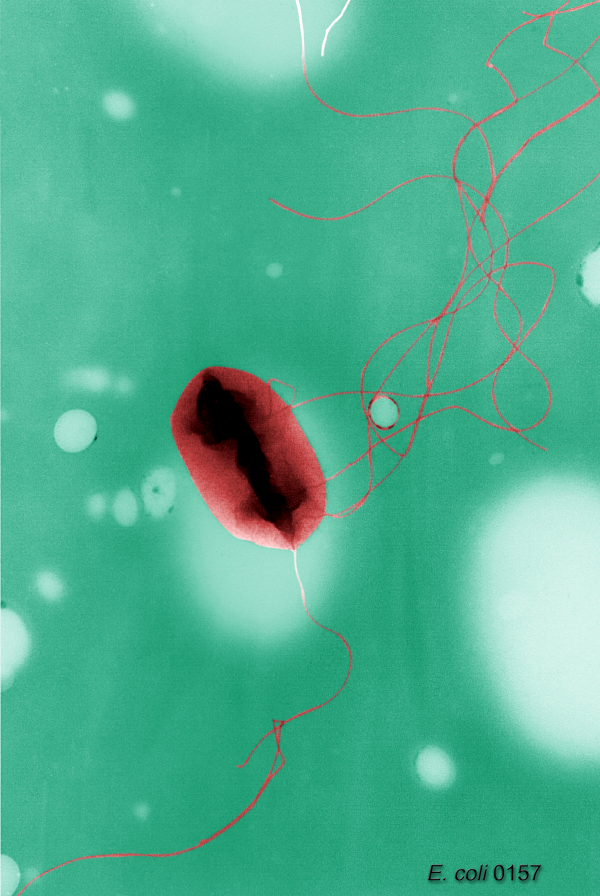
Escherichia coli UMN026

Gram-negativeRodNon-motileFacultative anaerobe

Kingdom

Pseudomonadati

Phylum

Pseudomonadota

Class

Gammaproteobacteria

Order

Enterobacterales

Family

Enterobacteriaceae

Genus

Escherichia

Description

Escherichia coli UMN026 is a Gram-negative, rod-shaped bacterium that thrives in mesophilic conditions, preferring moderate temperature ranges. As a chemoheterotroph, this microbe derives its energy from organic compounds, which it metabolizes in the presence or absence of oxygen, making it a facultative anaerobe. E. coli UMN026 can be found in the intestinal tracts of a variety of hosts, including humans and other animals, where it plays a notable role in digestion and nutrient absorption. The Gram-negative characteristic of E. coli UMN026 is attributed to its cell wall structure, which consists of a thin peptidoglycan layer surrounded by an outer membrane containing lipopolysaccharides. This structure not only provides structural integrity but also contributes to its pathogenic potential in certain strains. Its rod shape facilitates motility and colonization within the gastrointestinal tract, where it often forms biofilms. As a mesophilic organism, E. coli UMN026 thrives optimally at temperatures around 37°C (98.6°F), which is consistent with the body temperature of its warm-blooded hosts. Its facultative anaerobic nature allows it to adapt to varying oxygen levels, utilizing aerobic respiration when oxygen is available while switching to fermentation pathways under anaerobic conditions. This versatility enables it to occupy diverse ecological niches. E. coli UMN026 is known for its role as a model organism in microbiology and genetics, contributing significantly to our understanding of cellular processes. It also serves as a vital indicator organism in water quality testing, highlighting its presence in environments affected by fecal contamination. Moreover, some strains possess virulence factors that can result in foodborne illnesses, underscoring the complexity and duality of this ubiquitous microbe in health and disease.

Taxonomy

KingdomPseudomonadati
PhylumPseudomonadota
ClassGammaproteobacteria
OrderEnterobacterales
FamilyEnterobacteriaceae
GenusEscherichia
SpeciesEscherichia coli
StrainUMN026

Profile

Physiology
Gram staining propertiesNegative
ShapeRod
MobilityNo
Flagellar presenceYes
Number of membranes2
Image of Escherichia coli UMN026
Image source: Wikipedia/Wikimedia
Ecology, Host, and Life Cycle
Oxygen requirementsFacultative anaerobe
Optimal temperature37
Temperature rangeMesophilic
HabitatMultiple
Biotic relationshipFree living
Host(s)Homo sapiens
Cell arrangementPairs - Singles
SporulationNonsporulating
Energy sourceNot Available
PathogenicityYes

Genome Summary

Escherichia coli UMN026


Gene Summary

Adenine Count

9376 bp

Thymine Count

10222 bp

Guanine Count

6516 bp

Cytosine Count

7695 bp

Genome Length

33809 bp

Protein-coding Genes

46 genes

Non-Coding Genes

0 genes

# of Chromosomes/Plasmids

2

Genes

NameLocus TagUniProtStrandCoordinatesMolecular Weight
replication initiation proteinECUMN_RS00745Not Available+259 - 125137976.0
hypothetical proteinECUMN_RS00750Not Available+1260 - 170317043.0
dna distortion polypeptide 3ECUMN_RS00755Not Available+1833 - 218613505.3
membrane proteinECUMN_RS26530Not Available-2569 - 27847912.26
membrane proteinECUMN_RS00760Not Available-2935 - 321610490.4
hypothetical proteinECUMN_RS00765Not Available-3378 - 366210849.4
hypothetical proteinECUMN_RS00770Not Available-3699 - 400111095.4
peptidyl-arginine deiminaseECUMN_RS00775Not Available-4095 - 475424330.5
tyrosine-type recombinase/integraseECUMN_RS00780Not Available-4869 - 568430688.3
hypothetical proteinECUMN_RS00785Not Available-6240 - 689624426.3

Displaying genes 1 – 10 of 5111 in total

Metabolites

1958 records
Metabolite IDMetabolite nameStructureCAS number
BASm0000237(R)-4'-phosphopantothenateC9H18NO8PChemical structure of (R)-4'-phosphopantothenateNot available
Average299.2149Da
Monoisotopic299.0770031Da
BASm00002482,3-dihydroxy-3-methylbutanoateC5H10O4Chemical structure of 2,3-dihydroxy-3-methylbutanoate1756-18-9
Average134.1305Da
Monoisotopic134.0579088Da
BASm00002502,5-didehydro-D-gluconateC6H7O7Chemical structure of 2,5-didehydro-D-gluconate53736-12-2
Average191.1156Da
Monoisotopic191.019177578Da
BASm00002512-dehydropantoateC6H9O4Chemical structure of 2-dehydropantoateNot available
Average145.1333Da
Monoisotopic145.050083776Da
BASm00002532-oxopent-4-enoateC5H5O3Chemical structure of 2-oxopent-4-enoateNot available
Average113.093Da
Monoisotopic113.024417601Da
BASm00002603alpha,7alpha-dihydroxy-12-oxo-5beta-cholanateC24H37O5Chemical structure of 3alpha,7alpha-dihydroxy-12-oxo-5beta-cholanateNot available
Average405.556Da
Monoisotopic405.264647871Da
BASm0000274aldehydo-D-galacturonateC6H9O7Chemical structure of aldehydo-D-galacturonateNot available
Average193.132Da
Monoisotopic193.0353762Da
BASm0000387(6R)-5,10-methylene-5,6,7,8-tetrahydrofolateC20H21N7O6Chemical structure of (6R)-5,10-methylene-5,6,7,8-tetrahydrofolateNot available
Average455.432Da
Monoisotopic455.1564286Da
BASm0000399(S)-allantoinC4H6N4O3Chemical structure of (S)-allantoin97-59-6
Average158.1154Da
Monoisotopic158.0439901Da
BASm00004283-oxoadipateC6H6O5Chemical structure of 3-oxoadipateNot available
Average158.11Da
Monoisotopic158.022620453Da

Displaying 1–10 of 1958 metabolites