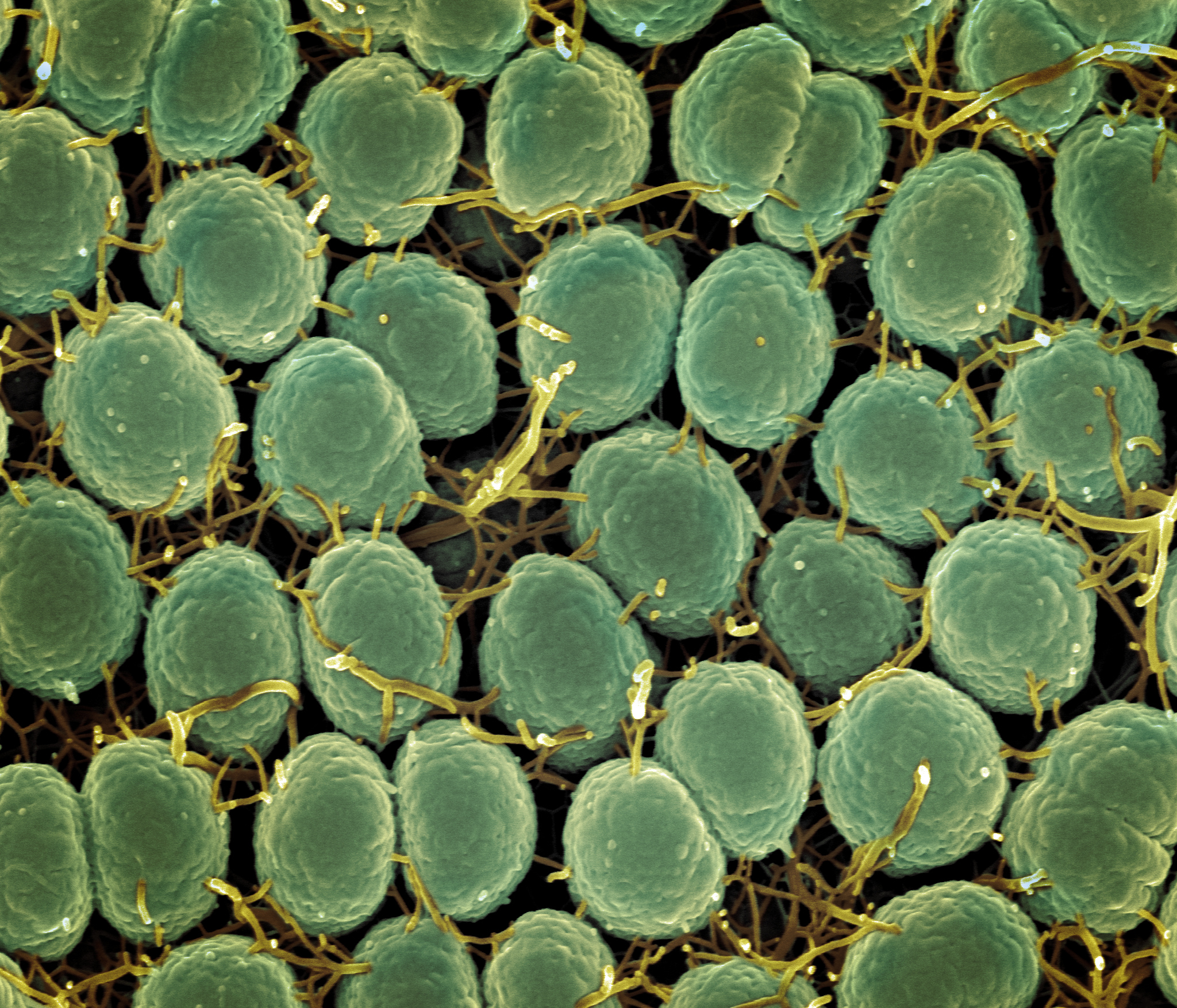
Neisseria gonorrhoeae NCCP11945

Gram-negativeCocciNon-motileAerobe

Kingdom

Pseudomonadati

Phylum

Pseudomonadota

Class

Betaproteobacteria

Order

Neisseriales

Family

Neisseriaceae

Genus

Neisseria

Description

Neisseria gonorrhoeae NCCP11945 is a gram-negative, diplococci-shaped microbe that thrives in mesophilic temperatures, categorizing it as a chemoheterotroph, and can infect various body sites in humans, including the urethra, cervix, pharynx, and rectum, making it a highly adaptable pathogen, and is an obligate aerobe. As a gram-negative bacterium, N. gonorrhoeae NCCP11945 has a unique outer membrane composition, which contributes to its virulence and ability to evade the host immune system. Its diplococci shape, typically seen in pairs, allows for efficient attachment to and invasion of host cells.The mesophilic temperature preference of N. gonorrhoeae NCCP11945 indicates that it grows best in moderate temperatures, typically between 35-37°C, which is consistent with its human host environment. As a chemoheterotroph, this microbe relies on external chemical sources for energy and carbon, which is obtained by breaking down host-derived nutrients. N. gonorrhoeae NCCP11945 can infect multiple body sites, leading to various clinical manifestations, including urethritis, cervicitis, and pharyngitis.As an obligate aerobe, N. gonorrhoeae NCCP11945 requires oxygen to grow, which is why it is typically found in areas of the body with high oxygen levels, such as the mucous membranes. The ability of N. gonorrhoeae NCCP11945 to infect and colonize different body sites is attributed to its capacity to adhere to and invade host cells, as well as its ability to evade the host immune response. N. gonorrhoeae NCCP11945 has developed resistance to multiple antibiotics, making treatment challenging, and its ability to form biofilms contributes to its persistence in the host and its transmission to new hosts.

Taxonomy

KingdomPseudomonadati
PhylumPseudomonadota
ClassBetaproteobacteria
OrderNeisseriales
FamilyNeisseriaceae
GenusNeisseria
SpeciesNeisseria gonorrhoeae
StrainNCCP11945

Profile

Physiology
Gram staining propertiesNegative
ShapeCocci
MobilityNo
Flagellar presenceYes
Number of membranes2
Image of Neisseria gonorrhoeae NCCP11945
Image source: Wikipedia/Wikimedia
Ecology, Host, and Life Cycle
Oxygen requirementsAerobe
Optimal temperature35
Temperature rangeMesophilic
HabitatHostAssociated
Biotic relationshipFree living
Host(s)Homo sapiens
Cell arrangementSingles - Pairs
SporulationNonsporulating
Energy sourceNot Available
PathogenicityYes

Genome Summary

Neisseria gonorrhoeae NCCP11945


Gene Summary

Adenine Count

888 bp

Thymine Count

1127 bp

Guanine Count

1026 bp

Cytosine Count

1112 bp

Genome Length

4153 bp

Protein-coding Genes

9 genes

Non-Coding Genes

0 genes

# of Chromosomes/Plasmids

1

Genes

NameLocus TagUniProtStrandCoordinatesMolecular Weight
hypothetical proteinNGK_RS16625Not Available-3 - 29310922.7
mobc family plasmid mobilization relaxosome proteinNGK_RS16130Not Available-290 - 67013952.8
replication initiation proteinNGK_RS12180Not Available+1056 - 192533199.0
hth domain-containing proteinNGK_RS12185Not Available+1929 - 21719301.9
hypothetical proteinNGK_RS12190Not Available+2168 - 24139297.02
duf5397 family proteinNGK_RS12195Not Available+2416 - 26016717.92
endoribonuclease vapdNGK_RS12200Not Available+2601 - 287910474.4
cryptic plasmid protein aNGK_RS12205Not Available-2857 - 31119182.02
mbeb family mobilization proteinNGK_RS12210Not Available-3158 - 374521911.4

Displaying genes 1 – 9 of 9 in total

Metabolites

1619 records
Metabolite IDMetabolite nameStructureCAS number
BASm00002502,5-didehydro-D-gluconateC6H7O7Chemical structure of 2,5-didehydro-D-gluconate53736-12-2
Average191.1156Da
Monoisotopic191.019177578Da
BASm00002603alpha,7alpha-dihydroxy-12-oxo-5beta-cholanateC24H37O5Chemical structure of 3alpha,7alpha-dihydroxy-12-oxo-5beta-cholanateNot available
Average405.556Da
Monoisotopic405.264647871Da
BASm0000592(S)-1-phenylethanolC8H10OChemical structure of (S)-1-phenylethanolNot available
Average122.1644Da
Monoisotopic122.0731649Da
BASm0000950L-xyluloseC5H10O5Chemical structure of L-xylulose527-50-4
Average150.1299Da
Monoisotopic150.05282343Da
BASm0000989GlycerolC3H8O3Chemical structure of Glycerol56-81-5
Average92.0938Da
Monoisotopic92.04734412Da
BASm0001225dodecanoateC12H23O2Chemical structure of dodecanoateNot available
Average199.3098Da
Monoisotopic199.169805Da
BASm0001661Cu(2+)CuChemical structure of Cu(2+)7440-50-8
Average63.546Da
Monoisotopic62.929601079Da
BASm00016962-heptyl-3-hydroxy-4(1H)-quinoloneC16H21NO2Chemical structure of 2-heptyl-3-hydroxy-4(1H)-quinoloneNot available
Average259.349Da
Monoisotopic259.15722892Da
BASm0001785(2R,3R)-tartrateC4H6O6Chemical structure of (2R,3R)-tartrate87-69-4
Average150.0868Da
Monoisotopic150.0164379Da
BASm0001808corynebactinC39H42N6O18Chemical structure of corynebactinNot available
Average882.789Da
Monoisotopic882.2555585Da

Displaying 1–10 of 1619 metabolites