Coxiella burnetii Dugway 5J108-111

Gram-negativeCocciMotileFacultative

Kingdom

Pseudomonadati

Phylum

Pseudomonadota

Class

Gammaproteobacteria

Order

Legionellales

Family

Coxiellaceae

Genus

Coxiella

Description

Coxiella burnetii is an obligate intracellular, Gram-negative bacterium that replicates within the phagolysosome of the eukaryotic phagocyte. It is the etiological agent of "Q (Query) fever". It is highly infective to both humans and livestock, growing to high titer in livestock placental tissues. Thus natural infection mostly results from exposure to dust or aerosol from ruminant birth fluids. In humans, the disease manifests as an acute flu-like illness. The bacteria are found as 2 particles, both of which are infectious. The small cell variants (SCV), are responsible for the ability to survive extreme environmental conditions of desiccation, heat, sonication, and pressure. In the host, the infecting SCV develop into large cell variants (LCV) that are metabolically active. The SCV and LCV are antigenically different, but do not correspond to stationary and log-phase growth stages as has been hypothesized. Transition between SCV and LCV is accompanied by changes in the expression of surface proteins and does not involve changes in lipopolysaccharide (LPS) structure. Infectious particles have been referred to as "endospore-like", but this nomenclature is misleading because they are not structurally similar to Bacillus spores. C.burnetii (SCV form) is able to survive outside the host in soil for extended periods of time. It shows high-level resistance to UV radiation, heat, dessication, pressure and osmotic and oxidative stress. It has already been weaponized and mass-produced under various biological warfare programs (adapted in part from PubMed: 17825460).The G isolate (Q212) was acquired in Nova Scotia, Canada, in 1982 from the aortic valve of a human endocarditis patient. It disseminates less and causes less inflammatory damage than the Nine Mile isolate (COXBU) following aerosol challenge of BALB/c mice. This strain has plasmid-like sequences integrated into its chromosome. Comparison with 3 other strains, Nine Mile, Dugway and CbuK_Q154 (COBXU, COXBN and COXB1, respectively) identified very few novel genes in each isolate, in agreement with the organism's obligate intracellular lifestyle that limits opportunities for genetic exchange. (EBI Integr8)

Taxonomy

KingdomPseudomonadati
PhylumPseudomonadota
ClassGammaproteobacteria
OrderLegionellales
FamilyCoxiellaceae
GenusCoxiella
SpeciesCoxiella burnetii
StrainDugway 5J108-111

Profile

Physiology
Gram staining propertiesNegative
ShapeCocci
MobilityYes
Flagellar presenceYes
Number of membranes2
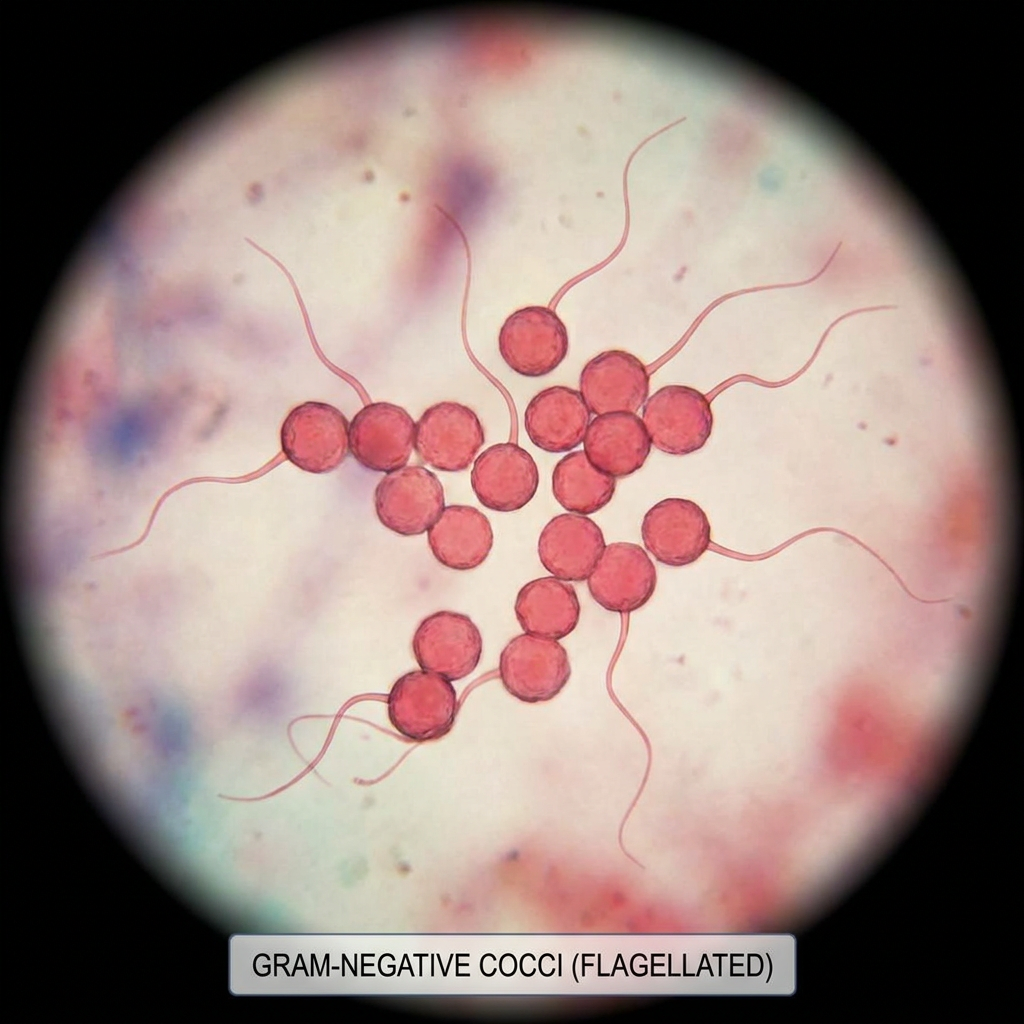
Image of Coxiella burnetii Dugway 5J108-111
AI-generated image based on bacteria physiology
Ecology, Host, and Life Cycle
Oxygen requirementsFacultative
Optimal temperature37
Temperature rangeMesophilic
HabitatHostAssociated
Biotic relationshipSymbiotic
Host(s)Homo sapiens
Cell arrangementSingles
SporulationSporulating
Energy sourceNot Available
PathogenicityYes

Genome Summary

Coxiella burnetii Dugway 5J108-111


Gene Summary

Adenine Count

16209 bp

Thymine Count

16411 bp

Guanine Count

10931 bp

Cytosine Count

10628 bp

Genome Length

54179 bp

Protein-coding Genes

65 genes

Non-Coding Genes

0 genes

# of Chromosomes/Plasmids

2

Genes

NameLocus TagUniProtStrandCoordinatesMolecular Weight
hypothetical proteinCBUD_RS00005Not Available-6 - 1194484.64
chromosomal replication initiator protein dnaaCBUD_RS00010Not Available+140 - 149551098.6
dna polymerase iii subunit betaCBUD_RS00015Not Available+1639 - 274841712.6
dna replication/repair protein recfCBUD_RS00020Not Available+2753 - 382641228.9
dna topoisomerase (atp-hydrolyzing) subunit bCBUD_RS00025Not Available+4128 - 655490651.8
hypothetical proteinCBUD_RS00030Not Available+6782 - 779936339.4
hypothetical proteinCBUD_RS00035Not Available-7796 - 806810166.7
hypothetical proteinCBUD_RS12640Not Available+8069 - 81523222.04
hypothetical proteinCBUD_RS12480Not Available-8176 - 983761956.3
hypothetical proteinCBUD_RS00045Not Available-9978 - 1207478253.5

Displaying genes 1 – 10 of 2342 in total

Pathways

0 pathways

No pathways found

No metabolic pathways have been associated with this bacterium yet.

Metabolites

1616 records
Metabolite IDMetabolite nameStructureCAS number
BASm00002532-oxopent-4-enoateC5H5O3Chemical structure of 2-oxopent-4-enoateNot available
Average113.093Da
Monoisotopic113.024417601Da
BASm00002603alpha,7alpha-dihydroxy-12-oxo-5beta-cholanateC24H37O5Chemical structure of 3alpha,7alpha-dihydroxy-12-oxo-5beta-cholanateNot available
Average405.556Da
Monoisotopic405.264647871Da
BASm0000592(S)-1-phenylethanolC8H10OChemical structure of (S)-1-phenylethanolNot available
Average122.1644Da
Monoisotopic122.0731649Da
BASm0000989GlycerolC3H8O3Chemical structure of Glycerol56-81-5
Average92.0938Da
Monoisotopic92.04734412Da
BASm0001225dodecanoateC12H23O2Chemical structure of dodecanoateNot available
Average199.3098Da
Monoisotopic199.169805Da
BASm00012442-succinylbenzoateC11H8O5Chemical structure of 2-succinylbenzoate27415-09-04
Average220.181Da
Monoisotopic220.038270517Da
BASm0001462ubiquinone-0C9H10O4Chemical structure of ubiquinone-0605-94-7
Average182.1733Da
Monoisotopic182.057908808Da
BASm0001661Cu(2+)CuChemical structure of Cu(2+)7440-50-8
Average63.546Da
Monoisotopic62.929601079Da
BASm00016962-heptyl-3-hydroxy-4(1H)-quinoloneC16H21NO2Chemical structure of 2-heptyl-3-hydroxy-4(1H)-quinoloneNot available
Average259.349Da
Monoisotopic259.15722892Da
BASm0001808corynebactinC39H42N6O18Chemical structure of corynebactinNot available
Average882.789Da
Monoisotopic882.2555585Da

Displaying 1–10 of 1616 metabolites