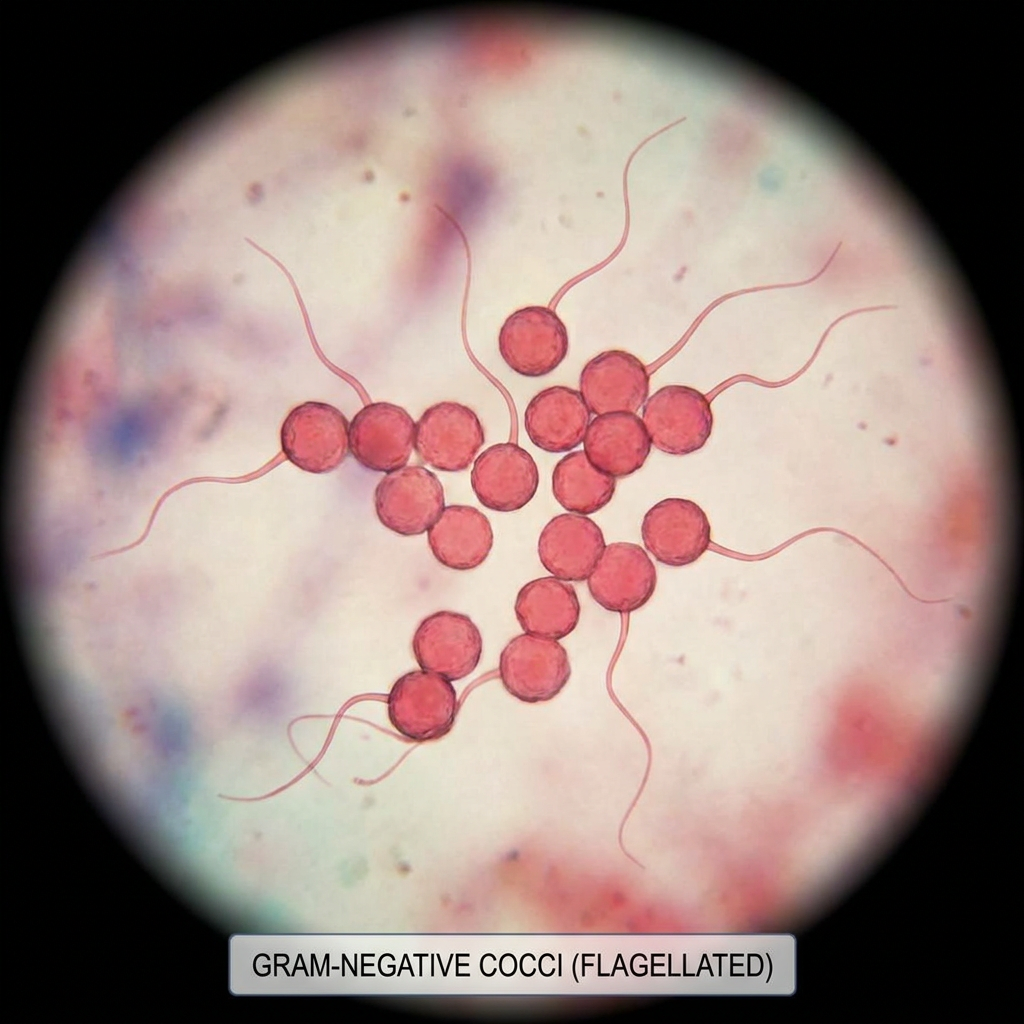
Synechococcus sp. CC9902

Gram-negativeCocciMotileFacultative

Kingdom

Bacillati

Phylum

Cyanobacteriota

Class

Cyanophyceae

Order

Synechococcales

Family

Synechococcaceae

Genus

Synechococcus

Description

Marine unicellular cyanobacteria of the synechococcus group occupy an important position at the base of the marine food chain. They are abundant in the world's oceans and as a result are one of the most numerous genomes on earth. They have the ability to acquire major nutrients and trace metals from the submicromolar concentrations found in the oligotrophic open seas and their light-harvesting apparatus is uniquely adapted to the spectral quality of light in the ocean.A third of the open ocean isolates of synechococcus possess a unique type of swimming motility not seen in any other type of microorganism, they propel themselves through seawater at speeds of up to 25 mm/sec despite their lack of external propelling devices. They do not use their motility to respond to light gradients, but instead to respond to extremely small gradients of nitrogenous compounds.Synechococcus sp. strain WH8102 is a motile strain that can be grown in both natural and artificial seawater liquid media as well as on plates and is amenable to biochemical and genetic manipulation. The availability of the complete sequence of the genome of synechococcus WH8102 will provide insights not only into the unique adaptations of this cyanobacterial group to the marine environment, including mechanisms of nutrient and metal transport, chemotaxis, motility, and viral interactions but also into what factors might be ultimately important in controlling primary productivity in the oceans.Marine synechococcus spp. coexist with the other abundant unicellular marine cyanobacterial group, prochlorococcus . A major difference between the synechococcus and prochlorococcus groups lies in their light-harvesting apparatus, with synechococcus utilizing chlorophyll A, and prochlorococcus relying on divinyl chlorophylls A and B. A comparative analysis of their genomes should allow insights not only into the evolution of light-harvesting complexes, but also into cyanobacterial diversification in the oceans, including adaptations to different marine niches.Marine unicellular cyanobacteria are responsible for an estimated 20-40% of chlorophyll biomass and carbon fixation in the oceans.(From http://www.ebi.ac.uk/2can/genomes/bacteria.html) (BacMap)

Taxonomy

KingdomBacillati
PhylumCyanobacteriota
ClassCyanophyceae
OrderSynechococcales
FamilySynechococcaceae
GenusSynechococcus
SpeciesSynechococcus sp. CC9902
StrainCC9902

Profile

Physiology
Gram staining propertiesNegative
ShapeCocci
MobilityYes
Flagellar presenceYes
Number of membranes2
Image of Synechococcus sp. CC9902
Ecology, Host, and Life Cycle
Oxygen requirementsFacultative
Optimal temperatureNot Available
Temperature rangeMesophilic
HabitatAquatic
Biotic relationshipFree living
Host(s)Not Available
Cell arrangementSingles
SporulationNot Available
Energy sourcePhotosynthetic - Photoautotroph
PathogenicityNo

Genome Summary

Synechococcus sp. CC9902

Accession NumberNC_007513.1

Gene Summary

Adenine Count

510200 bp

Thymine Count

514145 bp

Guanine Count

604102 bp

Cytosine Count

606381 bp

Genome Length

2234828 bp

Protein-coding Genes

2391 genes

Non-Coding Genes

52 genes

# of Chromosomes/Plasmids

1

Genes

NameLocus TagUniProtStrandCoordinatesMolecular Weight
dna polymerase iii subunit betaSYNCC9902_RS00010P52023+247 - 140440755.5
hypothetical proteinSYNCC9902_RS00015Not Available+1406 - 215528667.7
phosphoribosylformylglycinamidine synthase subunit purlSYNCC9902_RS00020Q3B100+2195 - 449580773.1
amidophosphoribosyltransferaseSYNCC9902_RS00025Q55038+4495 - 600054716.4
dna topoisomerase (atp-hydrolyzing) subunit aSYNCC9902_RS00030P73077-5990 - 845289847.9
tetratricopeptide repeat proteinSYNCC9902_RS00035Not Available-8498 - 937932384.0
trna epoxyqueuosine(34) reductase quegSYNCC9902_RS00040Q3ANP3-9399 - 1036436314.2
hpsj family proteinSYNCC9902_RS00045Not Available+10401 - 1104822746.9
duf502 domain-containing proteinSYNCC9902_RS00050Not Available+11095 - 1182926545.6
transcription antitermination factor nusbSYNCC9902_RS00055P74395+11833 - 1246823531.0

Displaying genes 1 – 10 of 2443 in total

Pathways

0 pathways

No pathways found

No metabolic pathways have been associated with this bacterium yet.

Metabolites

182 records
Metabolite IDMetabolite nameStructureCAS number
BASm0000122echinenoneC40H54OChemical structure of echinenoneNot available
Average550.871Da
Monoisotopic550.417466359Da
BASm0000217alpha-ribazoleC14H18N2O4Chemical structure of alpha-ribazoleNot available
Average278.3037Da
Monoisotopic278.126657074Da
BASm0000237(R)-4'-phosphopantothenateC9H18NO8PChemical structure of (R)-4'-phosphopantothenateNot available
Average299.2149Da
Monoisotopic299.0770031Da
BASm00002512-dehydropantoateC6H9O4Chemical structure of 2-dehydropantoateNot available
Average145.1333Da
Monoisotopic145.050083776Da
BASm0000377(S)-malateC4H4O5Chemical structure of (S)-malateNot available
Average132.0716Da
Monoisotopic132.005873238Da
BASm0000387(6R)-5,10-methylene-5,6,7,8-tetrahydrofolateC20H21N7O6Chemical structure of (6R)-5,10-methylene-5,6,7,8-tetrahydrofolateNot available
Average455.432Da
Monoisotopic455.1564286Da
BASm0000430hercynineC9H15N3O2Chemical structure of hercynineNot available
Average197.238Da
Monoisotopic197.1164267Da
BASm0000642S-adenosyl-4-methylsulfanyl-2-oxobutanoateC15H19N5O6SChemical structure of S-adenosyl-4-methylsulfanyl-2-oxobutanoateNot available
Average397.406Da
Monoisotopic397.105604055Da
BASm00007164-methylsulfanyl-2-oxobutanoateC5H7O3SChemical structure of 4-methylsulfanyl-2-oxobutanoateNot available
Average147.17Da
Monoisotopic147.012138839Da
BASm00008763-hydroxypyruvateC3H3O4Chemical structure of 3-hydroxypyruvateNot available
Average103.054Da
Monoisotopic103.003682157Da

Displaying 1–10 of 182 metabolites