Veillonella atypica

Gram-negativeAnaerobe

Kingdom

Bacillati

Phylum

Bacillota

Class

Negativicutes

Order

Veillonellales

Family

Veillonellaceae

Genus

Veillonella

Description

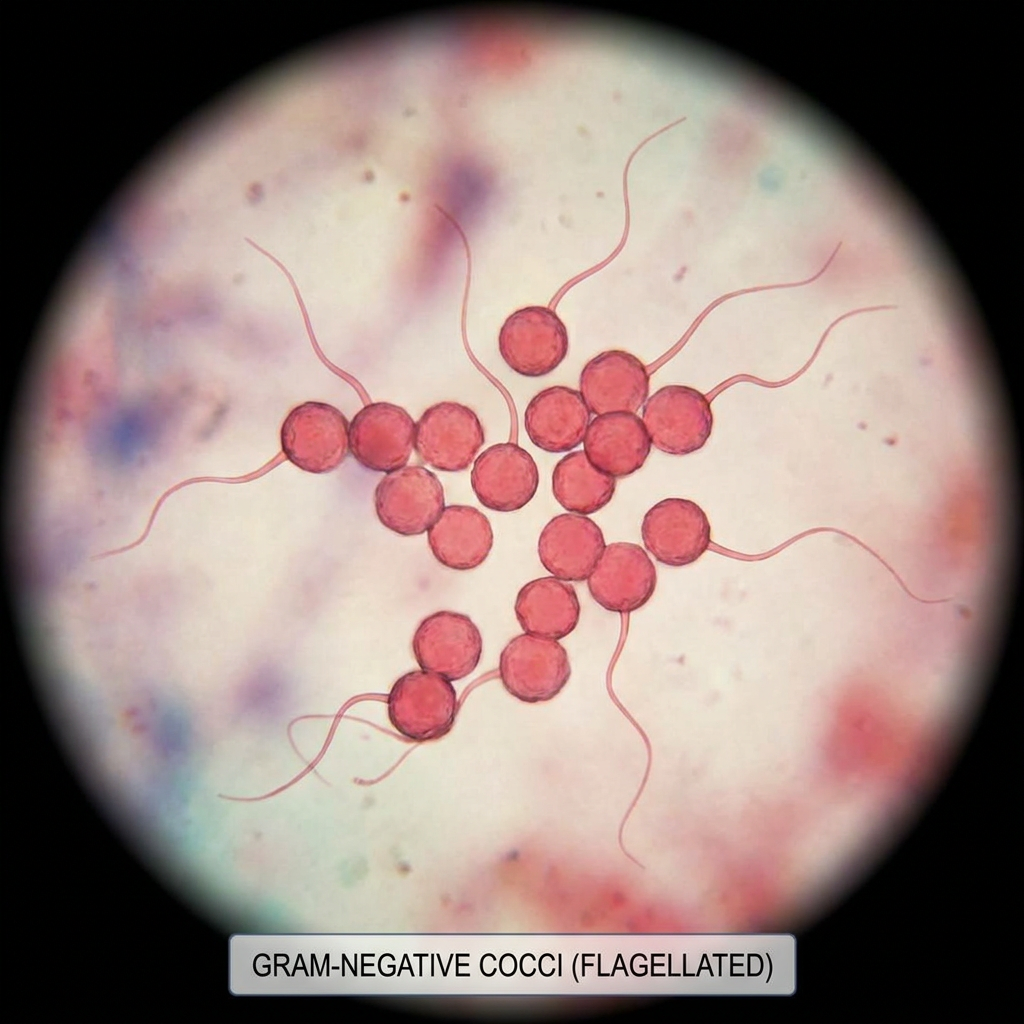
Veillonella atypica is a gram-negative, coccoid-shaped microbe that thrives in temperatures ranging from 25°C to 37°C, placing it in the mesophilic category. This microbe is a chemoheterotroph, meaning it obtains its energy by breaking down organic compounds and using them as its energy source. V. atypica produces energy through fermentation, specifically by converting glucose into lactate and acetate. V. atypica can be found in various body sites, including the oral cavity, respiratory tract, gastrointestinal tract, and female reproductive tract, of multiple species. Its ability to colonize these diverse environments is likely due to its adaptability to different temperatures, pH levels, and oxygen levels. V. atypica is an obligate anaerobe, meaning it cannot survive in the presence of oxygen. This is likely due to the fact that it lacks superoxide dismutase, an enzyme that helps protect against oxygen radicals. In anaerobic environments, V. atypica is able to metabolize carbohydrates and produce energy through fermentation. Despite being an obligate anaerobe, V. atypica has been found to be closely associated with the oral flora of humans, where it coexists with other microorganisms that are capable of producing oxygen. This suggests that V. atypica may have developed mechanisms to survive in environments with low oxygen levels, such as the dental plaque. Veillonella atypica plays a crucial role in the human microbiome, contributing to the breakdown of complex carbohydrates and influencing the composition of oral flora. Additionally, studies have linked V. atypica to the development of dental caries and other oral diseases.

Taxonomy

KingdomBacillati
PhylumBacillota
ClassNegativicutes
OrderVeillonellales
FamilyVeillonellaceae
GenusVeillonella
SpeciesVeillonella atypica
StrainNo strain

Profile

Physiology
Gram staining propertiesNegative
ShapeNot Available
MobilityNot Available
Flagellar presenceNot Available
Number of membranesNot Available
Ecology, Host, and Life Cycle
Oxygen requirementsAnaerobe
Optimal temperatureNot Available
Temperature rangeNot Available
Habitatoral cavity
Biotic relationshipNot Available
Host(s)Not Available
Cell arrangementNot Available
SporulationNot Available
Energy sourceNot Available
PathogenicityNot Available

Genome Summary

Veillonella atypica

Accession NumberUHIF00000000.1

Gene Summary

Adenine Count

Not Available

Thymine Count

Not Available

Guanine Count

Not Available

Cytosine Count

Not Available

Genome Length

Not Available

Protein-coding Genes

1957 genes

Non-Coding Genes

59 genes

# of Chromosomes/Plasmids

1

Genes

NameLocus TagUniProtStrandCoordinatesMolecular Weight
dna replication protein dnacNCTC11830_00001Not Available-593 - 108418749.5
uncharacterised proteinNCTC11830_00002Not Available-1118 - 13489026.95
transposase and inactivated derivativesNCTC11830_00003Not Available-1332 - 223434238.3
uncharacterised proteinNCTC11830_00004Not Available+2968 - 336915096.0
nadph-dependent 7-cyano-7-deazaguanine reductaseNCTC11830_00005Not Available+3508 - 400519202.9
uncharacterised proteinNCTC11830_00006Not Available+4425 - 480214180.9
uncharacterised proteinNCTC11830_00007Not Available-4872 - 556726524.6
nadph-dependent 7-cyano-7-deazaguanine reductaseNCTC11830_00008Not Available-5569 - 606619202.9
uncharacterised proteinNCTC11830_00009Not Available-6205 - 660615096.0
transposase and inactivated derivativesNCTC11830_00010Not Available+6950 - 741718351.7

Displaying genes 1 – 10 of 2016 in total

Pathways

22 pathways

No pathways found

No metabolic pathways have been associated with this bacterium yet.
Metabolites

81 records
Metabolite IDMetabolite nameStructureCAS number
BASm00188811-Acyl-sn-glycero-3-phosphoethanolamine (N-C18:0)C23H48NO7PChemical structure of 1-Acyl-sn-glycero-3-phosphoethanolamine (N-C18:0)NULL
Average481.6035Da
Monoisotopic481.316839407Da
BASm00188831-Acyl-sn-glycero-3-phosphoglycerol (N-C12:0)C18H36O9PChemical structure of 1-Acyl-sn-glycero-3-phosphoglycerol (N-C12:0)NULL
Average427.4468Da
Monoisotopic427.209694262Da
BASm00188841-Acyl-sn-glycero-3-phosphoglycerol (N-C14:1)C20H38O9PChemical structure of 1-Acyl-sn-glycero-3-phosphoglycerol (N-C14:1)NULL
Average453.4841Da
Monoisotopic453.225344326Da
BASm00188851-Acyl-sn-glycero-3-phosphoglycerol (N-C16:0)C22H44O9PChemical structure of 1-Acyl-sn-glycero-3-phosphoglycerol (N-C16:0)NULL
Average483.5531Da
Monoisotopic483.272294518Da
BASm00188861-Acyl-sn-glycero-3-phosphoglycerol (N-C16:1)C22H42O9PChemical structure of 1-Acyl-sn-glycero-3-phosphoglycerol (N-C16:1)NULL
Average481.5372Da
Monoisotopic481.256644454Da
BASm00188881-hexadecanoyl-sn-glycerol 3-phosphateC19H39O7PChemical structure of 1-hexadecanoyl-sn-glycerol 3-phosphateNULL
Average410.4825Da
Monoisotopic410.243340114Da
BASm00188942-Acyl-sn-glycero-3-phosphoethanolamine (N-C12:0)C17H36NO7PNot availableNULL
Average397.449Da
Monoisotopic397.222939501Da
BASm00188952-Acyl-sn-glycero-3-phosphoethanolamine (N-C14:0)C19H40NO7PNot availableNULL
Average425.503Da
Monoisotopic425.25423963Da
BASm00188972-Acyl-sn-glycero-3-phosphoethanolamine (N-C16:0)C21H44NO7PChemical structure of 2-Acyl-sn-glycero-3-phosphoethanolamine (N-C16:0)NULL
Average453.5503Da
Monoisotopic453.285539279Da
BASm00188992-Acyl-sn-glycero-3-phosphoethanolamine (N-C18:0)C23H48NO7PChemical structure of 2-Acyl-sn-glycero-3-phosphoethanolamine (N-C18:0)NULL
Average481.6035Da
Monoisotopic481.316839407Da

Displaying 31–40 of 81 metabolites