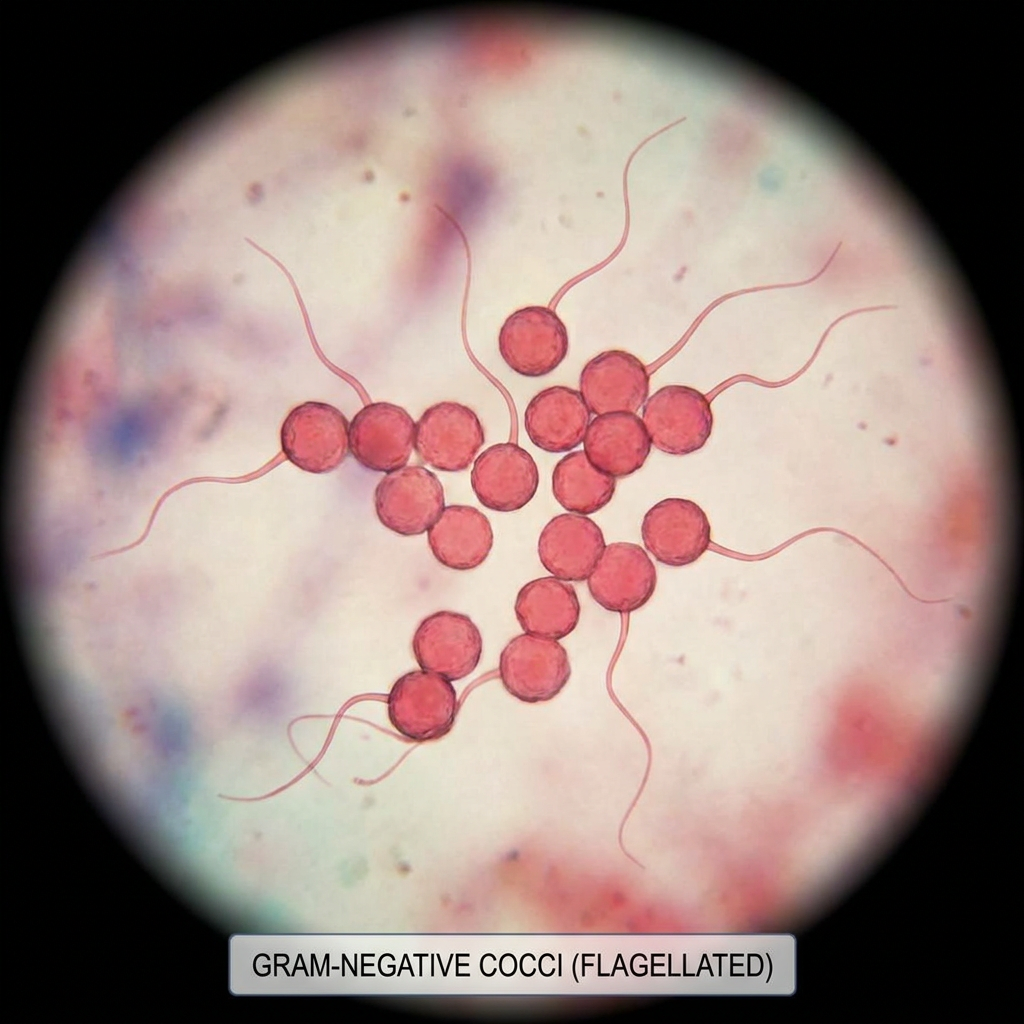
Veillonella parvula

Gram-negativeCocciNon-motileAnaerobe

Kingdom

Bacillati

Phylum

Bacillota

Class

Negativicutes

Order

Veillonellales

Family

Veillonellaceae

Genus

Veillonella

Description

Veillonella parvula is a Gram-negative, cocci-shaped microbe that thrives in mesophilic temperatures, categorized as a Chemoheterotroph, and can be found in various body sites, including the oral cavity, gut, and urogenital tract, of numerous species, including humans, animals, and insects, and is an Obligate Anaerobe. As a Gram-negative microbe, Veillonella parvula has a unique outer membrane containing lipopolysaccharides, which provides protection against environmental stresses. Its cocci shape allows it to maintain a large surface area, facilitating the uptake of nutrients and interaction with other microbes. The mesophilic temperature preference of Veillonella parvula enables it to grow optimally at temperatures between 20-45°C, making it well-suited to inhabit various ecosystems. As a Chemoheterotroph, Veillonella parvula relies on organic compounds for energy and carbon, breaking down lactate, pyruvate, and other substrates to sustain its growth. The presence of Veillonella parvula in diverse body sites and species highlights its adaptability and ability to form symbiotic relationships with its hosts. As an Obligate Anaerobe, Veillonella parvula requires the absence of oxygen to grow, which is reflected in its metabolic pathways and enzymatic systems. Veillonella parvula plays a significant role in the fermentation of lactate, producing propionic acid, acetate, and carbon dioxide, which can influence the pH and composition of its environment, and its ability to metabolize lactate has implications for the development of novel therapeutic strategies, particularly in the treatment of diseases associated with dysbiosis, such as periodontitis and inflammatory bowel disease.

Taxonomy

KingdomBacillati
PhylumBacillota
ClassNegativicutes
OrderVeillonellales
FamilyVeillonellaceae
GenusVeillonella
SpeciesVeillonella parvula
StrainNo strain

Profile

Physiology
Gram staining propertiesNegative
ShapeCocci
MobilityNo
Flagellar presenceYes
Number of membranes1
Image of Veillonella parvula
Ecology, Host, and Life Cycle
Oxygen requirementsAnaerobe
Optimal temperatureNot Available
Temperature rangeMesophilic
HabitatHostAssociated
Biotic relationshipFree living
Host(s)Not Available
Cell arrangementChains - Pairs
SporulationNot Available
Energy sourceNot Available
PathogenicityNot Available

Genome Summary

Veillonella parvula

Accession NumberPKHW00000000.1

Gene Summary

Adenine Count

Not Available

Thymine Count

Not Available

Guanine Count

Not Available

Cytosine Count

Not Available

Genome Length

Not Available

Protein-coding Genes

1909 genes

Non-Coding Genes

57 genes

# of Chromosomes/Plasmids

1

Genes

NameLocus TagUniProtStrandCoordinatesMolecular Weight
5s ribosomal rnaNot AvailableNot Available+300 - 416Not Available
5s ribosomal rnaNot AvailableNot Available+323 - 439Not Available
5s ribosomal rnaNot AvailableNot Available+326 - 442Not Available
5s ribosomal rnaNot AvailableNot Available+371 - 487Not Available
molybdenum-pterin-binding proteinCYK26_00015Not Available-1004 - 12137203.94
Trna-glyNot AvailableNot Available+1302 - 1375Not Available
peptidaseCYK26_00025Not Available+1514 - 284550348.2
na+/h+ antiporter nhaaCYK26_00030Not Available+2943 - 410041552.4
na+/h+ antiporter nhaaCYK26_00035Not Available+4136 - 530842435.1
hypothetical proteinCYK26_00040Not Available+5571 - 617922023.7

Displaying genes 1 – 10 of 757 in total

Pathways

21 pathways

No pathways found

No metabolic pathways have been associated with this bacterium yet.

Metabolites

77 records
Metabolite IDMetabolite nameStructureCAS number
BASm00055001-octadecanoyl-sn-glycero-3-phosphateC21H41O7PChemical structure of 1-octadecanoyl-sn-glycero-3-phosphateNot available
Average436.5198Da
Monoisotopic436.2589902Da
BASm0014033AmmoniaH3NChemical structure of Ammonia7664-41-7
Average17.0305Da
Monoisotopic17.026549101Da
BASm0014041Oleic acidC18H34O2Chemical structure of Oleic acid112-80-1
Average282.4614Da
Monoisotopic282.255880332Da
BASm0014058Myristic acidC14H28O2Chemical structure of Myristic acid544-63-8
Average228.3709Da
Monoisotopic228.20893014Da
BASm0014182Vaccenic acidC18H34O2Chemical structure of Vaccenic acidNULL
Average282.468Da
Monoisotopic282.255880335Da
BASm0014219Palmitoleic acidC16H30O2Chemical structure of Palmitoleic acidNULL
Average254.4082Da
Monoisotopic254.224580204Da
BASm0017263NADPC21H29N7O17P3Chemical structure of NADP53-59-8
Average744.4129Da
Monoisotopic744.083277073Da
BASm0017395CDP-DG(16:0/18:1(9Z))C46H83N3O15P2Chemical structure of CDP-DG(16:0/18:1(9Z))NULL
Average980.124Da
Monoisotopic979.529942981Da
BASm0017399CDP-DG(18:0/18:1(9Z))C48H87N3O15P2Chemical structure of CDP-DG(18:0/18:1(9Z))NULL
Average1008.178Da
Monoisotopic1007.561243109Da
BASm0017409PA(16:0/18:1(9Z))C37H71O8PChemical structure of PA(16:0/18:1(9Z))NULL
Average674.941Da
Monoisotopic674.488656244Da

Displaying 1–10 of 77 metabolites