Kingdom
Bacillati
Phylum
Bacillota
Class
Clostridia
Order
Eubacteriales
Family
Oscillospiraceae
Genus
Faecalibacterium
Description
Taxonomy
| Kingdom | Bacillati |
|---|---|
| Phylum | Bacillota |
| Class | Clostridia |
| Order | Eubacteriales |
| Family | Oscillospiraceae |
| Genus | Faecalibacterium |
| Species | Faecalibacterium langellae |
| Strain | No strain |
Profile
| Physiology | |
|---|---|
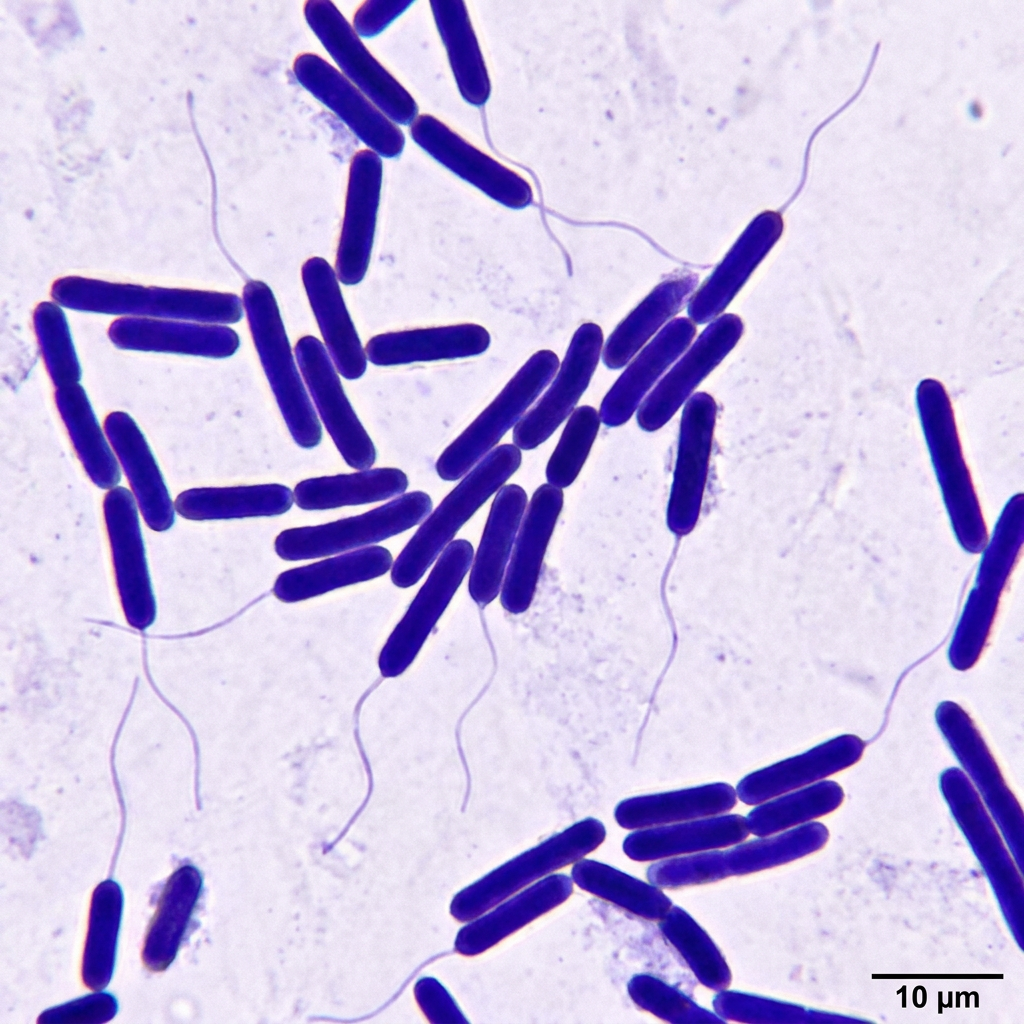
| Gram staining properties | Positive |
| Shape | Rod |
| Mobility | No |
| Flagellar presence | Yes |
| Number of membranes | Not Available |
| Ecology, Host, and Life Cycle | |
|---|---|
| Oxygen requirements | Anaerobe |
| Optimal temperature | 37 |
| Temperature range | Mesophilic |
| Habitat | Multiple |
| Biotic relationship | Not Available |
| Host(s) | Not Available |
| Cell arrangement | Not Available |
| Sporulation | Nonsporulating |
| Energy source | Chemoheterotroph |
| Pathogenicity | Not Available |
Genome Summary
Faecalibacterium prausnitzii str. CNCM I 4540
Accession NumberNMTQ00000000.1
Gene Summary
Adenine Count
Not Available
Thymine Count
Not Available
Guanine Count
Not Available
Cytosine Count
Not Available
Genome Length
Not Available
Protein-coding Genes
2750 genes
Non-Coding Genes
192 genes
# of Chromosomes/Plasmids
1
Genes
| Name | Locus Tag | UniProt | Strand | Coordinates | Molecular Weight |
|---|---|---|---|---|---|
| tetr family transcriptional regulator | CGS46_01275 | Not Available | + | 248682 - 249233 | 20995.5 |
| asparagine synthetase b | CGS46_01280 | Not Available | - | 249690 - 251264 | 60116.0 |
| fe2+/zn2+ uptake regulation protein | CGS46_01285 | Not Available | - | 251606 - 252091 | 18406.8 |
| gntr family transcriptional regulator | CGS46_01290 | Not Available | + | 252436 - 253095 | 25334.5 |
| aldo/keto reductase | CGS46_01295 | Not Available | - | 253251 - 254387 | 42827.9 |
| 50s ribosomal protein l7/l12 | CGS46_01300 | Not Available | - | 254566 - 254940 | 12856.6 |
| 50s ribosomal protein l10 | CGS46_01305 | Not Available | - | 255014 - 255529 | 18353.2 |
| 50s ribosomal protein l1 | CGS46_01310 | Not Available | - | 255807 - 256499 | 23987.2 |
| 50s ribosomal protein l11 | CGS46_01315 | Not Available | - | 256557 - 256982 | 14830.2 |
| transcription termination/antitermination protein nusg | CGS46_01320 | Not Available | - | 257119 - 257652 | 19833.9 |
Pathways
0 pathways
No pathways found
No metabolic pathways have been associated with this bacterium yet.
