Kingdom
Pseudomonadati
Phylum
Verrucomicrobiota
Class
Verrucomicrobiia
Order
Verrucomicrobiales
Family
Akkermansiaceae
Genus
Akkermansia
Description
Taxonomy
| Kingdom | Pseudomonadati |
|---|---|
| Phylum | Verrucomicrobiota |
| Class | Verrucomicrobiia |
| Order | Verrucomicrobiales |
| Family | Akkermansiaceae |
| Genus | Akkermansia |
| Species | Akkermansia glycaniphila |
| Strain | No strain |
Profile
| Physiology | |
|---|---|
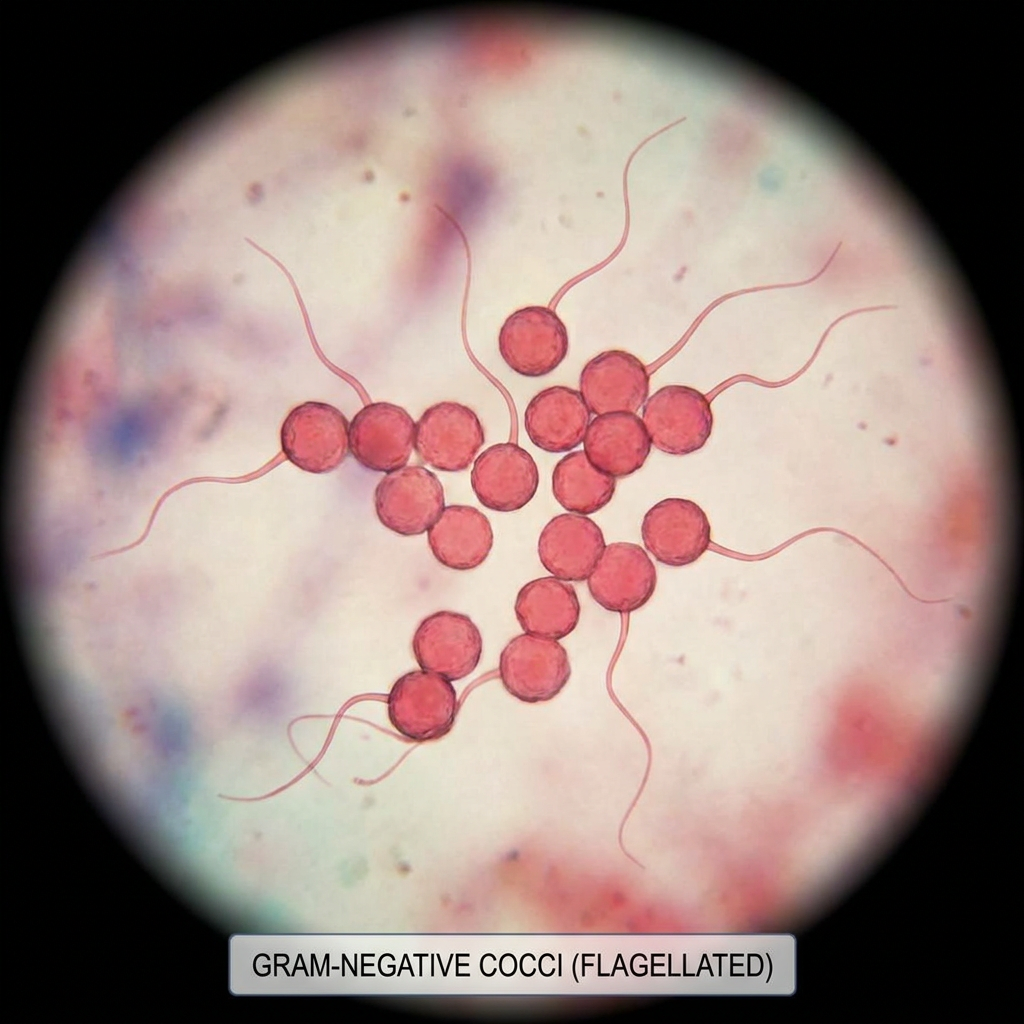
| Gram staining properties | Gram-negative |
| Shape | ovoid |
| Mobility | non-motile |
| Flagellar presence | Not Available |
| Number of membranes | Not Available |
| Ecology, Host, and Life Cycle | |
|---|---|
| Oxygen requirements | anaerobic |
| Optimal temperature | 29 |
| Temperature range | mesophilic |
| Habitat | Not Available |
| Biotic relationship | Not Available |
| Host(s) | Not Available |
| Cell arrangement | Not Available |
| Sporulation | Not Available |
| Energy source | Not Available |
| Pathogenicity | Not Available |
Genome Summary
Akkermansia glycaniphila
Accession NumberNZ_LT629973.1
Gene Summary
Adenine Count
664540 bp
Thymine Count
637461 bp
Guanine Count
866647 bp
Cytosine Count
905430 bp
Genome Length
3074078 bp
Protein-coding Genes
2514 genes
Non-Coding Genes
62 genes
# of Chromosomes/Plasmids
1
Genes
| Name | Locus Tag | UniProt | Strand | Coordinates | Molecular Weight |
|---|---|---|---|---|---|
| hypothetical protein | PYTT_RS13510 | Not Available | + | 2881185 - 2881892 | 26470.8 |
| dead/deah box helicase | PYTT_RS12060 | Not Available | + | 2881880 - 2884237 | 91587.6 |
| hypothetical protein | PYTT_RS12065 | Not Available | + | 2884785 - 2885012 | 8731.57 |
| hypothetical protein | PYTT_RS13515 | Not Available | + | 2885113 - 2885556 | 16778.1 |
| adp-ribosylglycohydrolase family protein | PYTT_RS12070 | Not Available | + | 2885793 - 2886884 | 39650.2 |
| sialate o-acetylesterase | PYTT_RS12075 | Not Available | - | 2887089 - 2888405 | 48517.8 |
| Ncrna_class:rnase_p_rna | Not Available | Not Available | + | 2888622 - 2889018 | Not Available |
| septal ring lytic transglycosylase rlpa family protein | PYTT_RS12085 | Not Available | + | 2889111 - 2889608 | 18484.7 |
| transglycosylase domain-containing protein | PYTT_RS12090 | Not Available | + | 2889587 - 2891977 | 86797.8 |
| beta strand repeat-containing protein | PYTT_RS12095 | Not Available | + | 2892247 - 2894370 | 71323.0 |
Pathways
0 pathways
No pathways found
No metabolic pathways have been associated with this bacterium yet.