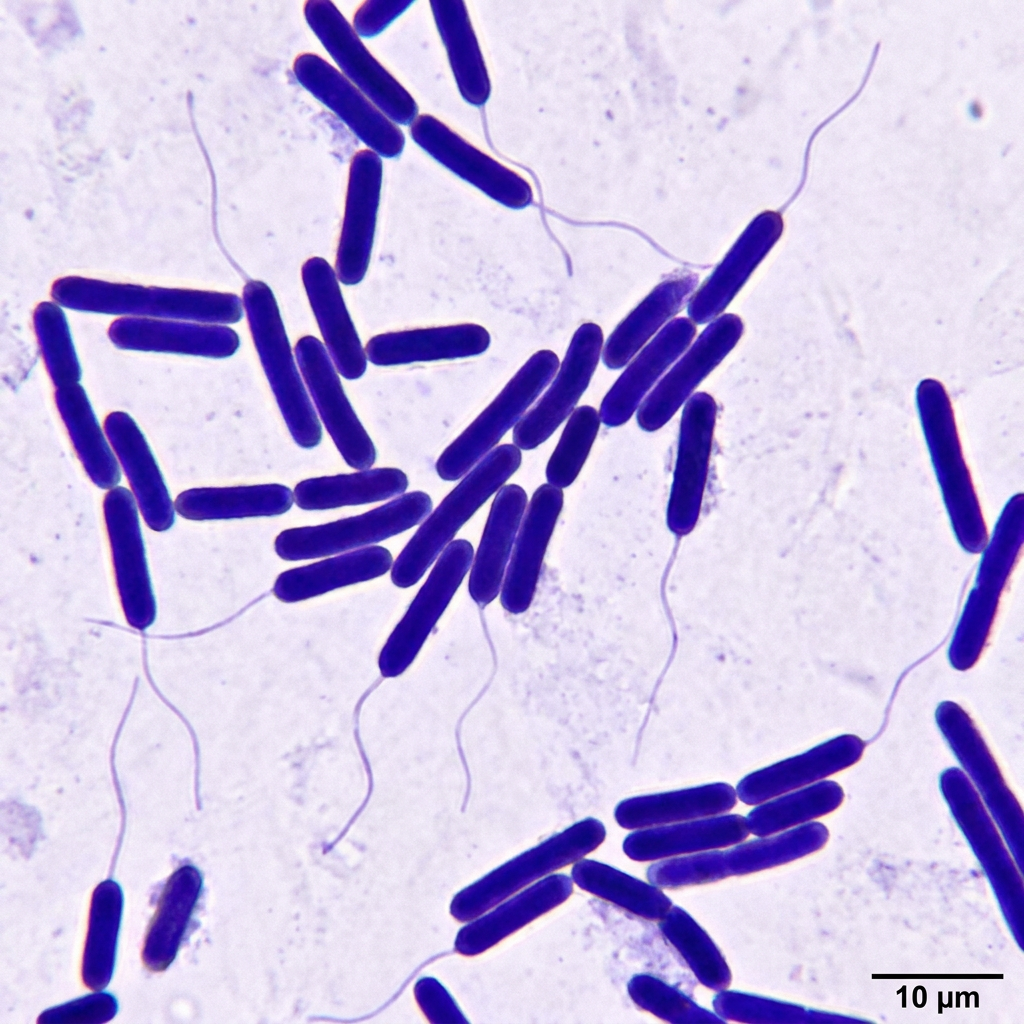
Paraclostridium bifermentans ATCC 19299

Gram-positiveRodNon-motileAnaerobic

Kingdom

Bacillati

Phylum

Bacillota

Class

Clostridia

Order

Peptostreptococcales

Family

Peptostreptococcaceae

Genus

Paraclostridium

Description

Paraclostridium bifermentans ATCC 19299 is a Gram-positive, rod-shaped bacterium characterized by its ability to sporulate and thrive in anaerobic environments. This microbe is classified as a chemoheterotroph, utilizing organic compounds as its energy source, and demonstrates optimal growth at a temperature of 37.0°C, which aligns with the physiological conditions found in warm-blooded animals. Typically residing in the intestinal microflora of various animal hosts, P. bifermentans contributes to the complex ecosystem of gut microbiota, playing a role in fermentation processes within the digestive tract. Its anaerobic requirement highlights the significance of oxygen-limited environments for its survival and metabolic activities. Furthermore, the sporulating ability of this organism suggests an adaptation mechanism for enduring unfavorable conditions, allowing it to persist in the intestinal environment despite fluctuations in local conditions. The presence of P. bifermentans in the gut microbiome raises intriguing questions about its interactions with other microbial species and its potential roles in digestive health and disease. Understanding its specific functions and contributions within the intestinal ecosystem could provide insights into the dynamics of gut microbiota and their implications for host health.

Taxonomy

KingdomBacillati
PhylumBacillota
ClassClostridia
OrderPeptostreptococcales
FamilyPeptostreptococcaceae
GenusParaclostridium
SpeciesParaclostridium bifermentans
StrainNo strain

Profile

Physiology
Gram staining propertiesPositive
ShapeRod
MobilityNo
Flagellar presenceYes
Number of membranesNot Available
Image of Paraclostridium bifermentans ATCC 19299
AI-generated image based on bacteria physiology
Ecology, Host, and Life Cycle
Oxygen requirementsAnaerobic
Optimal temperature37
Temperature rangeMesophilic
HabitatAnimal intestinal microflora
Biotic relationshipNot Available
Host(s)Not Available
Cell arrangementNot Available
SporulationSporulating
Energy sourceChemoheterotroph
PathogenicityNot Available

Genome Summary

Paraclostridium bifermentans ATCC 19299


Gene Summary

Adenine Count

1257903 bp

Thymine Count

1286192 bp

Guanine Count

490960 bp

Cytosine Count

505664 bp

Genome Length

3540719 bp

Protein-coding Genes

3483 genes

Non-Coding Genes

74 genes

# of Chromosomes/Plasmids

1

Genes

NameLocus TagUniProtStrandCoordinatesMolecular Weight
ribosome recycling factorC671_1571Not Available-1568702 - 156925920984.3
ump kinaseC671_1572Not Available-1569284 - 156998825631.2
translation elongation factor tsC671_1573Not Available-1570055 - 157096032949.7
ribosomal protein s2C671_1574Not Available-1571024 - 157179429238.6
d-alanyl-d-alanine carboxypeptidase family proteinC671_1575Not Available-1572110 - 157329744494.2
pentapeptide repeats family proteinC671_1576Not Available-1573375 - 157431936664.8
tyrosine kinase family proteinC671_1577Not Available-1574443 - 157543238075.2
putative peptidoglycan binding domain proteinC671_1578Not Available-1575769 - 157705547332.0
hypothetical proteinC671_1579Not Available-1577165 - 15773176005.25
endonuclease/exonuclease/phosphatase family proteinC671_1580Not Available-1577401 - 157779615437.0

Displaying genes 1571 – 1580 of 3557 in total

Pathways

0 pathways

No pathways found

No metabolic pathways have been associated with this bacterium yet.

Metabolites

351 records
Metabolite IDMetabolite nameStructureCAS number
BASm00190263-phospho-D-glyceroyl phosphateC3H8O10P2Chemical structure of 3-phospho-D-glyceroyl phosphateNULL
Average266.0371Da
Monoisotopic265.9592695Da
BASm0019115Adenosyl cobyrinate a,c diamideC55H73CoN11O15Chemical structure of Adenosyl cobyrinate a,c diamideNULL
Average1187.184Da
Monoisotopic1186.461406Da
BASm0019129PolyphosphateH5O10P3Chemical structure of PolyphosphateNULL
Average257.955Da
Monoisotopic257.909555916Da
BASm0019155HomocysteineC4H9NO2SChemical structure of HomocysteineNULL
Average135.185Da
Monoisotopic135.035399227Da
BASm00191605,10-Methenyltetrahydrofolic acidC20H21N7O6Chemical structure of 5,10-Methenyltetrahydrofolic acidNULL
Average455.424Da
Monoisotopic455.155331439Da
BASm00199285-Methyltetrahydrofolic acidC20H25N7O6Chemical structure of 5-Methyltetrahydrofolic acid134-35-0
Average459.4558Da
Monoisotopic459.186631567Da
BASm0019929CyanideCHNChemical structure of Cyanide57-12-5
Average27.0253Da
Monoisotopic27.010899037Da
BASm00199488-Amino-7-oxononanoateC9H17NO3Chemical structure of 8-Amino-7-oxononanoate4707-58-8
Average187.2362Da
Monoisotopic187.120843415Da
BASm0019965DihydrobiopterinC9H13N5O3Chemical structure of Dihydrobiopterin6779-87-9
Average239.2312Da
Monoisotopic239.101839307Da
BASm0019985Nicotinic acid mononucleotideC11H16NO9PChemical structure of Nicotinic acid mononucleotide321-02-8
Average337.2198Da
Monoisotopic337.056267627Da

Displaying 311–320 of 351 metabolites