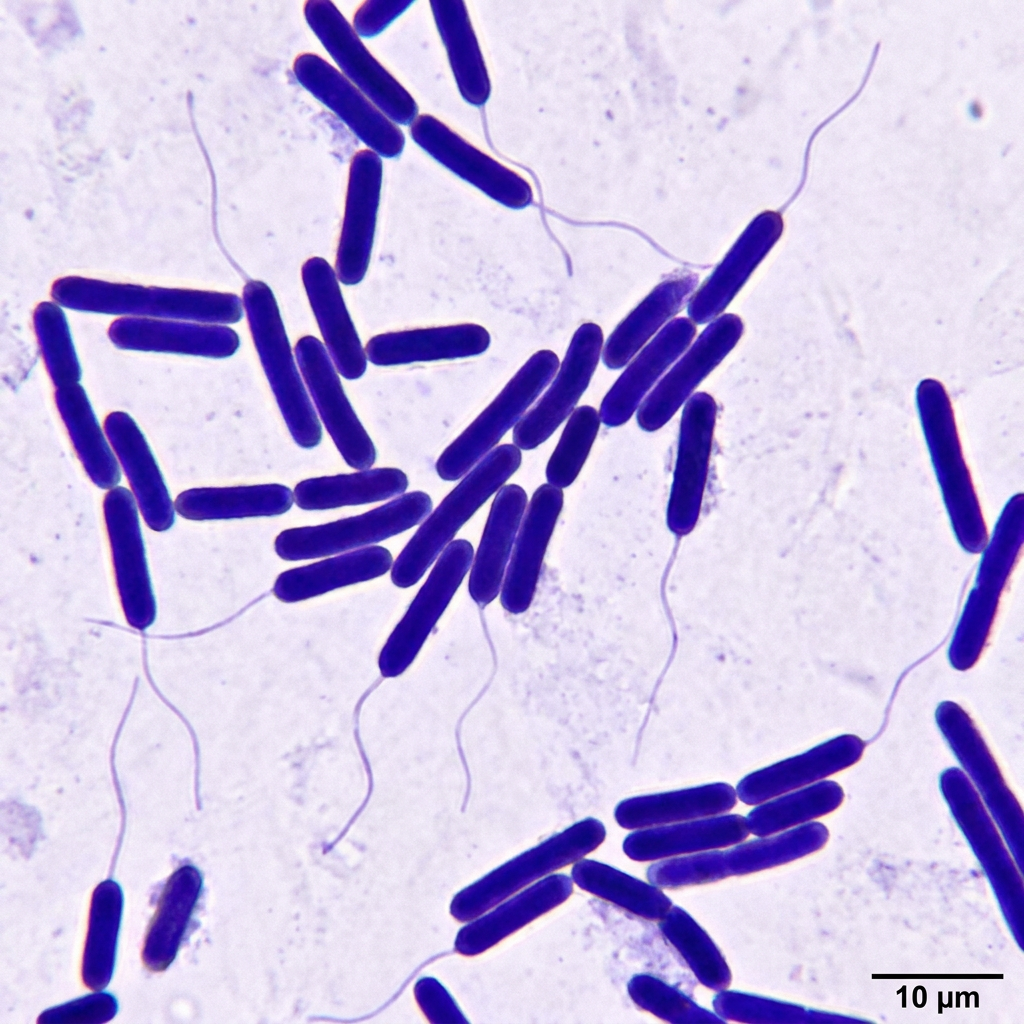
Paraclostridium bifermentans ATCC 19299

Gram-positiveRodNon-motileAnaerobic

Kingdom

Bacillati

Phylum

Bacillota

Class

Clostridia

Order

Peptostreptococcales

Family

Peptostreptococcaceae

Genus

Paraclostridium

Description

Paraclostridium bifermentans ATCC 19299 is a Gram-positive, rod-shaped bacterium characterized by its ability to sporulate and thrive in anaerobic environments. This microbe is classified as a chemoheterotroph, utilizing organic compounds as its energy source, and demonstrates optimal growth at a temperature of 37.0°C, which aligns with the physiological conditions found in warm-blooded animals. Typically residing in the intestinal microflora of various animal hosts, P. bifermentans contributes to the complex ecosystem of gut microbiota, playing a role in fermentation processes within the digestive tract. Its anaerobic requirement highlights the significance of oxygen-limited environments for its survival and metabolic activities. Furthermore, the sporulating ability of this organism suggests an adaptation mechanism for enduring unfavorable conditions, allowing it to persist in the intestinal environment despite fluctuations in local conditions. The presence of P. bifermentans in the gut microbiome raises intriguing questions about its interactions with other microbial species and its potential roles in digestive health and disease. Understanding its specific functions and contributions within the intestinal ecosystem could provide insights into the dynamics of gut microbiota and their implications for host health.

Taxonomy

KingdomBacillati
PhylumBacillota
ClassClostridia
OrderPeptostreptococcales
FamilyPeptostreptococcaceae
GenusParaclostridium
SpeciesParaclostridium bifermentans
StrainNo strain

Profile

Physiology
Gram staining propertiesPositive
ShapeRod
MobilityNo
Flagellar presenceYes
Number of membranesNot Available
Image of Paraclostridium bifermentans ATCC 19299
AI-generated image based on bacteria physiology
Ecology, Host, and Life Cycle
Oxygen requirementsAnaerobic
Optimal temperature37
Temperature rangeMesophilic
HabitatAnimal intestinal microflora
Biotic relationshipNot Available
Host(s)Not Available
Cell arrangementNot Available
SporulationSporulating
Energy sourceChemoheterotroph
PathogenicityNot Available

Genome Summary

Paraclostridium bifermentans ATCC 19299


Gene Summary

Adenine Count

1257903 bp

Thymine Count

1286192 bp

Guanine Count

490960 bp

Cytosine Count

505664 bp

Genome Length

3540719 bp

Protein-coding Genes

3483 genes

Non-Coding Genes

74 genes

# of Chromosomes/Plasmids

1

Genes

NameLocus TagUniProtStrandCoordinatesMolecular Weight
nifu-like n terminal domain proteinC671_1341Not Available+1305439 - 130613124887.0
gggtgrt family proteinC671_1342Not Available+1306154 - 130715235865.8
hypothetical proteinC671_1343Not Available+1307368 - 130778416749.2
nitrogenase component 1 type oxidoreductase family proteinC671_1344Not Available+1308108 - 130933747522.7
hypothetical proteinC671_1345Not Available+1309456 - 130998019695.1
hypothetical proteinC671_1346Not Available+1310116 - 131065219853.0
n-acetylmuramoyl-l-alanine amidase family proteinC671_1347Not Available+1310842 - 131166330187.7
k+-transporting atpase, a subunitC671_1348Not Available+1311835 - 131358063435.0
k+-transporting atpase, b subunitC671_1349Not Available+1313606 - 131566673684.2
k+-transporting atpase, c subunitC671_1350Not Available+1315687 - 131625621248.8

Displaying genes 1341 – 1350 of 3557 in total

Pathways

0 pathways

No pathways found

No metabolic pathways have been associated with this bacterium yet.

Metabolites

351 records
Metabolite IDMetabolite nameStructureCAS number
BASm00188891-Octadec-11-enoyl-sn-glycerol 3-phosphateC21H39O7PChemical structure of 1-Octadec-11-enoyl-sn-glycerol 3-phosphateNULL
Average434.5039Da
Monoisotopic434.243340114Da
BASm00188901-Tetradec-7-enoyl-sn-glycerol 3-phosphateC17H31O7PChemical structure of 1-Tetradec-7-enoyl-sn-glycerol 3-phosphateNULL
Average378.3976Da
Monoisotopic378.180739858Da
BASm00188942-Acyl-sn-glycero-3-phosphoethanolamine (N-C12:0)C17H36NO7PNot availableNULL
Average397.449Da
Monoisotopic397.222939501Da
BASm00188952-Acyl-sn-glycero-3-phosphoethanolamine (N-C14:0)C19H40NO7PNot availableNULL
Average425.503Da
Monoisotopic425.25423963Da
BASm00188962-Acyl-sn-glycero-3-phosphoethanolamine (N-C14:1)C19H35NO7PChemical structure of 2-Acyl-sn-glycero-3-phosphoethanolamine (N-C14:1)NULL
Average420.4575Da
Monoisotopic420.215113991Da
BASm00188972-Acyl-sn-glycero-3-phosphoethanolamine (N-C16:0)C21H44NO7PChemical structure of 2-Acyl-sn-glycero-3-phosphoethanolamine (N-C16:0)NULL
Average453.5503Da
Monoisotopic453.285539279Da
BASm00188982-Acyl-sn-glycero-3-phosphoethanolamine (N-C16:1)C21H39NO7PChemical structure of 2-Acyl-sn-glycero-3-phosphoethanolamine (N-C16:1)NULL
Average448.5106Da
Monoisotopic448.246414119Da
BASm00188992-Acyl-sn-glycero-3-phosphoethanolamine (N-C18:0)C23H48NO7PChemical structure of 2-Acyl-sn-glycero-3-phosphoethanolamine (N-C18:0)NULL
Average481.6035Da
Monoisotopic481.316839407Da
BASm00189002-Acyl-sn-glycero-3-phosphoethanolamine (N-C18:1)C23H43NO7PChemical structure of 2-Acyl-sn-glycero-3-phosphoethanolamine (N-C18:1)NULL
Average476.5638Da
Monoisotopic476.277714247Da
BASm00189012-Acyl-sn-glycero-3-phosphoglycerol (N-C14:0)C20H40O9PChemical structure of 2-Acyl-sn-glycero-3-phosphoglycerol (N-C14:0)NULL
Average455.5Da
Monoisotopic455.24099439Da

Displaying 281–290 of 351 metabolites