
Kingdom
Pseudomonadati
Phylum
Pseudomonadota
Class
Gammaproteobacteria
Order
Vibrionales
Family
Vibrionaceae
Genus
Vibrio
Description
Taxonomy
| Kingdom | Pseudomonadati |
|---|---|
| Phylum | Pseudomonadota |
| Class | Gammaproteobacteria |
| Order | Vibrionales |
| Family | Vibrionaceae |
| Genus | Vibrio |
| Species | Vibrio anguillarum |
| Strain | strain 12B09 |
Profile
| Physiology | |
|---|---|
| Gram staining properties | Negative |
| Shape | CurvedShaped |
| Mobility | Yes |
| Flagellar presence | Not Available |
| Number of membranes | Not Available |
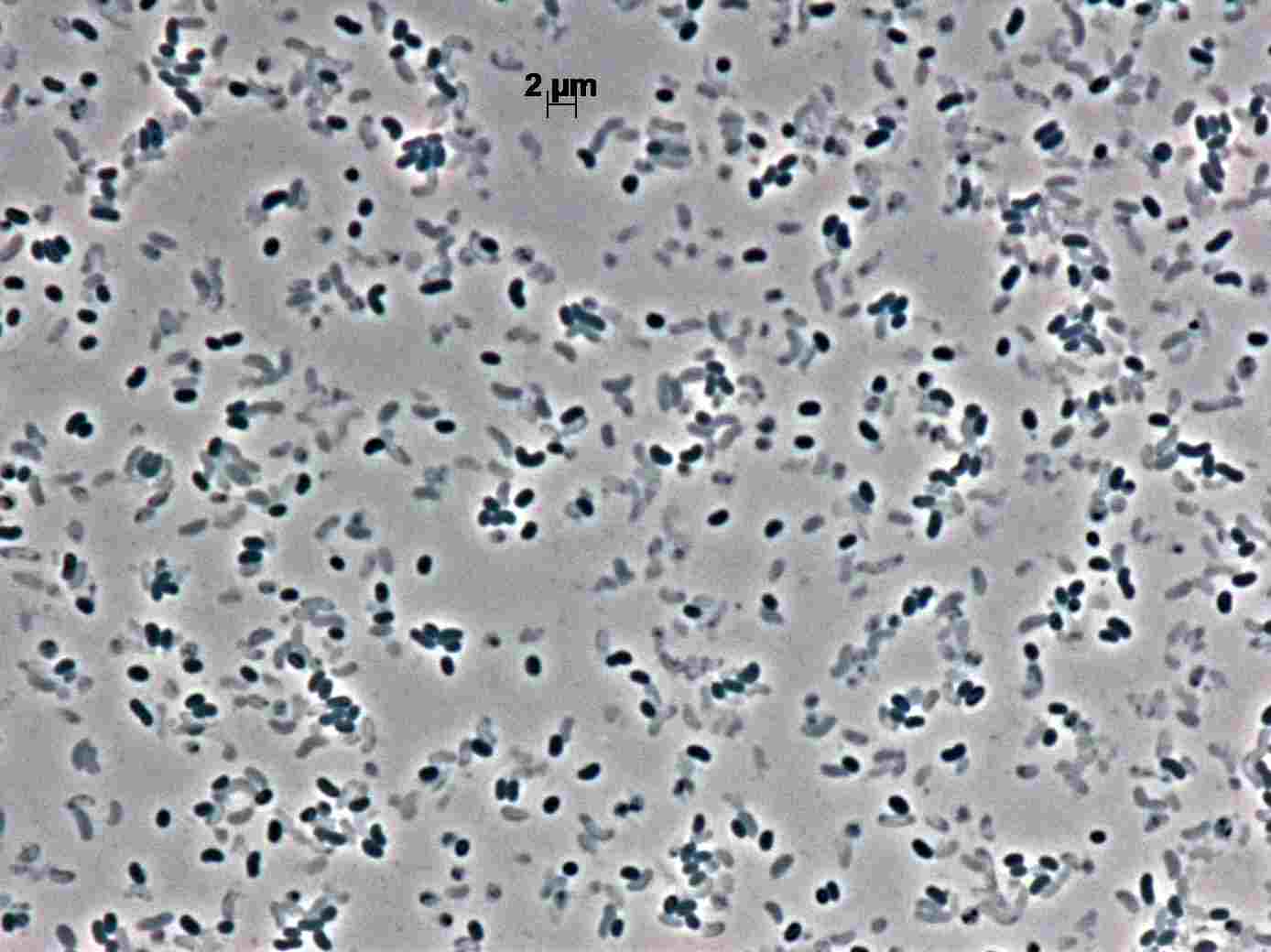
Image source: Wikipedia/Wikimedia
| Ecology, Host, and Life Cycle | |
|---|---|
| Oxygen requirements | Facultative |
| Optimal temperature | Not Available |
| Temperature range | Mesophilic |
| Habitat | HostAssociated |
| Biotic relationship | Free living |
| Host(s) | Homo sapiens |
| Cell arrangement | Singles |
| Sporulation | Nonsporulating |
| Energy source | Heterotroph |
| Pathogenicity | Animal |
Gene Summary
Adenine Count
1121298 bp
Thymine Count
1121020 bp
Guanine Count
897551 bp
Cytosine Count
905695 bp
Genome Length
4097728 bp
Protein-coding Genes
3439 genes
Non-Coding Genes
85 genes
# of Chromosomes/Plasmids
1
Genes
| Name | Locus Tag | UniProt ID | Strand Orientation | Gene Start/End | Protein Molecular Weight |
|---|---|---|---|---|---|
| transketolase | A1QY_00455 | Not Available | Negative | 1151315 - 1152930 | 58363.0 |
| Trna-leu | Not Available | Not Available | Positive | 1153299 - 1153383 | Not Available |
| Trna-gln | Not Available | Not Available | Positive | 1153465 - 1153539 | Not Available |
| hypothetical protein | A1QY_00470 | Not Available | Positive | 1153622 - 1153963 | 12861.0 |
| fluoroquinolone resistance protein | A1QY_00475 | Not Available | Positive | 1154099 - 1154755 | 25051.5 |
| gamma carbonic anhydrase family protein | A1QY_00480 | Not Available | Positive | 1155037 - 1155585 | 19694.7 |
| transcriptional regulator | A1QY_00485 | Not Available | Negative | 1155586 - 1155852 | 9910.63 |
| shikimate dehydrogenase | A1QY_00490 | Not Available | Negative | 1155855 - 1156685 | 30009.9 |
| coproporphyrinogen iii oxidase | A1QY_00495 | Not Available | Negative | 1156750 - 1157664 | 34977.1 |
| threonylcarbamoyl-amp synthase | A1QY_00500 | Not Available | Negative | 1157685 - 1158242 | 20110.9 |
Pathways
0 pathways
No pathways found
No metabolic pathways have been associated with this bacterium yet.


