Leuconostoc gelidum JB7

Gram-positiveFacultative anaerobe

Kingdom

Bacillati

Phylum

Bacillota

Class

Bacilli

Order

Lactobacillales

Family

Lactobacillaceae

Genus

Leuconostoc

Description

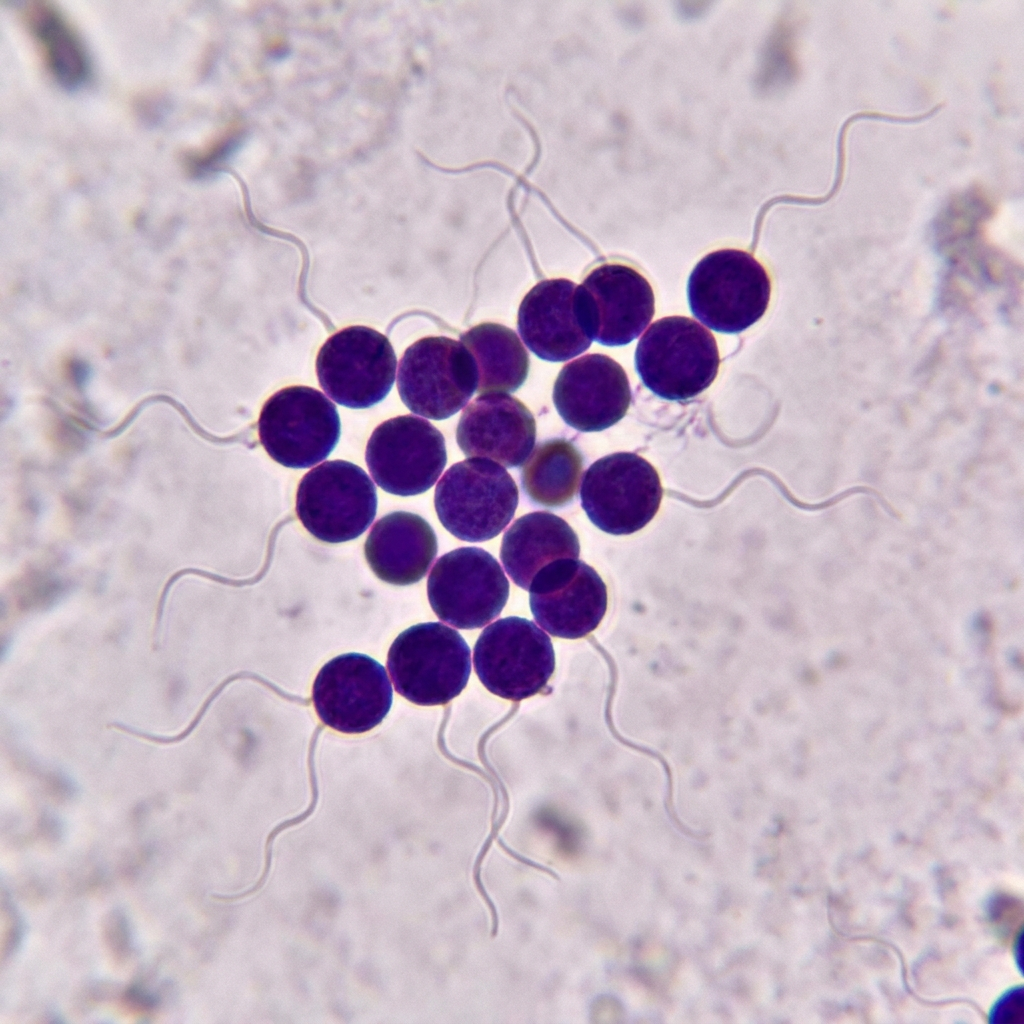
Leuconostoc gelidum JB7 is a Gram-positive, coccoid-shaped bacterium that thrives in low-temperature environments, categorizing it as a psychrotroph. It is a chemoheterotroph, deriving energy from organic compounds, and it exhibits facultative anaerobic metabolism, allowing it to grow in both aerobic and anaerobic conditions.As a psychrotroph, Leuconostoc gelidum JB7 is particularly well-adapted to cold temperatures, often found in various food preservation settings, such as fermented dairy products and cold storage environments. The Gram-positive characteristic indicates a thick peptidoglycan layer in its cell wall, which not only provides structural integrity but also helps it survive harsh conditions, including those found in refrigerated foods. As a coccoid-shaped microbe, Leuconostoc gelidum JB7 displays a spherical form, which is typical for many lactic acid bacteria. This shape contributes to its ability to form clusters or chains, enhancing its survival and metabolic efficiency in diverse ecological niches. Being classified as a chemoheterotroph, it relies on organic substrates for energy and carbon. This characteristic allows it to play a significant role in the fermentation processes of various foods, contributing to flavor, texture, and preservation. Moreover, its facultative anaerobic nature permits it to adapt to varying oxygen levels, making it a versatile organism in both natural ecosystems and food production contexts. Leuconostoc gelidum JB7 has been shown to produce exopolysaccharides, which can enhance the texture and mouthfeel of fermented products. Its presence is often beneficial in food fermentation, contributing not only to preservation but also to the development of distinctive flavors in products like kimchi and sauerkraut, showcasing its importance in both food science and microbiology.

Taxonomy

KingdomBacillati
PhylumBacillota
ClassBacilli
OrderLactobacillales
FamilyLactobacillaceae
GenusLeuconostoc
SpeciesLeuconostoc gelidum
StrainNo strain

Profile

Physiology
Gram staining propertiesPositive
ShapeNot Available
MobilityNot Available
Flagellar presenceNot Available
Number of membranesNot Available
Ecology, Host, and Life Cycle
Oxygen requirementsFacultative anaerobe
Optimal temperatureNot Available
Temperature rangeNot Available
HabitatNot Available
Biotic relationshipNot Available
Host(s)Not Available
Cell arrangementNot Available
SporulationNot Available
Energy sourceNot Available
PathogenicityNot Available

Genome Summary

Leuconostoc gelidum JB7

Accession NumberNC_018631.1

Gene Summary

Adenine Count

600998 bp

Thymine Count

598020 bp

Guanine Count

348339 bp

Cytosine Count

346142 bp

Genome Length

1893499 bp

Protein-coding Genes

1801 genes

Non-Coding Genes

82 genes

# of Chromosomes/Plasmids

1

Genes

NameLocus TagUniProtStrandCoordinatesMolecular Weight
hypothetical proteinC269_RS09035Not Available-1864059 - 186448713839.2
tigr01457 family had-type hydrolaseC269_RS09040Q5HQN3+1864759 - 186553227912.5
mfs transporterC269_RS09045P94577-1865570 - 186676343902.9
Trna-ileNot AvailableNot Available+1867148 - 1867221Not Available
Trna-glyNot AvailableNot Available+1867252 - 1867322Not Available
Trna-pheNot AvailableNot Available+1867357 - 1867429Not Available
Trna-aspNot AvailableNot Available+1867455 - 1867528Not Available
Trna-metNot AvailableNot Available+1867531 - 1867604Not Available
Trna-serNot AvailableNot Available+1867632 - 1867721Not Available
Trna-metNot AvailableNot Available+1867755 - 1867828Not Available

Displaying genes 1841 – 1850 of 1883 in total

Pathways

0 pathways

No pathways found

No metabolic pathways have been associated with this bacterium yet.
Metabolites

285 records
Metabolite IDMetabolite nameStructureCAS number
BASm0000237(R)-4'-phosphopantothenateC9H18NO8PChemical structure of (R)-4'-phosphopantothenateNot available
Average299.2149Da
Monoisotopic299.0770031Da
BASm00002502,5-didehydro-D-gluconateC6H7O7Chemical structure of 2,5-didehydro-D-gluconate53736-12-2
Average191.1156Da
Monoisotopic191.019177578Da
BASm00002512-dehydropantoateC6H9O4Chemical structure of 2-dehydropantoateNot available
Average145.1333Da
Monoisotopic145.050083776Da
BASm0000377(S)-malateC4H4O5Chemical structure of (S)-malateNot available
Average132.0716Da
Monoisotopic132.005873238Da
BASm0000387(6R)-5,10-methylene-5,6,7,8-tetrahydrofolateC20H21N7O6Chemical structure of (6R)-5,10-methylene-5,6,7,8-tetrahydrofolateNot available
Average455.432Da
Monoisotopic455.1564286Da
BASm0000400(R)-10-hydroxyoctadecanoateC18H35O3Chemical structure of (R)-10-hydroxyoctadecanoateNot available
Average299.476Da
Monoisotopic299.2591686Da
BASm0000403(S)-acetoinC4H8O2Chemical structure of (S)-acetoinNot available
Average88.1051Da
Monoisotopic88.0524295Da
BASm00007164-methylsulfanyl-2-oxobutanoateC5H7O3SChemical structure of 4-methylsulfanyl-2-oxobutanoateNot available
Average147.17Da
Monoisotopic147.012138839Da
BASm00008763-hydroxypyruvateC3H3O4Chemical structure of 3-hydroxypyruvateNot available
Average103.054Da
Monoisotopic103.003682157Da
BASm0000893crotonobetaineC7H13NO2Chemical structure of crotonobetaine927-89-9
Average143.1836Da
Monoisotopic143.0946287Da

Displaying 1–10 of 285 metabolites