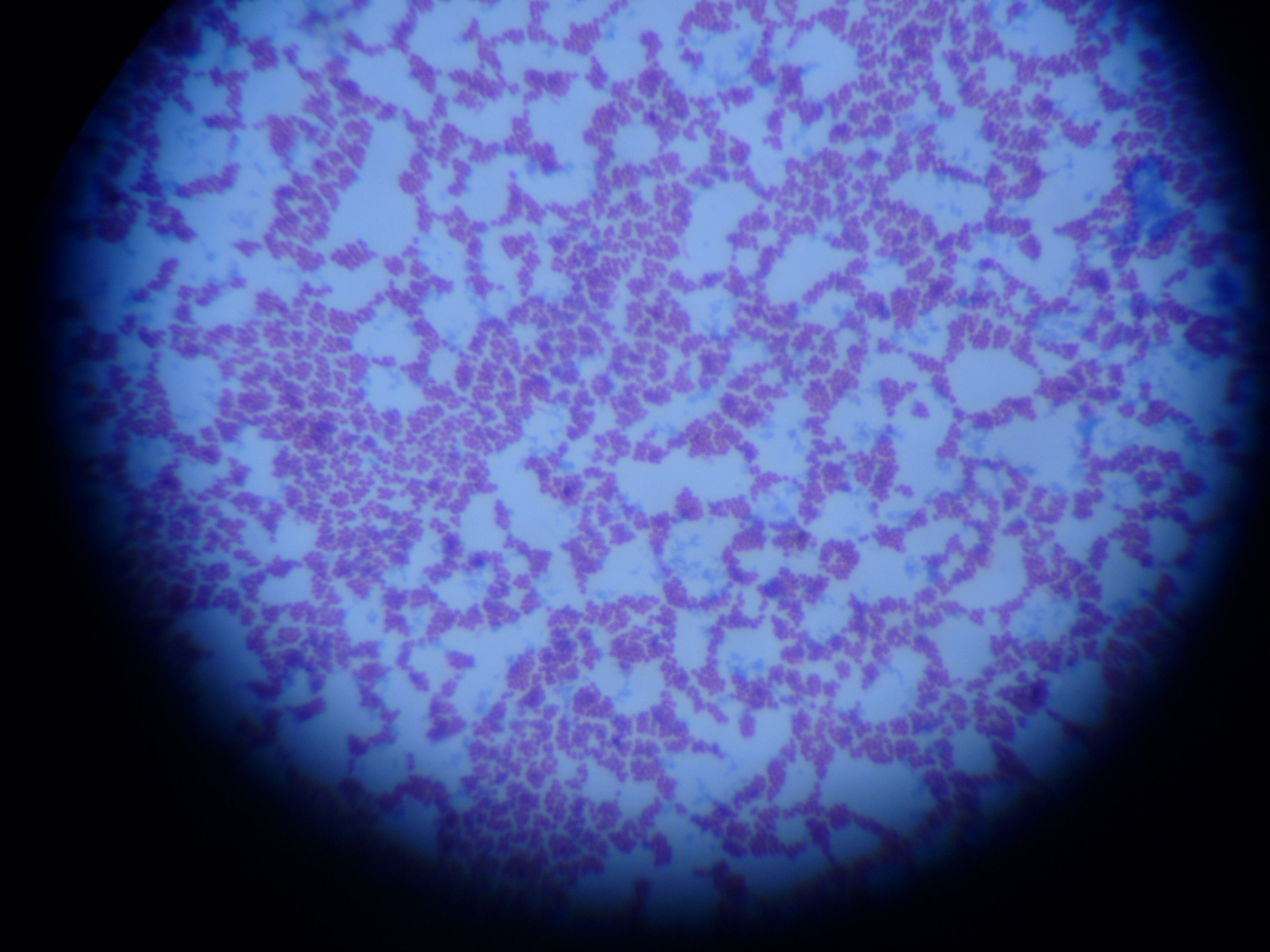
Streptococcus parasanguinis ATCC 15912

Gram-positiveCocciNon-motileFacultative

Kingdom

Bacillati

Phylum

Bacillota

Class

Bacilli

Order

Lactobacillales

Family

Streptococcaceae

Genus

Streptococcus

Description

Streptococcus parasanguinis ATCC 15912 is a mesophilic, facultative anaerobic, gram-positive coccus that thrives in temperatures ranging from 20°C to 40°C. As a facultative anaerobe, it can grow in the presence or absence of oxygen, although it prefers aerobic conditions. Its metabolism is heterotrophic, meaning it obtains energy by breaking down organic compounds. Specifically, it uses fermentation to produce energy, utilizing the substrate glucose and other carbohydrates. Streptococcus parasanguinis ATCC 15912 is spherical in shape, typically ranging from 0.5 to 1.0 μm in diameter, and forms chains or pairs. Its Gram-staining properties are characteristic of gram-positive bacteria, where the cell wall is composed of a thick layer of peptidoglycan. As an inhabitant of the oral cavity, this microbe is found on the surface of teeth and along the gingiva. It is also detected in the saliva, tongue, and palatal mucosa. In addition, it has been isolated from blood and other body fluids, particularly in cases of bacteremia. Streptococcus parasanguinis ATCC 15912 is a common commensal microbe, co-existing with other oral bacteria and playing a role in the development of dental plaque. Despite its non-pathogenic nature, it has been implicated in diseases such as periodontitis and endocarditis. Moreover, it has been shown to be potentially involved in the early stages of cardiovascular disease. This microbe's ability to form biofilms, adhere to surfaces, and produce extracellular enzymes contributes to its pathogenic potential. In summary, Streptococcus parasanguinis ATCC 15912 is a versatile, opportunistic microbe that thrives in various environments, from the oral cavity to blood and other body fluids. Its complex interactions with other microorganisms and host tissues make it an important focus of research in the fields of oral and cardiovascular health.

Taxonomy

KingdomBacillati
PhylumBacillota
ClassBacilli
OrderLactobacillales
FamilyStreptococcaceae
GenusStreptococcus
SpeciesStreptococcus parasanguinis
StrainATCC 15912

Profile

Physiology
Gram staining propertiesPositive
ShapeCocci
MobilityNo
Flagellar presenceNot Available
Number of membranesNot Available
Image of Streptococcus parasanguinis ATCC 15912
Image source: Wikipedia/Wikimedia
Ecology, Host, and Life Cycle
Oxygen requirementsFacultative
Optimal temperatureNot Available
Temperature rangeMesophilic
HabitatHostAssociated
Biotic relationshipFree living
Host(s)Homo sapiens
Cell arrangementChains-Pairs
SporulationNonsporulating
Energy sourceNot Available
PathogenicityNot Available

Genome Summary

Streptococcus parasanguinis ATCC 15912


Gene Summary

Adenine Count

627187 bp

Thymine Count

627865 bp

Guanine Count

451609 bp

Cytosine Count

446991 bp

Genome Length

2153652 bp

Protein-coding Genes

1973 genes

Non-Coding Genes

77 genes

# of Chromosomes/Plasmids

1

Genes

NameLocus TagUniProtStrandCoordinatesMolecular Weight
methionyl-trna formyltransferaseHMPREF0833_RS10095Not Available+2142037 - 214297233937.3
16s rrna (cytosine(967)-c(5))-methyltransferase rsmbHMPREF0833_RS10100Not Available+2142962 - 214427549655.0
stp1/irep family pp2c-type ser/thr phosphataseHMPREF0833_RS10105Not Available+2144297 - 214503727134.8
stk1 family pasta domain-containing ser/thr kinaseHMPREF0833_RS10110Not Available+2145034 - 214690268732.7
cap domain-containing proteinHMPREF0833_RS10115Not Available+2147505 - 214929568805.3
cell wall-active antibiotics response protein liafHMPREF0833_RS10120Not Available+2149470 - 215016526966.7
sensor histidine kinaseHMPREF0833_RS10125Not Available+2150162 - 215117838785.6
response regulator transcription factorHMPREF0833_RS10130Not Available+2151175 - 215180723749.7
cof-type had-iib family hydrolaseHMPREF0833_RS10135Not Available+2151852 - 215325251938.9
s1 rna-binding domain-containing proteinHMPREF0833_RS10140Not Available+2153254 - 215361913703.4

Displaying genes 2041 – 2050 of 2050 in total

Metabolites

194 records
Metabolite IDMetabolite nameStructureCAS number
BASm0000237(R)-4'-phosphopantothenateC9H18NO8PChemical structure of (R)-4'-phosphopantothenateNot available
Average299.2149Da
Monoisotopic299.0770031Da
BASm00002512-dehydropantoateC6H9O4Chemical structure of 2-dehydropantoateNot available
Average145.1333Da
Monoisotopic145.050083776Da
BASm0000377(S)-malateC4H4O5Chemical structure of (S)-malateNot available
Average132.0716Da
Monoisotopic132.005873238Da
BASm0000989GlycerolC3H8O3Chemical structure of Glycerol56-81-5
Average92.0938Da
Monoisotopic92.04734412Da
BASm0001167triphosphateO10P3Chemical structure of triphosphate14127-68-5
Average252.9153Da
Monoisotopic252.8704308Da
BASm0001639CobinamideC48H72CoN11O8Chemical structure of Cobinamide13497-85-3
Average990.0874Da
Monoisotopic989.4897335Da
BASm0001661Cu(2+)CuChemical structure of Cu(2+)7440-50-8
Average63.546Da
Monoisotopic62.929601079Da
BASm0002051D-fructoseC6H12O6Chemical structure of D-fructose57-48-7
Average180.1559Da
Monoisotopic180.0633881Da
BASm00022412-demethylmenaquinone-8C50H70O2Chemical structure of 2-demethylmenaquinone-8Not available
Average703.0896Da
Monoisotopic702.5375815Da
BASm0002282(2R)-2,3-dihydroxy-3-methylbutanoateC5H9O4Chemical structure of (2R)-2,3-dihydroxy-3-methylbutanoateNot available
Average133.1226Da
Monoisotopic133.0500838Da

Displaying 1–10 of 194 metabolites