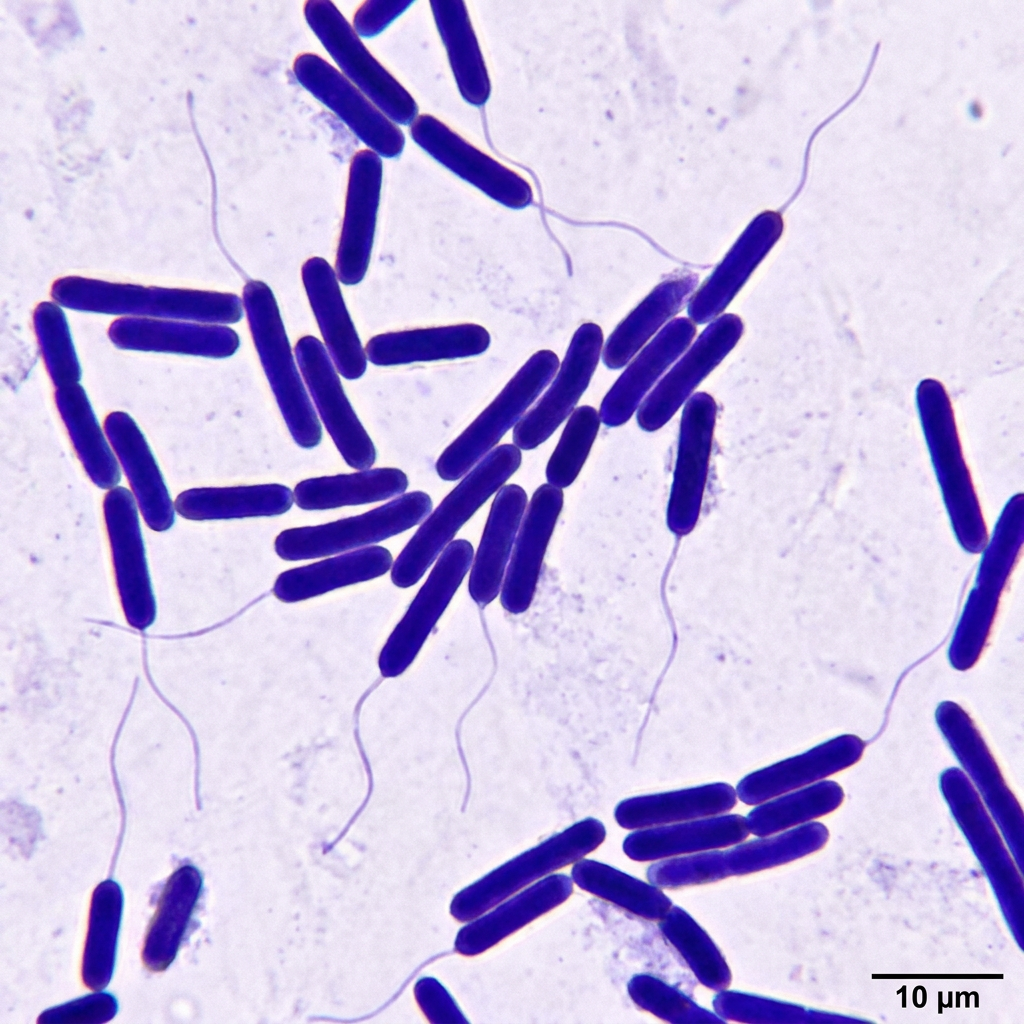
Bacillus cereus B4264

Gram-positiveRodMotileAerobe

Kingdom

Bacillati

Phylum

Bacillota

Class

Bacilli

Order

Caryophanales

Family

Bacillaceae

Genus

Bacillus

Description

Bacillus cereus B4264 is a Gram-positive, rod-shaped bacterium that thrives in mesophilic temperature ranges, making it a facultative anaerobe and a chemoheterotroph. This microorganism is characterized by its ability to form endospores, which contribute to its resilience and adaptability in a variety of environments. Found in diverse habitats, such as soil, water, and even within the gastrointestinal tracts of various organisms, B. cereus can occupy numerous body sites, highlighting its ecological versatility. As a Gram-positive bacterium, B. cereus retains the crystal violet stain used in the Gram staining process, which is indicative of its thick peptidoglycan layer. Its rod-shaped morphology allows for efficient motility and colonization, particularly in nutrient-rich environments. Being mesophilic, it optimally grows at moderate temperatures, typically between 30°C and 37°C, which aligns with its presence in food products and environments conducive to human activity. As a facultative anaerobe, B. cereus can switch between anaerobic and aerobic respiration, enabling it to thrive in fluctuating oxygen levels. This metabolic flexibility is particularly advantageous when it colonizes food sources, where oxygen availability may vary. As a chemoheterotroph, it derives energy from organic compounds, allowing it to utilize a wide range of nutrients for growth and proliferation. Bacillus cereus B4264 is often associated with foodborne illnesses, causing gastrointestinal issues after consumption of contaminated food, particularly rice and other starchy foods. This strain is notable not only for its pathogenic potential but also for its production of various enzymes, including proteases and phospholipases, which contribute to its ability to break down organic matter. Additionally, some strains are being investigated for biotechnological applications, particularly in agriculture for their potential as biopesticides and biofertilizers. Through its multifaceted capabilities, B. cereus B4264 underscores the complex role of microorganisms in both health and industry.

Taxonomy

KingdomBacillati
PhylumBacillota
ClassBacilli
OrderCaryophanales
FamilyBacillaceae
GenusBacillus
SpeciesBacillus cereus
StrainB4264

Profile

Physiology
Gram staining propertiesPositive
ShapeRod
MobilityYes
Flagellar presenceYes
Number of membranes1
Image of Bacillus cereus B4264
Ecology, Host, and Life Cycle
Oxygen requirementsAerobe
Optimal temperature37
Temperature rangeMesophilic
HabitatMultiple
Biotic relationshipFree living
Host(s)Homo sapiens
Cell arrangementChains
SporulationSporulating
Energy sourceNot Available
PathogenicityYes

Genome Summary

Bacillus cereus B4264

Accession NumberNC_011725.1

Gene Summary

Adenine Count

1750304 bp

Thymine Count

1755619 bp

Guanine Count

954538 bp

Cytosine Count

958575 bp

Genome Length

5419036 bp

Protein-coding Genes

4768752 genes

Non-Coding Genes

650284 genes

# of Chromosomes/Plasmids

1

Genes

NameLocus TagUniProtStrandCoordinatesMolecular Weight
AttlNot AvailableNot Available+2501128 - 2501139Not Available
Hypothetical proteinBCB4264_RS12740Not Available+2507451 - 250771410061.5
Hypothetical proteinBCB4264_RS12745Not Available+2508272 - 250859211293.2
site-specific integraseBCB4264_RS29120Not Available+2508738 - 25088725150.37
Hypothetical proteinBCB4264_RS12750Not Available+2509082 - 250956718213.5
AttlNot AvailableNot Available+2509607 - 2509618Not Available
Hypothetical proteinBCB4264_RS12755Not Available+2509876 - 251057728085.8
IntegraseBCB4264_RS12760Q8R890-2510616 - 251172542282.7
AttlNot AvailableNot Available+2512132 - 2512143Not Available
Helix-turn-helix proteinBCB4264_RS12765Not Available+2512480 - 251368847070.2

Displaying genes 1 – 10 of 5511 in total

Pathways

1441 pathways

Metabolites

183 records
Metabolite IDMetabolite nameStructureCAS number
BASm0000232(4S)-perillyl alcoholC10H16OChemical structure of (4S)-perillyl alcoholNot available
Average152.237Da
Monoisotopic152.1201151Da
BASm0000237(R)-4'-phosphopantothenateC9H18NO8PChemical structure of (R)-4'-phosphopantothenateNot available
Average299.2149Da
Monoisotopic299.0770031Da
BASm00002512-dehydropantoateC6H9O4Chemical structure of 2-dehydropantoateNot available
Average145.1333Da
Monoisotopic145.050083776Da
BASm00002543-hydroxy-2-methylpropanoateC4H7O3Chemical structure of 3-hydroxy-2-methylpropanoateNot available
Average103.098Da
Monoisotopic103.0400677Da
BASm0000377(S)-malateC4H4O5Chemical structure of (S)-malateNot available
Average132.0716Da
Monoisotopic132.005873238Da
BASm0000387(6R)-5,10-methylene-5,6,7,8-tetrahydrofolateC20H21N7O6Chemical structure of (6R)-5,10-methylene-5,6,7,8-tetrahydrofolateNot available
Average455.432Da
Monoisotopic455.1564286Da
BASm00005275-oxopentanoateC5H7O3Chemical structure of 5-oxopentanoateNot available
Average115.109Da
Monoisotopic115.040067665Da
BASm00007164-methylsulfanyl-2-oxobutanoateC5H7O3SChemical structure of 4-methylsulfanyl-2-oxobutanoateNot available
Average147.17Da
Monoisotopic147.012138839Da
BASm0000719chloramphenicol 3-acetateC13H14Cl2N2O6Chemical structure of chloramphenicol 3-acetateNot available
Average365.16Da
Monoisotopic364.0228916Da
BASm0000976enol-oxaloacetateC4H2O5Chemical structure of enol-oxaloacetateNot available
Average130.056Da
Monoisotopic129.9913203Da

Displaying 1–10 of 183 metabolites