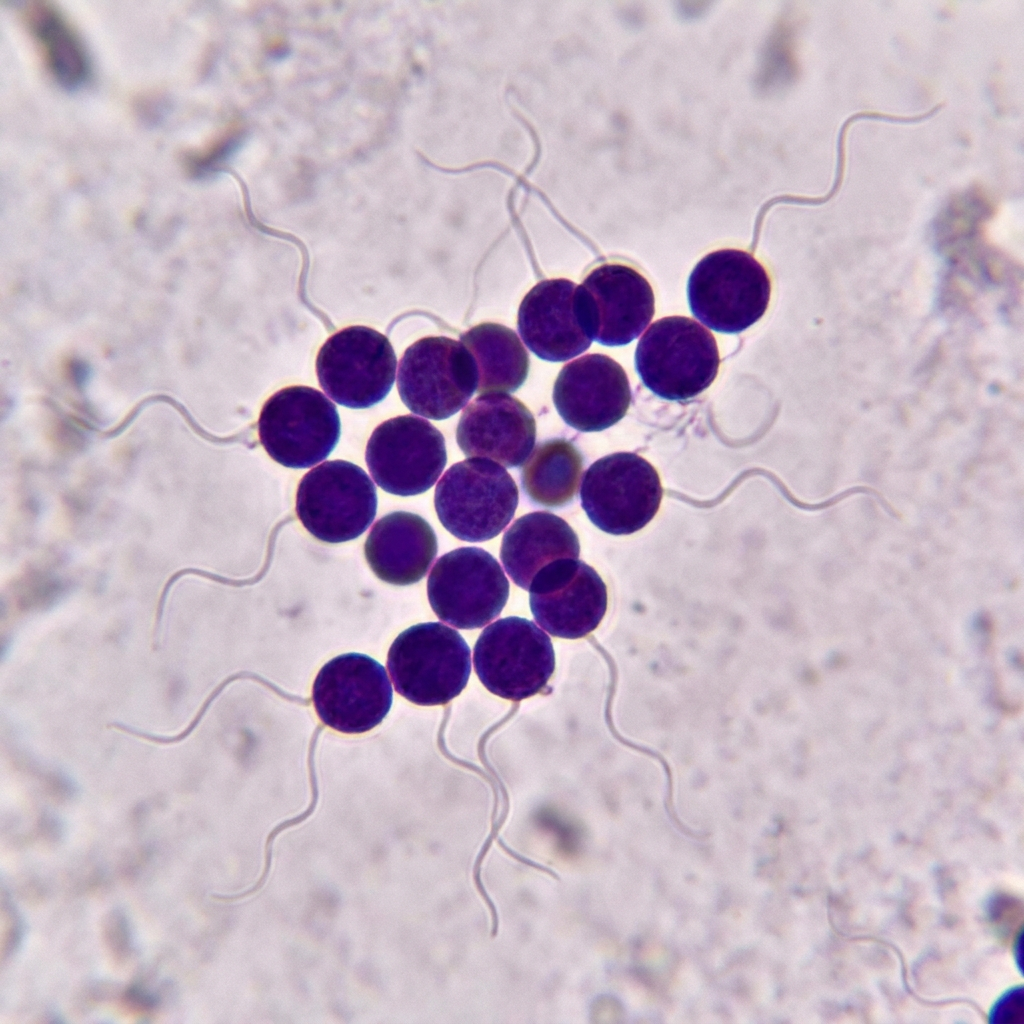
Streptococcus mitis B6

Gram-positiveCocciNon-motileAerobic

Kingdom

Bacillati

Phylum

Bacillota

Class

Bacilli

Order

Lactobacillales

Family

Streptococcaceae

Genus

Streptococcus

Description

Streptococcus mitis B6 is a Gram-positive, heterotrophic bacterium that thrives in a temperature range of mesophilic, between 25-40°C. This microbe is capable of chemosynthesis, utilizing organic molecules as its energy source, and fermenting them to produce energy. Specifically, S. mitis B6 is a facultative anaerobe, meaning it can survive in both the presence and absence of oxygen. In the absence of oxygen, it can ferment carbohydrates and proteins to produce energy. However, in the presence of oxygen, it can perform aerobic respiration. In terms of morphology, S. mitis B6 is a coccus, meaning it has a spherical shape. It typically exists in pairs or chains. This microbe is found in various body sites, including the mucous membranes, skin, and respiratory tract of humans and animals. Specifically, it has been isolated from the oral cavity, nasopharynx, and genital tract. Streptococcus mitis B6 is a gram-positive bacteria, which means that it has a thick peptidoglycan layer in its cell wall. This layer is composed of a peptidoglycan backbone with alternating units of N-acetylglucosamine and N-acetylmuramic acid. The gram-positive classification is an important feature, as it determines the staining properties of the microbe. This microbe is a part of the oral flora and is often found in the dental plaque of humans. It has been associated with dental caries, but its exact role is still unclear. S. mitis B6 is also capable of adhering to tooth surfaces and modifying the local environment to create a niche for itself. In recent studies, S. mitis B6 has been found to produce bioactive compounds that inhibit the growth of other bacteria. This ability to produce antimicrobial peptides may contribute to its ability to colonize the oral cavity and establish itself as a member of the oral flora. Furthermore, research has shown that this microbe is capable of inducing an immune response in the host, leading to the production of antibodies that recognize its surface antigens. Overall, Streptococcus mitis B6 is a fascinating microbe that plays an important role in the oral ecosystem and continues to be a subject of interest in research.

Taxonomy

KingdomBacillati
PhylumBacillota
ClassBacilli
OrderLactobacillales
FamilyStreptococcaceae
GenusStreptococcus
SpeciesStreptococcus mitis
StrainB6

Profile

Physiology
Gram staining propertiesPositive
ShapeCocci
MobilityNo
Flagellar presenceYes
Number of membranes1
Image of Streptococcus mitis B6
Ecology, Host, and Life Cycle
Oxygen requirementsAerobic
Optimal temperatureNot Available
Temperature rangeMesophilic
HabitatHostAssociated
Biotic relationshipFree living
Host(s)Homo sapiens
Cell arrangementChains-Pairs
SporulationNonsporulating
Energy sourceNot Available
PathogenicityNo

Genome Summary

Streptococcus mitis B6

Accession NumberNC_013853.1

Gene Summary

Adenine Count

642677 bp

Thymine Count

645737 bp

Guanine Count

429355 bp

Cytosine Count

428842 bp

Genome Length

2146611 bp

Protein-coding Genes

1993 genes

Non-Coding Genes

139 genes

# of Chromosomes/Plasmids

1

Genes

NameLocus TagUniProtStrandCoordinatesMolecular Weight
Dna-binding proteinSMI_RS02235Not Available+413375 - 41386318735.6
Hypothetical proteinSMI_RS02240Not Available+413865 - 41414310290.9
Hypothetical proteinSMI_RS02245Not Available+414156 - 4143808857.54
Transcriptional regulatorSMI_RS02250Not Available-414401 - 41475413632.3
Transcriptional regulatorSMI_RS02255Not Available-414738 - 4149537838.39
Hypothetical proteinSMI_RS02260Not Available+415084 - 41553017288.1
Trna-other;Not AvailableNot Available+415776 - 415854Not Available
Phage terminase small subunitSMI_RS02270Not Available+415901 - 41638618447.7
Putative terminase large subunitSMI_RS02275Not Available+416376 - 41763248706.6
Phage portal protein, spp1SMI_RS02280Not Available+417647 - 41907155528.2

Displaying genes 31 – 40 of 2132 in total

Pathways

880 pathways

Metabolites

171 records
Metabolite IDMetabolite nameStructureCAS number
BASm0000237(R)-4'-phosphopantothenateC9H18NO8PChemical structure of (R)-4'-phosphopantothenateNot available
Average299.2149Da
Monoisotopic299.0770031Da
BASm00002512-dehydropantoateC6H9O4Chemical structure of 2-dehydropantoateNot available
Average145.1333Da
Monoisotopic145.050083776Da
BASm0000377(S)-malateC4H4O5Chemical structure of (S)-malateNot available
Average132.0716Da
Monoisotopic132.005873238Da
BASm0000989GlycerolC3H8O3Chemical structure of Glycerol56-81-5
Average92.0938Da
Monoisotopic92.04734412Da
BASm0001167triphosphateO10P3Chemical structure of triphosphate14127-68-5
Average252.9153Da
Monoisotopic252.8704308Da
BASm0001639CobinamideC48H72CoN11O8Chemical structure of Cobinamide13497-85-3
Average990.0874Da
Monoisotopic989.4897335Da
BASm0001661Cu(2+)CuChemical structure of Cu(2+)7440-50-8
Average63.546Da
Monoisotopic62.929601079Da
BASm00022412-demethylmenaquinone-8C50H70O2Chemical structure of 2-demethylmenaquinone-8Not available
Average703.0896Da
Monoisotopic702.5375815Da
BASm0002282(2R)-2,3-dihydroxy-3-methylbutanoateC5H9O4Chemical structure of (2R)-2,3-dihydroxy-3-methylbutanoateNot available
Average133.1226Da
Monoisotopic133.0500838Da
BASm0002780orotidine 5'-phosphateC10H10N2O11PNot available2149-82-8
Average365.168Da
Monoisotopic365.003866888Da

Displaying 1–10 of 171 metabolites