Kingdom
Pseudomonadati
Phylum
Pseudomonadota
Class
Alphaproteobacteria
Order
Hyphomicrobiales
Family
Brucellaceae
Genus
Brucella
Description
Taxonomy
| Kingdom | Pseudomonadati |
|---|---|
| Phylum | Pseudomonadota |
| Class | Alphaproteobacteria |
| Order | Hyphomicrobiales |
| Family | Brucellaceae |
| Genus | Brucella |
| Species | Brucella abortus |
| Strain | 9-941 |
Profile
| Physiology | |
|---|---|
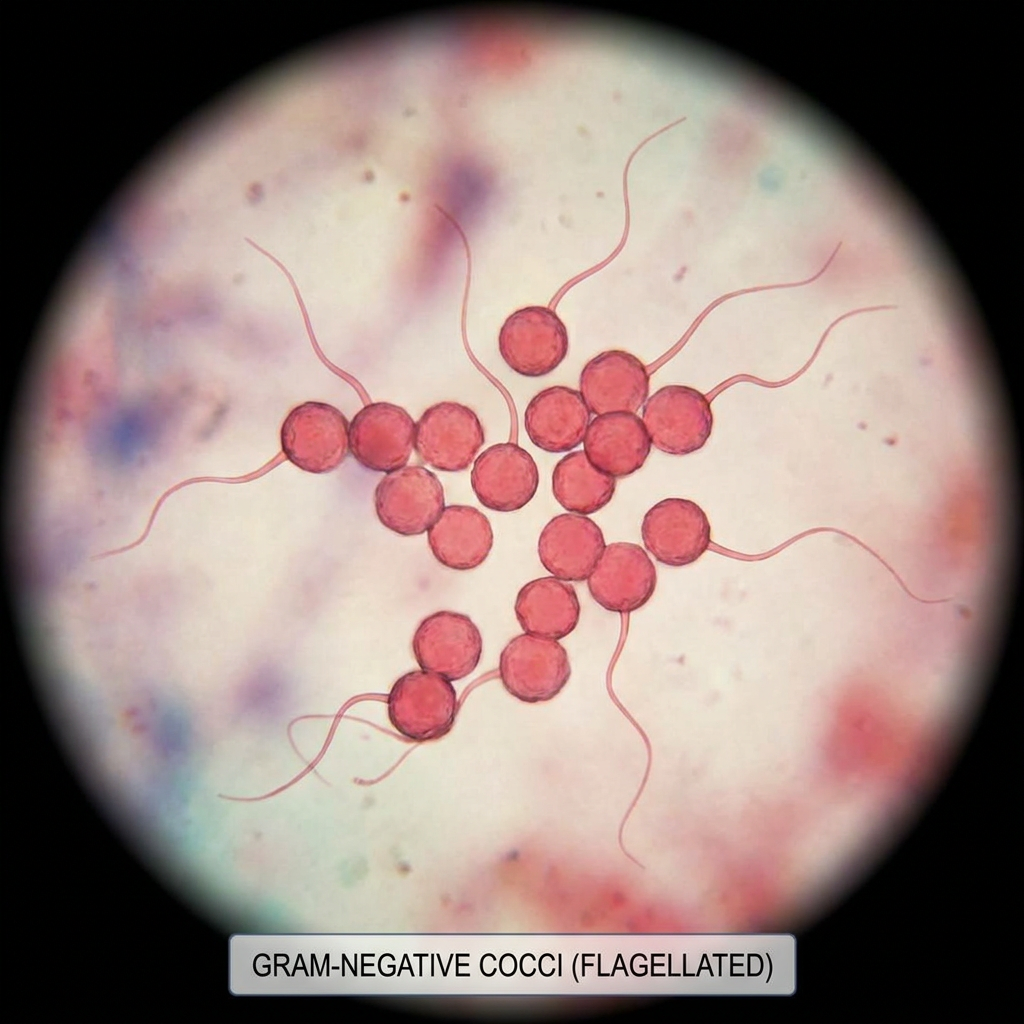
| Gram staining properties | Negative |
| Shape | Rod |
| Mobility | No |
| Flagellar presence | Yes |
| Number of membranes | 2 |

| Ecology, Host, and Life Cycle | |
|---|---|
| Oxygen requirements | Facultative aerobe |
| Optimal temperature | 37 |
| Temperature range | Mesophilic |
| Habitat | HostAssociated |
| Biotic relationship | Free living |
| Host(s) | Homo sapiens |
| Cell arrangement | Singles |
| Sporulation | Nonsporulating |
| Energy source | Not Available |
| Pathogenicity | Yes |
Genome Summary
Brucella abortus bv. 1 str. 9-941
Accession NumberNC_006932.1
Gene Summary
Adenine Count
Not Available
Thymine Count
Not Available
Guanine Count
Not Available
Cytosine Count
Not Available
Genome Length
Not Available
Protein-coding Genes
Not Available
Non-Coding Genes
Not Available
# of Chromosomes/Plasmids
2
Genes
| Name | Locus Tag | UniProt | Strand | Coordinates | Molecular Weight |
|---|---|---|---|---|---|
| succinate dehydrogenase, cytochrome b556 subunit | BRUAB_RS09070 | Not Available | - | 1856034 - 1856432 | 14633.0 |
| gnat family n-acetyltransferase | BRUAB_RS09075 | Not Available | - | 1856777 - 1857235 | 16934.1 |
| 3-isopropylmalate dehydratase large subunit | BRUAB_RS09080 | Not Available | - | 1857492 - 1858901 | 50714.4 |
| 50s ribosomal protein l19 | BRUAB_RS09085 | Not Available | - | 1859112 - 1859549 | 16078.3 |
| class i sam-dependent methyltransferase | BRUAB_RS09090 | Not Available | + | 1859841 - 1861302 | 53935.0 |
| hypothetical protein | BRUAB_RS09095 | Not Available | - | 1861455 - 1861706 | 8645.93 |
| hypothetical protein | BRUAB_RS09100 | Not Available | - | 1861703 - 1862113 | 14622.5 |
| antibiotic biosynthesis monooxygenase family protein | BRUAB_RS09105 | Not Available | - | 1862106 - 1862468 | 13605.0 |
| nipsnap family protein | BRUAB_RS09110 | Not Available | - | 1862465 - 1862788 | 12062.1 |
| arsr/smtb family transcription factor | BRUAB_RS09115 | Not Available | + | 1862859 - 1863524 | 24383.5 |
Pathways
0 pathways
No pathways found
No metabolic pathways have been associated with this bacterium yet.