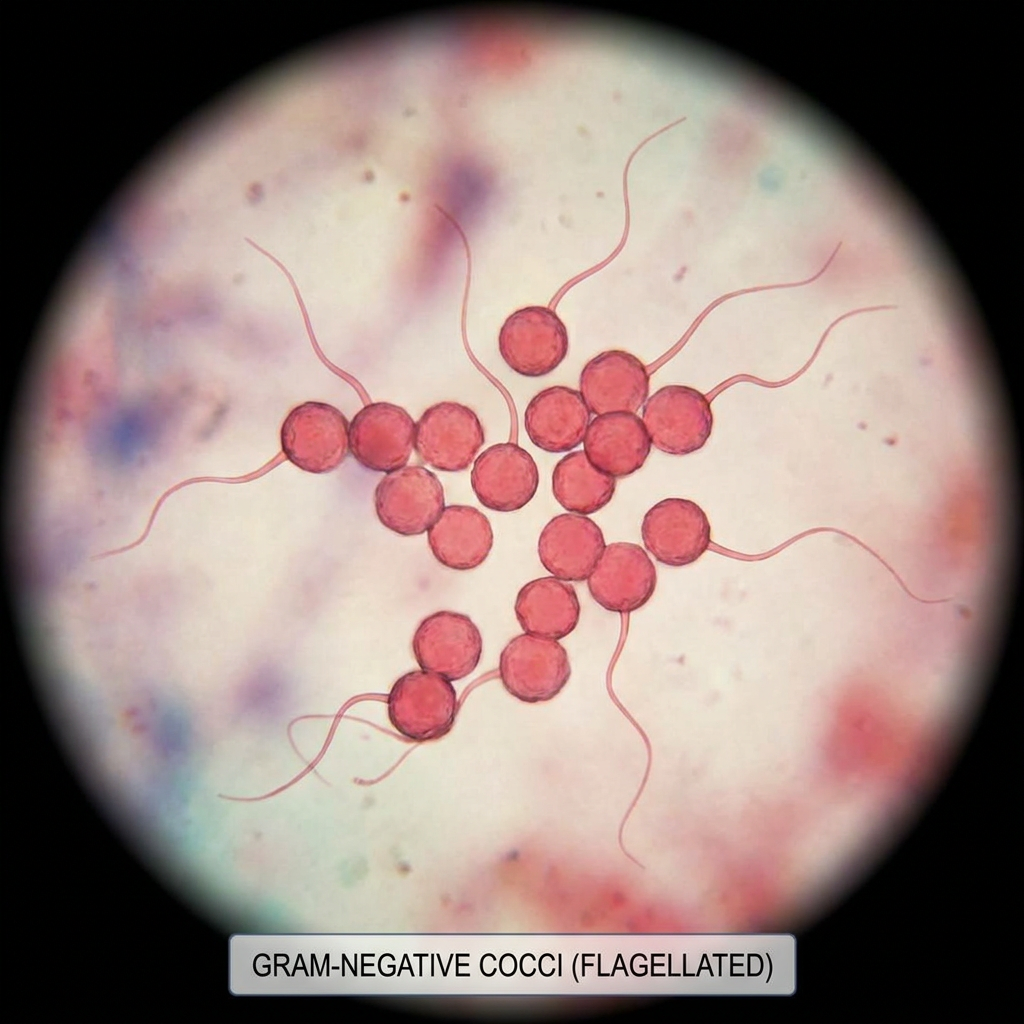
Akkermansia muciniphila

Gram-negativeCocciNon-motileAnaerobe

Kingdom

Pseudomonadati

Phylum

Verrucomicrobiota

Class

Verrucomicrobiia

Order

Verrucomicrobiales

Family

Akkermansiaceae

Genus

Akkermansia

Description

Akkermansia muciniphila is a Gram-negative, rod-shaped bacterium categorized as a mesophile, with a temperature preference typically around 37°C. It is a chemoheterotroph, deriving energy from the fermentation of mucin, a glycoprotein found in mucus, and it primarily inhabits the human gastrointestinal tract, particularly the intestines. This anaerobic microbe thrives in low-oxygen environments, making it an obligate anaerobe.As a member of the human gut microbiome, Akkermansia muciniphila plays a crucial role in maintaining gut health and integrity. Its ability to degrade mucin allows it to utilize the mucus layer as both a habitat and a nutrient source, contributing to the maintenance of the gut barrier. By doing so, it helps modulate the immune system and prevent the translocation of pathogens. Furthermore, its presence has been linked to various health outcomes, including metabolic health and weight regulation, highlighting its importance in human physiology. Akkermansia muciniphila has garnered significant interest in recent years due to its potential as a probiotic. Studies suggest that higher levels of this microbe are associated with lower levels of obesity, insulin resistance, and inflammation. Additionally, it has been shown to improve metabolic disorders in animal models, prompting research into its therapeutic potential for conditions like diabetes and cardiovascular diseases. As gut microbiota research continues to evolve, Akkermansia muciniphila stands out for its unique role in gut homeostasis and its promising implications for human health and disease management.

Taxonomy

KingdomPseudomonadati
PhylumVerrucomicrobiota
ClassVerrucomicrobiia
OrderVerrucomicrobiales
FamilyAkkermansiaceae
GenusAkkermansia
SpeciesAkkermansia muciniphila
StrainNo strain

Profile

Physiology
Gram staining propertiesNegative
ShapeCocci
MobilityNo
Flagellar presenceYes
Number of membranes2
Image of Akkermansia muciniphila
Ecology, Host, and Life Cycle
Oxygen requirementsAnaerobe
Optimal temperature37
Temperature rangeMesophilic
HabitatHostAssociated
Biotic relationshipFree living
Host(s)Not Available
Cell arrangementPairs - Singles
SporulationNot Available
Energy sourceNot Available
PathogenicityNot Available

Genome Summary

Akkermansia muciniphila

Accession NumberPJKA00000000.1

Gene Summary

Adenine Count

636171 bp

Thymine Count

627499 bp

Guanine Count

865677 bp

Cytosine Count

879716 bp

Genome Length

3009091 bp

Protein-coding Genes

2428 genes

Non-Coding Genes

55 genes

# of Chromosomes/Plasmids

2

Genes

NameLocus TagUniProtStrandCoordinatesMolecular Weight
ribonuclease hiiEAJ16_00195Not Available+36220 - 3686422955.0
yran family proteinEAJ16_00200Not Available+36788 - 3724317065.8
hypothetical proteinEAJ16_00205Not Available-37147 - 373506838.16
hypothetical proteinEAJ16_00210Not Available-37396 - 3818128431.6
uracil-dna glycosylaseEAJ16_00215Not Available-38185 - 3915936196.6
hypothetical proteinEAJ16_00220Not Available-39873 - 401429849.23
hypothetical proteinEAJ16_00225Not Available+40279 - 4072516840.1
endonuclease iiiEAJ16_00230Not Available+40813 - 4145123241.3
mota/tolq/exbb proton channel family proteinEAJ16_00235Not Available+41544 - 4233528344.8
biopolymer transporter exbdEAJ16_00240Not Available+42414 - 4292018300.1

Displaying genes 41 – 50 of 4874 in total

Pathways

23 pathways

Metabolites

86 records
Metabolite IDMetabolite nameStructureCAS number
BASm0001865diphosphateHO7P2Chemical structure of diphosphateNot available
Average174.95Da
Monoisotopic174.9213971Da
BASm00055001-octadecanoyl-sn-glycero-3-phosphateC21H41O7PChemical structure of 1-octadecanoyl-sn-glycero-3-phosphateNot available
Average436.5198Da
Monoisotopic436.2589902Da
BASm0012554N-acetyl-beta-D-glucosaminyl-(1->4)-1,6-anhydro-N-acetyl-beta-D-muramoyl-L-alanyl-gamma-D-glutamyl-meso-diaminoheptanedioate-D-alanineC37H57N7O20Not availableNot available
Average919.893Da
Monoisotopic919.366934423Da
BASm0014032Acetic acidC2H4O2Chemical structure of Acetic acid64-19-7
Average60.052Da
Monoisotopic60.021129372Da
BASm0014033AmmoniaH3NChemical structure of Ammonia7664-41-7
Average17.0305Da
Monoisotopic17.026549101Da
BASm0014041Oleic acidC18H34O2Chemical structure of Oleic acid112-80-1
Average282.4614Da
Monoisotopic282.255880332Da
BASm0014058Myristic acidC14H28O2Chemical structure of Myristic acid544-63-8
Average228.3709Da
Monoisotopic228.20893014Da
BASm0014182Vaccenic acidC18H34O2Chemical structure of Vaccenic acidNULL
Average282.468Da
Monoisotopic282.255880335Da
BASm0014219Palmitoleic acidC16H30O2Chemical structure of Palmitoleic acidNULL
Average254.4082Da
Monoisotopic254.224580204Da
BASm0014222DiethanolamineC4H11NO2Chemical structure of DiethanolamineNULL
Average105.1356Da
Monoisotopic105.078978601Da

Displaying 1–10 of 86 metabolites