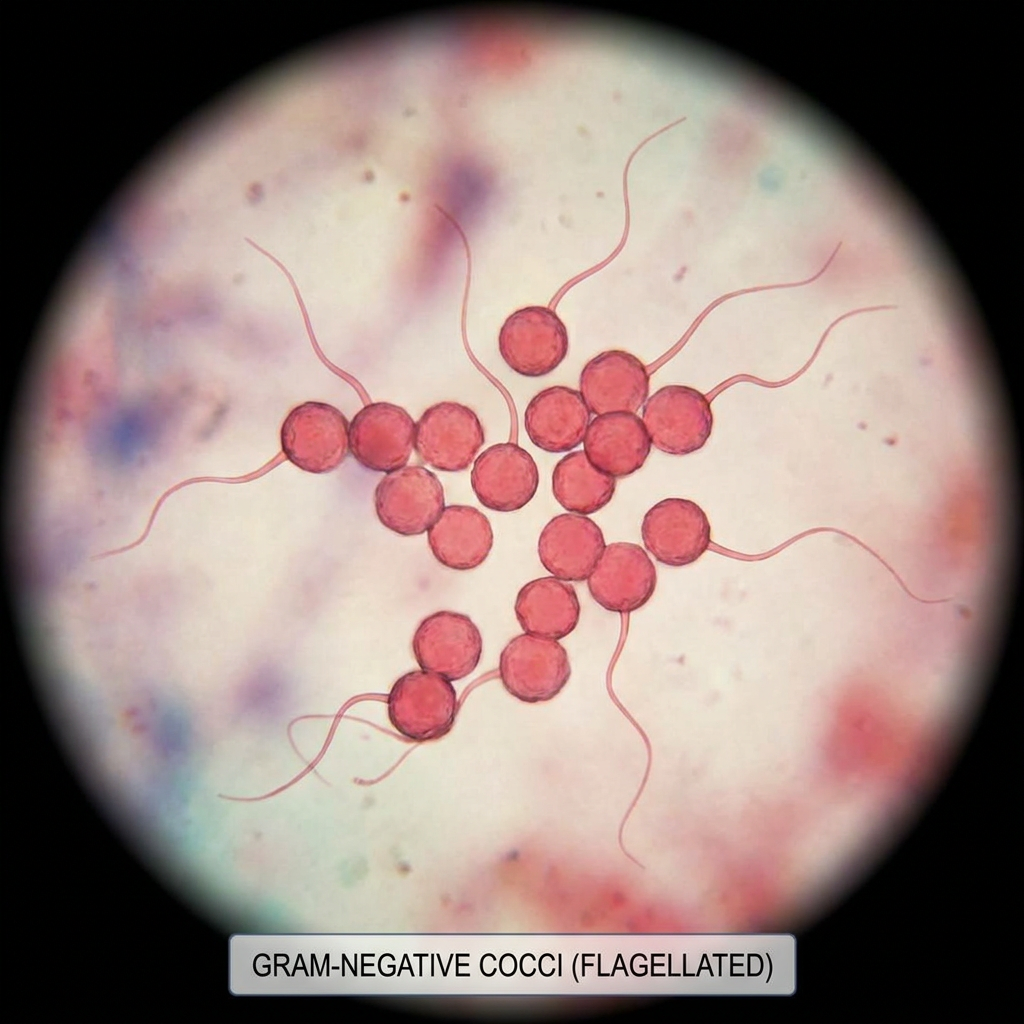
Brucella sp. causes brucellosis, a "zoonotic disease endemic in many areas of the world, characterized by chronic infections in animals leading to abortion and infertility, and a systemic, febrile illness in humans" (Paulsen et al. 2002). Brucella suis was the first pathogenic organism used by the U.S. military as a weapon backing in the 1950s. Although treatment is available for brucellosis, it is prolonged antibiotic therapy. In addition, early diagnosis is problematic and no acceptable vaccines have been made (Paulsen et al. 2002).The genome of Brucella melitensis strain 16M is comprised of 3,294,931 bp in two circular chromosomes. Chromosome I has 2,117,144 bp and chromosome II has 1,177,787 bp; of both of these chromosomes, 3,198 ORFs were predicted. Genes encoding for DNA replication, protein synthesis, core metabolism, and cell-wall biosynthesis can be found on both chromosomes. It has been speculated that the second, smaller chromosome might have evolved from a megaplasmid such as the one located in Agrobacterium (DelVecchio et. al. 2002) . Some of the clusters, such as arginine and ornithine cyclodeamidase genes and the virB operon, that are on chromosome II are actually homologous to genes located in the same order on the Ti plasmid in Agrobacterium tumefaciens (Paulsen et al. 2002).Brucella is a Gram-negative pathogen that is distringuished from most other pathogens because it does not have "obvious virulence factors" like "capsules, fimbriae, flagella, exotoxins, exproteases, or other exoenzymes, cytolysins, resistance forms, antigenic variation, plamids, or lysogenic phages" (Moreno and Moriyon 2002). In addition to this, analyses of three Brucella species have shown that their genomes lack the functional sequences of so-called classical virulence factors, pathogenic islands, and a complete set of genes to mount, types I, II, and II secretion systems. It was found, however, that the bacterium recruits actin and activates small GTP-ases when in internalizes into cells (Moreno and Moriyon 2002).In a study investigating B. abortus's internalization and intracellular growth in nonphagocytic Vero cells, it was found that smooth virulent, smooth attenuated, and rough strains of the bacterium replicated within the cells. However, rough strains were more adherent and entered more Vero cells than the other strains. The smooth virulent B. abortus strains replicated intracellularly at a larger percentage than smooth attenuated or rough strains. These differences in adhesiveness and invasiveness are due to hydophobicity of the bacteria as measured by hydrocarbon adherence. Both intracellular smooth and rough Brucella were found within cisternae of the rough endoplasmic reticulum and nuclear envelope. The study concluded in suggesting that the movement to the rough endoplasmic reticulum is "the limiting step in the infection of nonphagocytic cells by B. abortus" (Detilleux et al. 1990).Brucella is a pathogenic bacterium that has been called "exceedingly well adapted" to the niche of living in compartments within professional and nonprofessional phagocytes (Moreno and Moriyon 2002). It is found all over the world infecting many different types of mammals from marine mammals to horses to humans.Brucellosis occurs all over the world and is caught from exposure to infected animals, meat, or unpasteurized milk products. Brucella bacteria can survive inside macrophages and are facultative intracellular pathogens - they enter their host through mucosal sufaces. The bacterium is able to do this because it is Gram-negative and "can present itself upon culture with a smooth or rough colony mophology" because it is "possible for smooth colonies to spontaneoulsy become rough and some rough colonies to spontaneously become rough" (Schurig). Inside macrophages, Brucella survives by inhibiting the phagosome-lysosome fusion. Within placental trophoblasts and other non-professional phagocytes, Brucella have been shown to localize and proliferate in autophagosome-like compartments resembling the rough endoplasmic reticulum (Moreno and Moriyon 2002). Similarly, Brucella abortus localizes and replicates in the rough endoplasmic reticulum of trophoblastic epithelial cells in pregnat ruminants (Detilleux et al. 1990). However, most of the mechanisms that allow the bacteria to cause tissue tropism as well as the way in which Brucella enters and lives in such different host cells such as epithelial cells are not known.Brucella is generally known for causing infertility, abortions, and other reproductive complications in animals with the disease brucellosis, however, this bacterium is also the cause of a rarer, more severe systemic infection called neurobrucellosis. Neurobrucellosis results in the formation of Brucella granulomas in the central nervous system in sellar and parasellar sites and in the spinal cord. Reports of this disease in humans identified a marine mammal Brucella strain as the culprit which confirmed that this bacterium can in fact cross over from their primary hosts in a community setting. The patient whose brain is pictured to the right had a 1-year history of headaches, nausea, vomiting, and progressive deterioration in visual function before examination - neurologic examination found a right homonoymous hemianopsia, optic nerve atrophy, and a major visual impairment. He started anti-brucella therapy, which continued for 1 year and the enhancement and edema receded (Sohn et al. 2003). (From http://microbewiki.kenyon.edu/index.php/Brucella) (MicrobeWiki: Brucella)
Taxonomy
Kingdom
Pseudomonadati
Phylum
Pseudomonadota
Class
Alphaproteobacteria
Order
Hyphomicrobiales
Family
Brucellaceae
Genus
Brucella
Species
Brucella suis
Strain
1330
Profile
Physiology
Gram staining properties
Negative
Shape
Rod
Mobility
No
Flagellar presence
Yes
Number of membranes
2
Ecology, Host, and Life Cycle
Oxygen requirements
Aerobe
Optimal temperature
37
Temperature range
Mesophilic
Habitat
HostAssociated
Biotic relationship
Free living
Host(s)
Swine- Homo sapiens
Cell arrangement
Pairs - Chains - Singles
Sporulation
Nonsporulating
Energy source
Not Available
Pathogenicity
Yes
Genome Summary
Brucella suis 1330
Accession NumberNC_017251.1
Gene Summary
Adenine Count
451237 bp
Thymine Count
450598 bp
Guanine Count
600998 bp
Cytosine Count
604950 bp
Genome Length
2107783 bp
Protein-coding Genes
2014 genes
Non-Coding Genes
66 genes
# of Chromosomes/Plasmids
2
Genes
Name
Locus Tag
UniProt
Strand
Coordinates
Molecular Weight
ribonuclease d
BS1330_RS00560
Not Available
-
132309 - 132926
23170.7
dipeptidase
BS1330_RS00565
Not Available
-
132965 - 134380
51027.7
hypothetical protein
BS1330_RS18095
Not Available
+
134533 - 134859
11971.4
dna polymerase i
BS1330_RS00570
Not Available
+
134941 - 137880
107017.0
dead/deah box helicase
BS1330_RS00575
Not Available
+
138022 - 139902
68900.8
dna topoisomerase (atp-hydrolyzing) subunit b
BS1330_RS00580
Not Available
-
139998 - 142439
89523.6
hypothetical protein
BS1330_RS18015
Not Available
-
142490 - 142624
4623.62
s-formylglutathione hydrolase
BS1330_RS00585
Not Available
-
142761 - 143597
31132.8
duf1345 domain-containing protein
BS1330_RS00590
Not Available
-
143605 - 144261
23806.2
gnat family n-acetyltransferase
BS1330_RS00595
Not Available
-
144261 - 144728
17077.6
Displaying genes 1291 – 1300 of 3233 in total
Pathways
0 pathways
No pathways found
No metabolic pathways have been associated with this bacterium yet.