Kingdom
Bacillati
Phylum
Bacillota
Class
Clostridia
Order
Lachnospirales
Family
Lachnospiraceae
Genus
Blautia
Description
Taxonomy
| Kingdom | Bacillati |
|---|---|
| Phylum | Bacillota |
| Class | Clostridia |
| Order | Lachnospirales |
| Family | Lachnospiraceae |
| Genus | Blautia |
| Species | Blautia obeum |
| Strain | No strain |
Profile
| Physiology | |
|---|---|
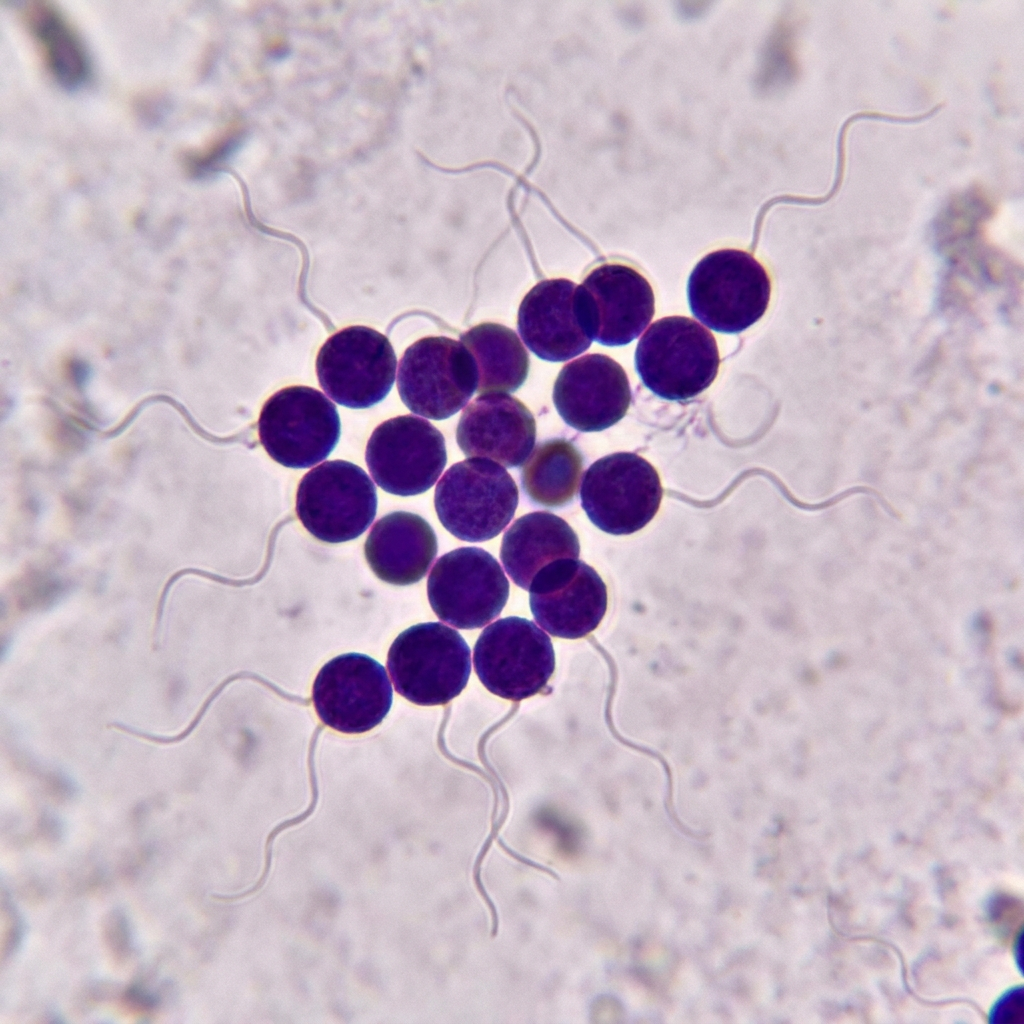
| Gram staining properties | Positive |
| Shape | Cocci |
| Mobility | No |
| Flagellar presence | Yes |
| Number of membranes | Not Available |
| Ecology, Host, and Life Cycle | |
|---|---|
| Oxygen requirements | Anaerobic |
| Optimal temperature | Not Available |
| Temperature range | Mesophilic |
| Habitat | Animal intestinal microflora |
| Biotic relationship | Not Available |
| Host(s) | Not Available |
| Cell arrangement | Not Available |
| Sporulation | Nonsporulating |
| Energy source | Chemoheterotroph |
| Pathogenicity | Not Available |
Genome Summary
Blautia obeum
Accession NumberQRVV00000000.1
Gene Summary
Adenine Count
Not Available
Thymine Count
Not Available
Guanine Count
Not Available
Cytosine Count
Not Available
Genome Length
Not Available
Protein-coding Genes
Not Available
Non-Coding Genes
Not Available
# of Chromosomes/Plasmids
9
Genes
| Name | Locus Tag | UniProt | Strand | Coordinates | Molecular Weight |
|---|---|---|---|---|---|
| d-xylose-binding periplasmic protein precursor | ERS852533_00491 | P45047 | - | 521163 - 522221 | 38465.9 |
| uncharacterized hth-type transcriptional regulator ypdc | ERS852533_00492 | Not Available | - | 522218 - 523813 | 61325.3 |
| inner membrane protein ypda | ERS852533_00493 | Q82Z75 | - | 523856 - 525355 | 57492.2 |
| abc-type sugar transport system%2c periplasmic component | ERS852533_00494 | Not Available | - | 525352 - 526374 | 38155.8 |
| xylose transport system permease protein xylh | ERS852533_00495 | P45045 | - | 526530 - 527687 | 41566.1 |
| xylose import atp-binding protein xylg | ERS852533_00496 | Q9S472 | - | 527728 - 529269 | 57077.9 |
| multiple sugar-binding periplasmic protein sbpa precursor | ERS852533_00497 | P25548 | - | 529367 - 530497 | 40630.8 |
| shikimate kinase | ERS852533_00498 | A5FRZ4 | - | 530783 - 531571 | 30287.6 |
| ftsx-like permease family | ERS852533_00499 | Not Available | - | 531705 - 534020 | 87543.6 |
| macrolide export atp-binding/permease protein macb | ERS852533_00500 | P75612 | - | 534033 - 534731 | 26008.5 |
Pathways
0 pathways
No pathways found
No metabolic pathways have been associated with this bacterium yet.