Kingdom
Bacillati
Phylum
Bacillota
Class
Clostridia
Order
Lachnospirales
Family
Lachnospiraceae
Genus
Mediterraneibacter
Description
Taxonomy
| Kingdom | Bacillati |
|---|---|
| Phylum | Bacillota |
| Class | Clostridia |
| Order | Lachnospirales |
| Family | Lachnospiraceae |
| Genus | Mediterraneibacter |
| Species | Mediterraneibacter gnavus |
| Strain | No strain |
Profile
| Physiology | |
|---|---|
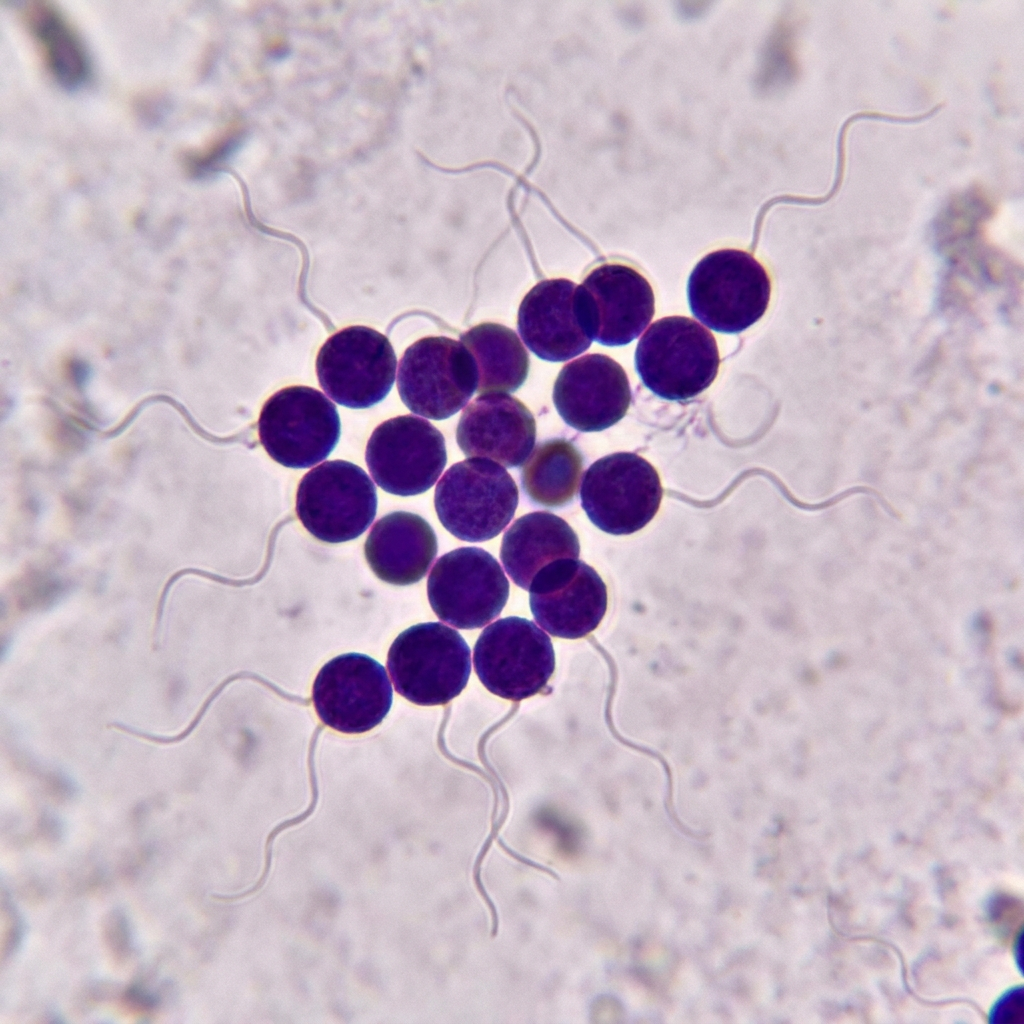
| Gram staining properties | Positive |
| Shape | Cocci |
| Mobility | No |
| Flagellar presence | Yes |
| Number of membranes | Not Available |
| Ecology, Host, and Life Cycle | |
|---|---|
| Oxygen requirements | Anaerobic |
| Optimal temperature | 37 |
| Temperature range | Mesophilic |
| Habitat | Animal intestinal microflora |
| Biotic relationship | Not Available |
| Host(s) | Not Available |
| Cell arrangement | Not Available |
| Sporulation | Nonsporulating |
| Energy source | Chemoheterotroph |
| Pathogenicity | Not Available |
Genome Summary
Mediterraneibacter gnavus
Accession NumberNIHU00000000.1
Gene Summary
Adenine Count
Not Available
Thymine Count
Not Available
Guanine Count
Not Available
Cytosine Count
Not Available
Genome Length
Not Available
Protein-coding Genes
Not Available
Non-Coding Genes
Not Available
# of Chromosomes/Plasmids
4
Genes
| Name | Locus Tag | UniProt | Strand | Coordinates | Molecular Weight |
|---|---|---|---|---|---|
| Dna modification methylase | DXC31_02470 | Not Available | + | 496894 - 498207 | 49848.7 |
| Terminase small subunit | DXC31_02475 | Not Available | + | 498259 - 498846 | 22078.8 |
| Terminase large subunit | DXC31_02480 | Not Available | + | 498809 - 500656 | 70384.2 |
| Peptidylprolyl isomerase | DXC31_02485 | Not Available | + | 500666 - 500911 | 9092.73 |
| Portal protein | DXC31_02490 | Not Available | + | 500917 - 502512 | 59404.8 |
| Hk97 familygprohead protease | DXC31_02495 | Not Available | + | 502448 - 503107 | 24705.9 |
| Major capsid protein | DXC31_02500 | Not Available | + | 503097 - 504683 | 58315.9 |
| Duf2190 family protein | DXC31_02505 | Not Available | + | 504703 - 505038 | 11577.7 |
| Hypothetical protein | DXC31_02510 | Not Available | + | 505040 - 505321 | 10126.0 |
| Head closure protein | DXC31_02515 | Not Available | + | 505318 - 505641 | 12250.5 |
Pathways
0 pathways
No pathways found
No metabolic pathways have been associated with this bacterium yet.