Kingdom
Bacillati
Phylum
Actinomycetota
Class
Actinomycetes
Order
Propionibacteriales
Family
Propionibacteriaceae
Genus
Cutibacterium
Description
Taxonomy
| Kingdom | Bacillati |
|---|---|
| Phylum | Actinomycetota |
| Class | Actinomycetes |
| Order | Propionibacteriales |
| Family | Propionibacteriaceae |
| Genus | Cutibacterium |
| Species | Cutibacterium granulosum |
| Strain | No strain |
Profile
| Physiology | |
|---|---|
| Gram staining properties | Positive |
| Shape | Not Available |
| Mobility | No |
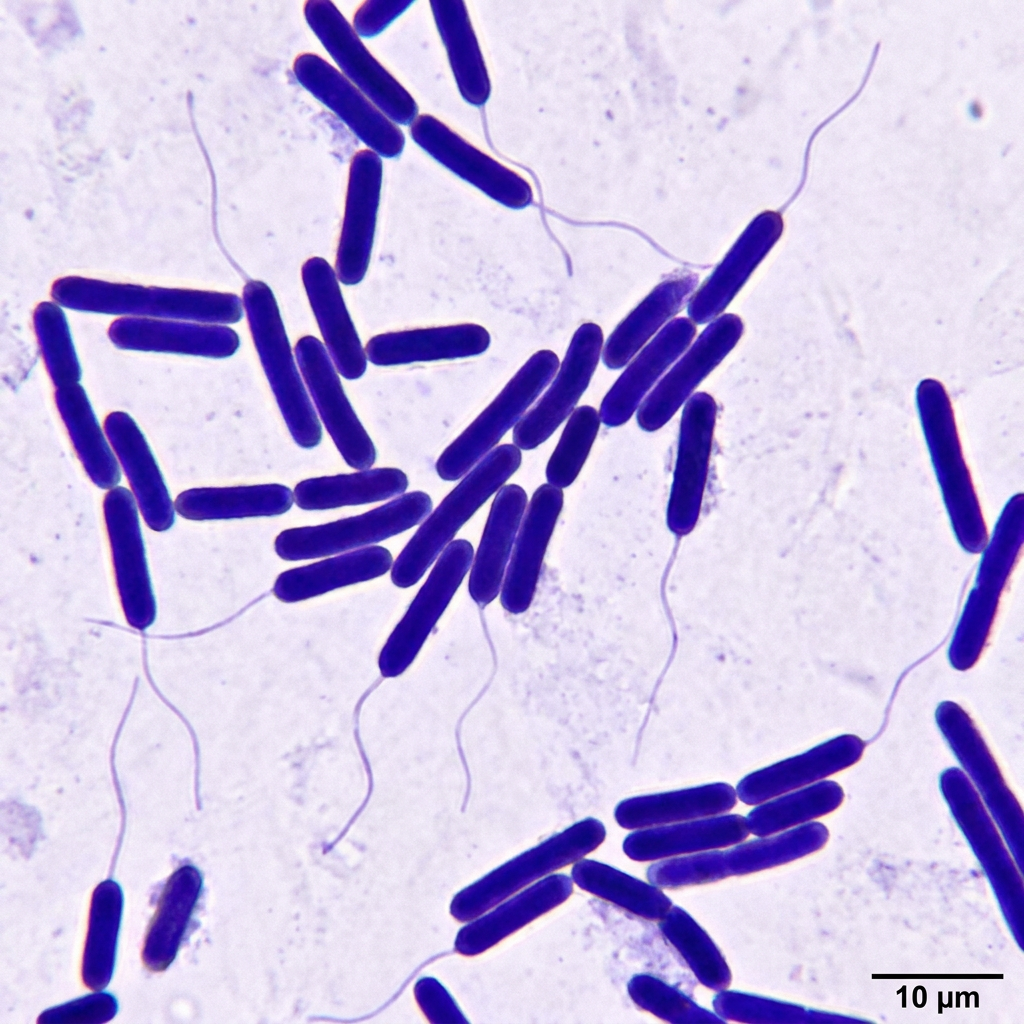
| Flagellar presence | Yes |
| Number of membranes | Not Available |
| Ecology, Host, and Life Cycle | |
|---|---|
| Oxygen requirements | anaerobic |
| Optimal temperature | Not Available |
| Temperature range | Mesophilic |
| Habitat | Host epidermis |
| Biotic relationship | Not Available |
| Host(s) | Not Available |
| Cell arrangement | Not Available |
| Sporulation | Nonsporulating |
| Energy source | Chemoheterotroph |
| Pathogenicity | Not Available |
Genome Summary
Cutibacterium granulosum
Accession NumberQFOG00000000.1
Gene Summary
Adenine Count
349293 bp
Thymine Count
345442 bp
Guanine Count
613442 bp
Cytosine Count
616819 bp
Genome Length
1924996 bp
Protein-coding Genes
1860 genes
Non-Coding Genes
50 genes
# of Chromosomes/Plasmids
2
Genes
| Name | Locus Tag | UniProt | Strand | Coordinates | Molecular Weight |
|---|---|---|---|---|---|
| metallophosphoesterase family protein | CKV91_RS07430 | Not Available | + | 1746092 - 1747564 | 53913.1 |
| branched-chain amino acid aminotransferase | CKV91_RS07435 | Not Available | - | 1747772 - 1748872 | 39938.3 |
| ketol-acid reductoisomerase | CKV91_RS07440 | Not Available | - | 1749002 - 1749970 | 34182.5 |
| hit family protein | CKV91_RS07445 | Not Available | - | 1749991 - 1750386 | 14141.0 |
| imidazole glycerol phosphate synthase subunit hisf | CKV91_RS07450 | Not Available | - | 1750424 - 1751185 | 26210.1 |
| dead/deah box helicase | CKV91_RS07455 | Not Available | - | 1751322 - 1754156 | 103563.0 |
| twin-arginine translocase subunit tatc | CKV91_RS07460 | Not Available | - | 1754213 - 1755067 | 31268.4 |
| twin-arginine translocase tata/tate family subunit | CKV91_RS07465 | Not Available | - | 1755094 - 1755330 | 8295.07 |
| hypothetical protein | CKV91_RS07470 | Not Available | - | 1755520 - 1755702 | 6695.1 |
| helix-turn-helix transcriptional regulator | CKV91_RS07475 | Not Available | - | 1755731 - 1756678 | 35417.0 |
Pathways
0 pathways
No pathways found
No metabolic pathways have been associated with this bacterium yet.