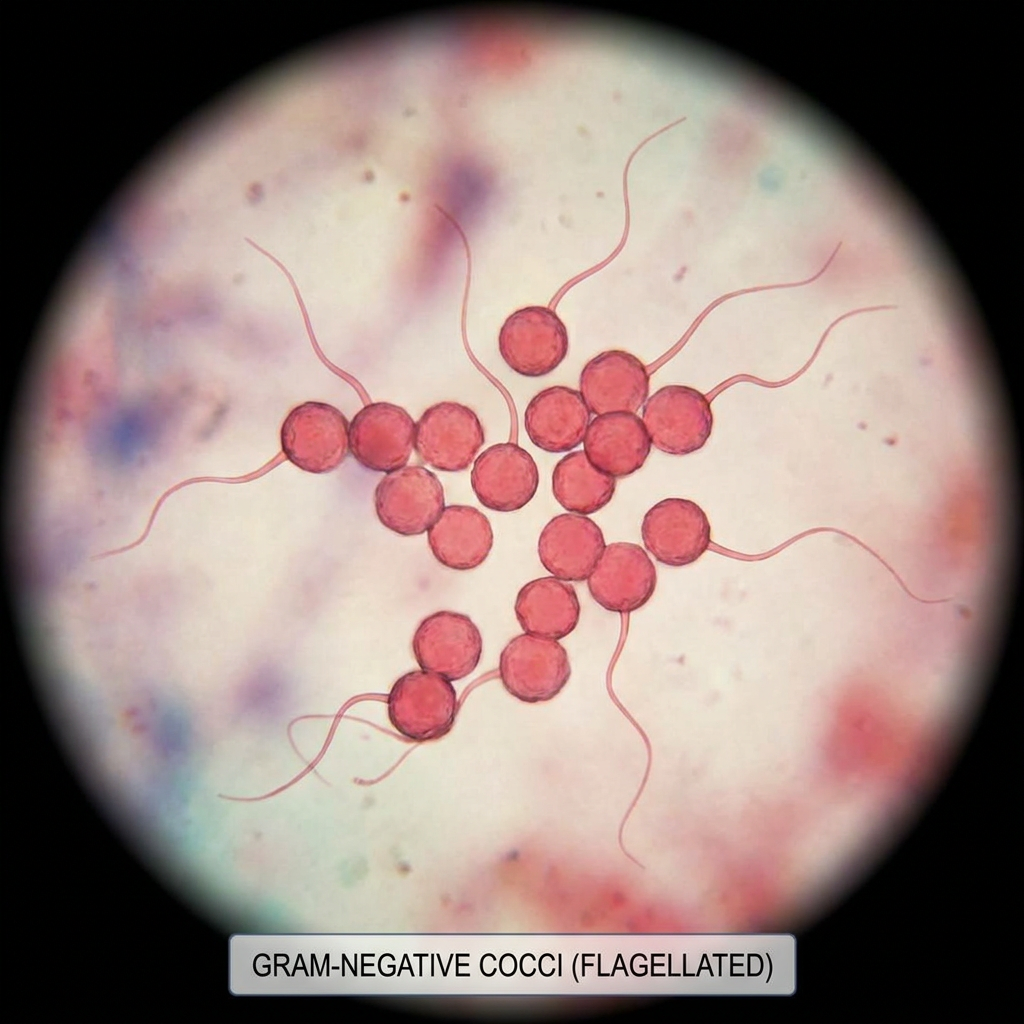
Brucella melitensis

Gram-negativeCocciNon-motileFacultative aerobe

Kingdom

Pseudomonadati

Phylum

Pseudomonadota

Class

Alphaproteobacteria

Order

Hyphomicrobiales

Family

Brucellaceae

Genus

Brucella

Description

Brucella melitensis, a gram-negative, rod-shaped microbe, thrives in temperatures ranging from 25°C to 39°C, categorizing it as a mesophile. As a facultative chemoheterotroph, it derives energy from the breakdown of organic compounds, utilizing carbon sources such as glucose and glycogen. This microbe's metabolism is fueled by aerobic respiration, utilizing oxygen as its primary energy source. In the presence of sufficient oxygen, it produces ATP through the process of cellular respiration, releasing carbon dioxide and water as byproducts. Brucella melitensis is ubiquitous, colonizing various body sites across all possible species, including humans, animals, and milk, where it infects mammary glands, causing brucellosis. It can also be found in soil and water, potentially transmitting infection through contact with contaminated environments. As an obligate aerobe, Brucella melitensis requires oxygen to survive and flourish. It cannot tolerate anaerobic conditions, as it lacks the necessary mechanisms to function in the absence of oxygen. A common zoonotic pathogen, Brucella melitensis is responsible for significant morbidity and mortality worldwide. It is typically transmitted through contact with infected animals, contaminated milk, or contaminated soil and water. In humans, it can cause a range of symptoms, from mild to severe, including fever, headache, and joint pain. In addition to its significant impact on human health, Brucella melitensis has also been recognized as a model organism for studying intracellular parasitism, providing valuable insights into the mechanisms of microbial pathogenesis and host-pathogen interactions.

Taxonomy

KingdomPseudomonadati
PhylumPseudomonadota
ClassAlphaproteobacteria
OrderHyphomicrobiales
FamilyBrucellaceae
GenusBrucella
SpeciesBrucella melitensis
StrainNo strain

Profile

Physiology
Gram staining propertiesNegative
ShapeCocci
MobilityNo
Flagellar presenceYes
Number of membranes2
Image of Brucella melitensis
Ecology, Host, and Life Cycle
Oxygen requirementsFacultative aerobe
Optimal temperature37
Temperature rangeMesophilic
HabitatHostAssociated
Biotic relationshipFree living
Host(s)Not Available
Cell arrangementChains - Pairs - Singles
SporulationNot Available
Energy sourceNot Available
PathogenicityNot Available

Genome Summary

Brucella melitensis

Accession NumberNZ_CP035797.1

Gene Summary

Adenine Count

Not Available

Thymine Count

Not Available

Guanine Count

Not Available

Cytosine Count

Not Available

Genome Length

Not Available

Protein-coding Genes

2053 genes

Non-Coding Genes

65 genes

# of Chromosomes/Plasmids

2

Genes

NameLocus TagUniProtStrandCoordinatesMolecular Weight
Terminase large subunitEXD79_RS10430Not Available+2006760 - 200801945873.8
Portal proteinEXD79_RS10435Not Available+2008051 - 200924443659.9
duf6107 family proteinEXD79_RS10440Not Available+2009241 - 200961813025.0
Putative prohead proteaseEXD79_RS10445Not Available+2009605 - 201027423586.6
Phage major capsid proteinEXD79_RS10450Not Available+2010296 - 201157046066.6
Dna packaging/head-tail-connectorEXD79_RS10455Not Available+2011735 - 201230121020.3
Head-tail connector complex proteinEXD79_RS10460Not Available+2012298 - 201263612693.2
Duf3168 domain-containing proteinEXD79_RS10465Not Available+2012758 - 201316515048.1
Gene transfer aget (gta) orfg9-like phage major tail proteinEXD79_RS10470Not Available+2013206 - 201361914784.4
gene transfer agent family proteinEXD79_RS10475Not Available+2013616 - 201395712009.3

Displaying genes 1 – 10 of 3246 in total

Pathways

22 pathways

Metabolites

86 records
Metabolite IDMetabolite nameStructureCAS number
BASm00188881-hexadecanoyl-sn-glycerol 3-phosphateC19H39O7PChemical structure of 1-hexadecanoyl-sn-glycerol 3-phosphateNULL
Average410.4825Da
Monoisotopic410.243340114Da
BASm00188942-Acyl-sn-glycero-3-phosphoethanolamine (N-C12:0)C17H36NO7PNot availableNULL
Average397.449Da
Monoisotopic397.222939501Da
BASm00188952-Acyl-sn-glycero-3-phosphoethanolamine (N-C14:0)C19H40NO7PNot availableNULL
Average425.503Da
Monoisotopic425.25423963Da
BASm00188972-Acyl-sn-glycero-3-phosphoethanolamine (N-C16:0)C21H44NO7PChemical structure of 2-Acyl-sn-glycero-3-phosphoethanolamine (N-C16:0)NULL
Average453.5503Da
Monoisotopic453.285539279Da
BASm00188992-Acyl-sn-glycero-3-phosphoethanolamine (N-C18:0)C23H48NO7PChemical structure of 2-Acyl-sn-glycero-3-phosphoethanolamine (N-C18:0)NULL
Average481.6035Da
Monoisotopic481.316839407Da
BASm00189012-Acyl-sn-glycero-3-phosphoglycerol (N-C14:0)C20H40O9PChemical structure of 2-Acyl-sn-glycero-3-phosphoglycerol (N-C14:0)NULL
Average455.5Da
Monoisotopic455.24099439Da
BASm00189022-Acyl-sn-glycero-3-phosphoglycerol (N-C14:1)C20H38O9PChemical structure of 2-Acyl-sn-glycero-3-phosphoglycerol (N-C14:1)NULL
Average453.4841Da
Monoisotopic453.225344326Da
BASm00189042-Acyl-sn-glycero-3-phosphoglycerol (N-C16:1)C22H42O9PChemical structure of 2-Acyl-sn-glycero-3-phosphoglycerol (N-C16:1)NULL
Average481.5372Da
Monoisotopic481.256644454Da
BASm00189052-Acyl-sn-glycero-3-phosphoglycerol (N-C18:0)C24H48O9PChemical structure of 2-Acyl-sn-glycero-3-phosphoglycerol (N-C18:0)NULL
Average511.6063Da
Monoisotopic511.303594646Da
BASm00189062-Acyl-sn-glycero-3-phosphoglycerol (N-C18:1)C24H46O9PChemical structure of 2-Acyl-sn-glycero-3-phosphoglycerol (N-C18:1)NULL
Average509.5904Da
Monoisotopic509.287944582Da

Displaying 41–50 of 86 metabolites