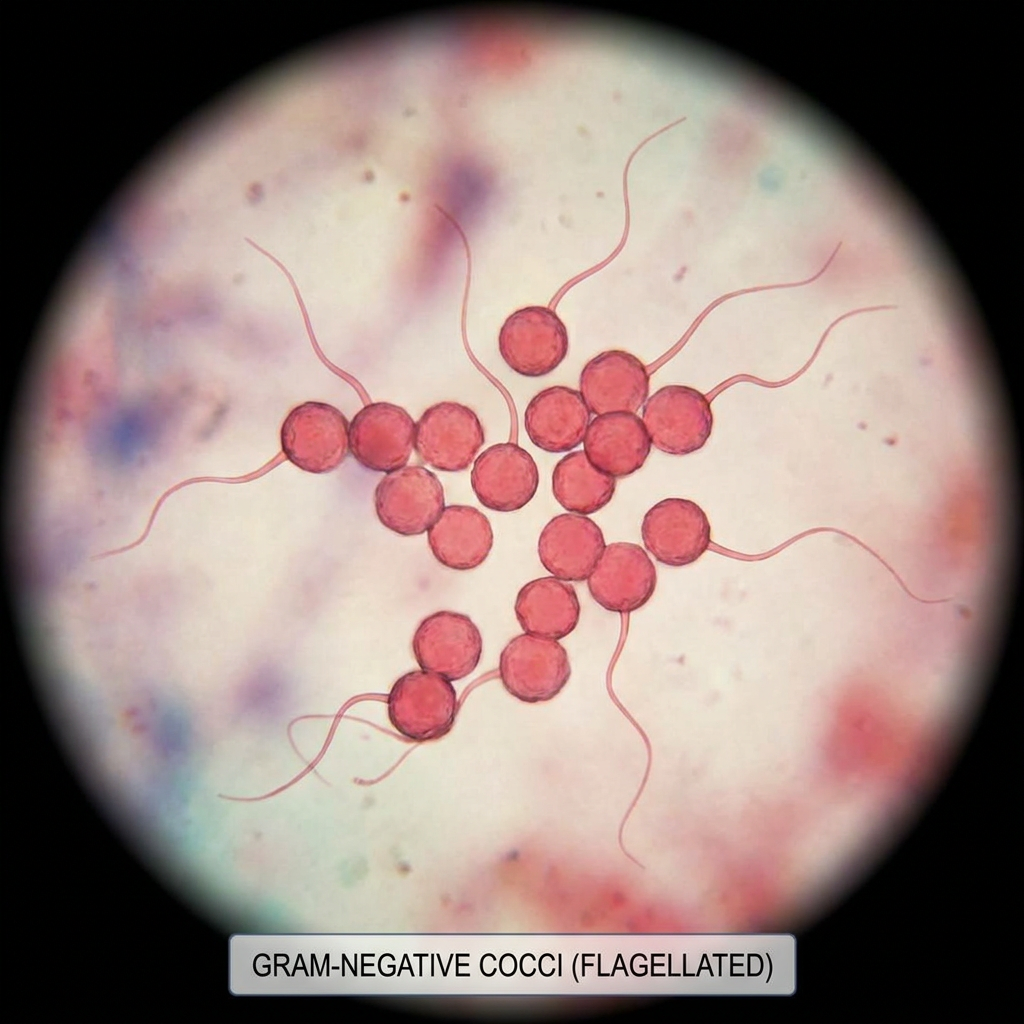
Brucella melitensis

Gram-negativeCocciNon-motileFacultative aerobe

Kingdom

Pseudomonadati

Phylum

Pseudomonadota

Class

Alphaproteobacteria

Order

Hyphomicrobiales

Family

Brucellaceae

Genus

Brucella

Description

Brucella melitensis, a gram-negative, rod-shaped microbe, thrives in temperatures ranging from 25°C to 39°C, categorizing it as a mesophile. As a facultative chemoheterotroph, it derives energy from the breakdown of organic compounds, utilizing carbon sources such as glucose and glycogen. This microbe's metabolism is fueled by aerobic respiration, utilizing oxygen as its primary energy source. In the presence of sufficient oxygen, it produces ATP through the process of cellular respiration, releasing carbon dioxide and water as byproducts. Brucella melitensis is ubiquitous, colonizing various body sites across all possible species, including humans, animals, and milk, where it infects mammary glands, causing brucellosis. It can also be found in soil and water, potentially transmitting infection through contact with contaminated environments. As an obligate aerobe, Brucella melitensis requires oxygen to survive and flourish. It cannot tolerate anaerobic conditions, as it lacks the necessary mechanisms to function in the absence of oxygen. A common zoonotic pathogen, Brucella melitensis is responsible for significant morbidity and mortality worldwide. It is typically transmitted through contact with infected animals, contaminated milk, or contaminated soil and water. In humans, it can cause a range of symptoms, from mild to severe, including fever, headache, and joint pain. In addition to its significant impact on human health, Brucella melitensis has also been recognized as a model organism for studying intracellular parasitism, providing valuable insights into the mechanisms of microbial pathogenesis and host-pathogen interactions.

Taxonomy

KingdomPseudomonadati
PhylumPseudomonadota
ClassAlphaproteobacteria
OrderHyphomicrobiales
FamilyBrucellaceae
GenusBrucella
SpeciesBrucella melitensis
StrainNo strain

Profile

Physiology
Gram staining propertiesNegative
ShapeCocci
MobilityNo
Flagellar presenceYes
Number of membranes2
Image of Brucella melitensis
Ecology, Host, and Life Cycle
Oxygen requirementsFacultative aerobe
Optimal temperature37
Temperature rangeMesophilic
HabitatHostAssociated
Biotic relationshipFree living
Host(s)Not Available
Cell arrangementChains - Pairs - Singles
SporulationNot Available
Energy sourceNot Available
PathogenicityNot Available

Genome Summary

Brucella melitensis

Accession NumberNZ_CP035797.1

Gene Summary

Adenine Count

Not Available

Thymine Count

Not Available

Guanine Count

Not Available

Cytosine Count

Not Available

Genome Length

Not Available

Protein-coding Genes

2053 genes

Non-Coding Genes

65 genes

# of Chromosomes/Plasmids

2

Genes

NameLocus TagUniProtStrandCoordinatesMolecular Weight
tniq family proteinEXD79_RS17070Not Available+18307 - 1917331836.2
hypothetical proteinEXD79_RS17075Not Available+19329 - 2014431023.7
hypothetical proteinEXD79_RS00115Not Available-20182 - 203797525.06
imma/irre family metallo-endopeptidaseEXD79_RS00120Not Available+20620 - 2192749949.1
hepn domain-containing proteinEXD79_RS00125Not Available+22333 - 2375452603.6
tir domain-containing translocated effector btpbEXD79_RS00130Not Available+23843 - 2472133619.0
sh3 domain-containing proteinEXD79_RS00135Not Available-25105 - 2561718125.3
ymgg-like glycine zipper-containing proteinEXD79_RS00140Not Available-25777 - 260258317.4
hypothetical proteinEXD79_RS00145Not Available+26053 - 262447166.7
cystathionine beta-lyaseEXD79_RS00150Not Available-26270 - 2743942517.8

Displaying genes 41 – 50 of 3246 in total

Pathways

22 pathways

Metabolites

86 records
Metabolite IDMetabolite nameStructureCAS number
BASm0001865diphosphateHO7P2Chemical structure of diphosphateNot available
Average174.95Da
Monoisotopic174.9213971Da
BASm00055001-octadecanoyl-sn-glycero-3-phosphateC21H41O7PChemical structure of 1-octadecanoyl-sn-glycero-3-phosphateNot available
Average436.5198Da
Monoisotopic436.2589902Da
BASm0012554N-acetyl-beta-D-glucosaminyl-(1->4)-1,6-anhydro-N-acetyl-beta-D-muramoyl-L-alanyl-gamma-D-glutamyl-meso-diaminoheptanedioate-D-alanineC37H57N7O20Not availableNot available
Average919.893Da
Monoisotopic919.366934423Da
BASm0014032Acetic acidC2H4O2Chemical structure of Acetic acid64-19-7
Average60.052Da
Monoisotopic60.021129372Da
BASm0014033AmmoniaH3NChemical structure of Ammonia7664-41-7
Average17.0305Da
Monoisotopic17.026549101Da
BASm0014041Oleic acidC18H34O2Chemical structure of Oleic acid112-80-1
Average282.4614Da
Monoisotopic282.255880332Da
BASm0014058Myristic acidC14H28O2Chemical structure of Myristic acid544-63-8
Average228.3709Da
Monoisotopic228.20893014Da
BASm0014182Vaccenic acidC18H34O2Chemical structure of Vaccenic acidNULL
Average282.468Da
Monoisotopic282.255880335Da
BASm0014219Palmitoleic acidC16H30O2Chemical structure of Palmitoleic acidNULL
Average254.4082Da
Monoisotopic254.224580204Da
BASm0014222DiethanolamineC4H11NO2Chemical structure of DiethanolamineNULL
Average105.1356Da
Monoisotopic105.078978601Da

Displaying 1–10 of 86 metabolites