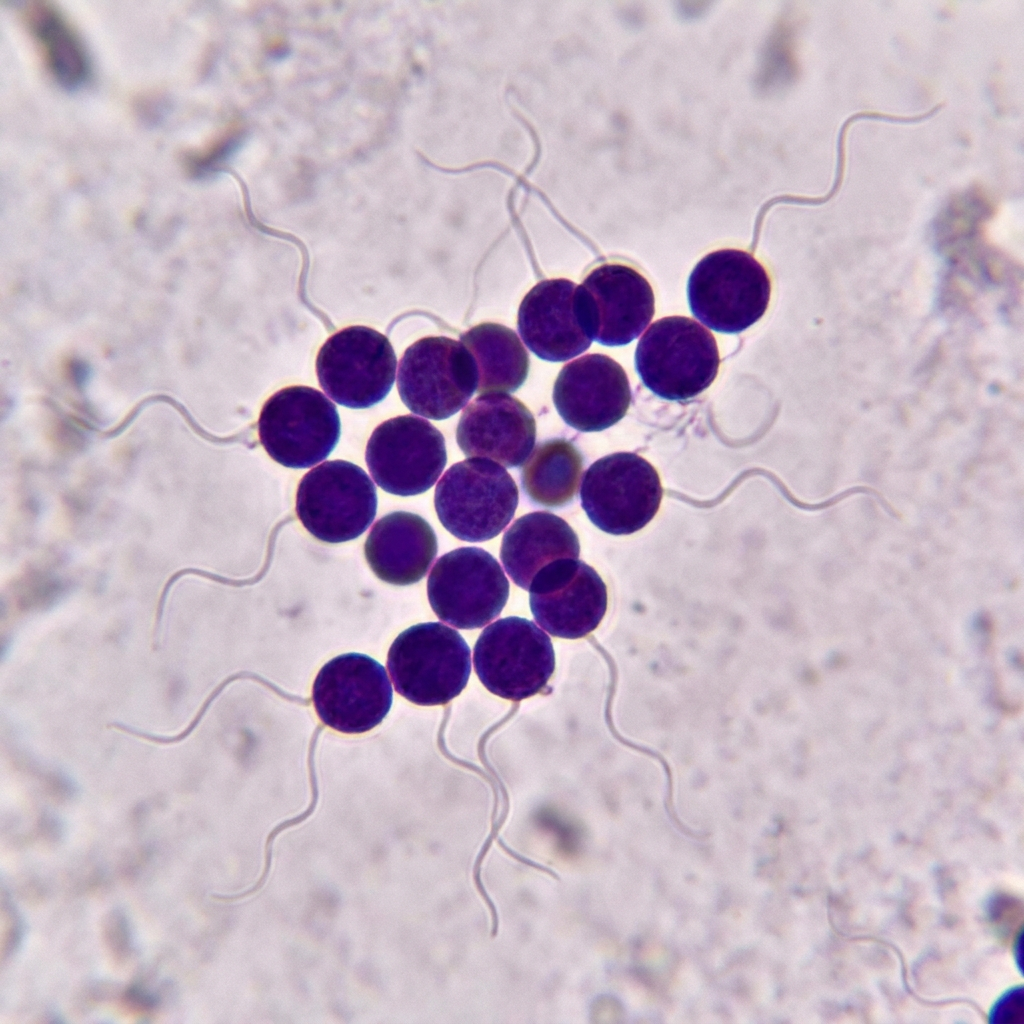
Kingdom
Bacillati
Phylum
Bacillota
Class
Bacilli
Order
Caryophanales
Family
Staphylococcaceae
Genus
Staphylococcus
Description
Taxonomy
| Kingdom | Bacillati |
|---|---|
| Phylum | Bacillota |
| Class | Bacilli |
| Order | Caryophanales |
| Family | Staphylococcaceae |
| Genus | Staphylococcus |
| Species | Staphylococcus capitis |
| Strain | No strain |
Profile
| Physiology | |
|---|---|
| Gram staining properties | Positive |
| Shape | Cocci |
| Mobility | Not Available |
| Flagellar presence | Not Available |
| Number of membranes | Not Available |
| Ecology, Host, and Life Cycle | |
|---|---|
| Oxygen requirements | Facultative anaerobe |
| Optimal temperature | Not Available |
| Temperature range | Not Available |
| Habitat | neonatal intensive care units (NICUs); pork meat; skin; skin surface of the foot |
| Biotic relationship | Not Available |
| Host(s) | Not Available |
| Cell arrangement | Not Available |
| Sporulation | Not Available |
| Energy source | Not Available |
| Pathogenicity | Not Available |
Genome Summary
Staphylococcus capitis
Accession NumberCVUF00000000.1
Gene Summary
Adenine Count
827874 bp
Thymine Count
855418 bp
Guanine Count
394123 bp
Cytosine Count
427937 bp
Genome Length
2505352 bp
Protein-coding Genes
2384 genes
Non-Coding Genes
139 genes
# of Chromosomes/Plasmids
1
Genes
| Name | Locus Tag | UniProt | Strand | Coordinates | Molecular Weight |
|---|---|---|---|---|---|
| abc transporter, permease protein | BN151710231 | Not Available | + | 252002 - 252898 | 33336.0 |
| phosphohydrolase, icc family | BN151710232 | Not Available | + | 252913 - 253767 | 33124.9 |
| mate efflux family protein | BN151710233 | Not Available | + | 253754 - 255079 | 49308.4 |
| uncharacterized hth-type transcriptional regulator se_1102 | BN151710234 | Not Available | + | 255086 - 255853 | 29504.1 |
| two-component response regulator (ykoh) | BN151710235 | Not Available | + | 256534 - 257193 | 25459.7 |
| signal transduction histidine-protein kinase arls | BN151710236 | Not Available | + | 257190 - 258554 | 52714.6 |
| 2-oxoglutarate dehydrogenase (e1 subunit) | BN151710237 | Not Available | + | 258789 - 261593 | 105515.0 |
| 2-oxoglutarate dehydrogenase complex (dihydrolipoamide transsuccinylase, e2 subunit) | BN151710238 | Not Available | + | 261611 - 262885 | 46334.2 |
| fic family protein (fragment) | BN151710239 | Not Available | + | 263081 - 263461 | 14953.8 |
| hypothetical protein | BN151710240 | Not Available | + | 263559 - 263747 | 7315.83 |
Pathways
0 pathways
No pathways found
No metabolic pathways have been associated with this bacterium yet.