Kingdom
Bacillati
Phylum
Bacillota
Class
Bacilli
Order
Lactobacillales
Family
Streptococcaceae
Genus
Streptococcus
Description
Taxonomy
| Kingdom | Bacillati |
|---|---|
| Phylum | Bacillota |
| Class | Bacilli |
| Order | Lactobacillales |
| Family | Streptococcaceae |
| Genus | Streptococcus |
| Species | Streptococcus mitis |
| Strain | No strain |
Profile
| Physiology | |
|---|---|
| Gram staining properties | Positive |
| Shape | Cocci |
| Mobility | No |
| Flagellar presence | Yes |
| Number of membranes | 1 |
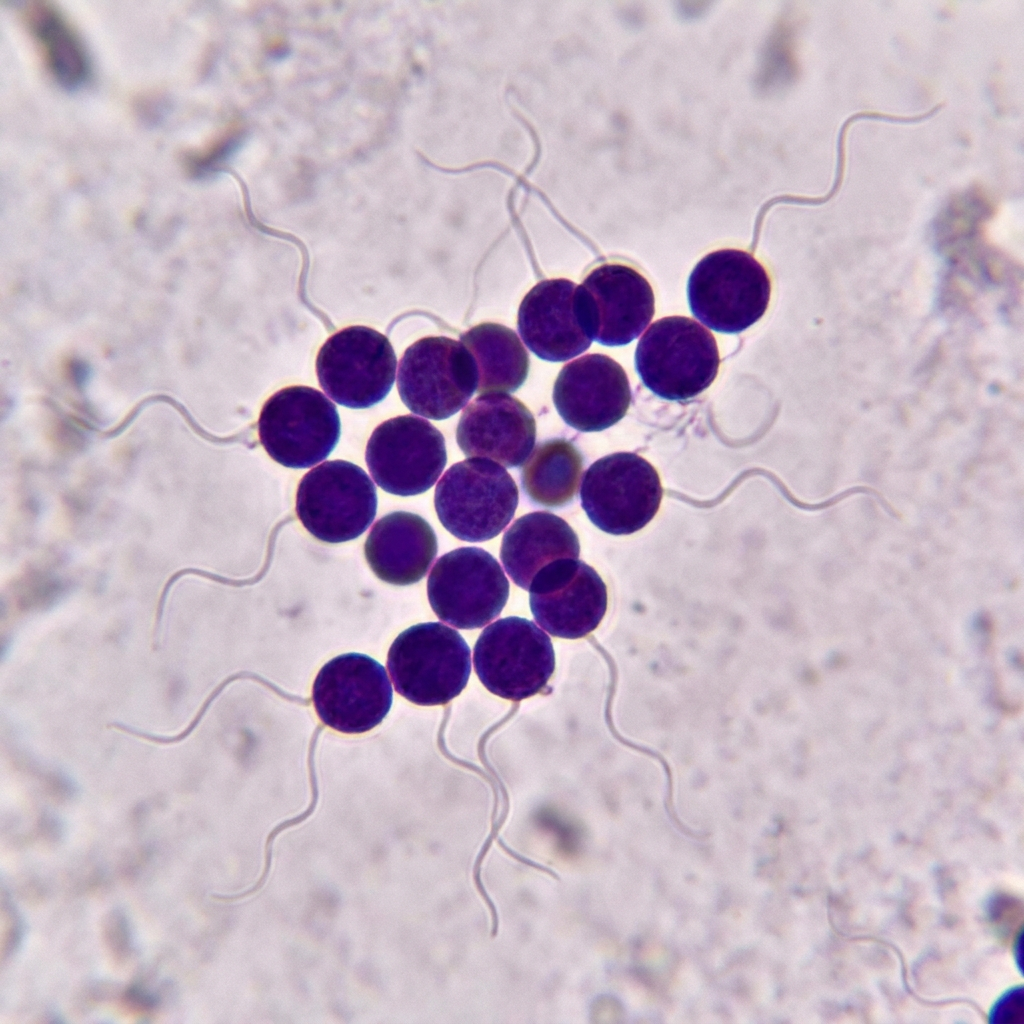
| Ecology, Host, and Life Cycle | |
|---|---|
| Oxygen requirements | Facultative anaerobe |
| Optimal temperature | Not Available |
| Temperature range | Mesophilic |
| Habitat | HostAssociated |
| Biotic relationship | Free living |
| Host(s) | Not Available |
| Cell arrangement | Chains-Pairs |
| Sporulation | Nonsporulating |
| Energy source | Not Available |
| Pathogenicity | Not Available |
Genome Summary
Streptococcus mitis
Accession NumberJYGQ00000000.1
Gene Summary
Adenine Count
Not Available
Thymine Count
Not Available
Guanine Count
Not Available
Cytosine Count
Not Available
Genome Length
Not Available
Protein-coding Genes
1761 genes
Non-Coding Genes
200 genes
# of Chromosomes/Plasmids
23
Genes
| Name | Locus Tag | UniProt | Strand | Coordinates | Molecular Weight |
|---|---|---|---|---|---|
| hypothetical protein | TZ90_00037 | Not Available | + | 36975 - 37181 | 8087.42 |
| competence factor transporting atp-binding protein/permease coma | TZ90_00038 | P59653 | + | 37746 - 39899 | 80372.3 |
| competence factor transport protein comb | TZ90_00039 | P59654 | + | 39912 - 41261 | 49942.7 |
| phosphoribosylaminoimidazole-succinocarboxamide synthase | TZ90_00040 | B5E5J3 | + | 41389 - 42138 | 28567.1 |
| phosphoribosylformylglycinamidine synthase | TZ90_00041 | Q97BD5 | + | 42340 - 46065 | 135470.0 |
| amidophosphoribosyltransferase | TZ90_00042 | P00497 | + | 46078 - 47520 | 52877.1 |
| phosphoribosylaminoimidazole synthetase | TZ90_00043 | A8AU99 | + | 47726 - 48748 | 36446.1 |
| phosphoribosylglycinamide formyltransferase | TZ90_00044 | P12040 | + | 48745 - 49296 | 20358.2 |
| acetyltransferase (gnat) family protein | TZ90_00045 | Not Available | + | 49341 - 49805 | 17868.6 |
| bifunctional phosphoribosylaminoimidazolecarboxamide formyltransferase/imp cyclohydrolase | TZ90_00046 | Q97T99 | + | 49807 - 51354 | 56198.8 |
Pathways
0 pathways
No pathways found
No metabolic pathways have been associated with this bacterium yet.
