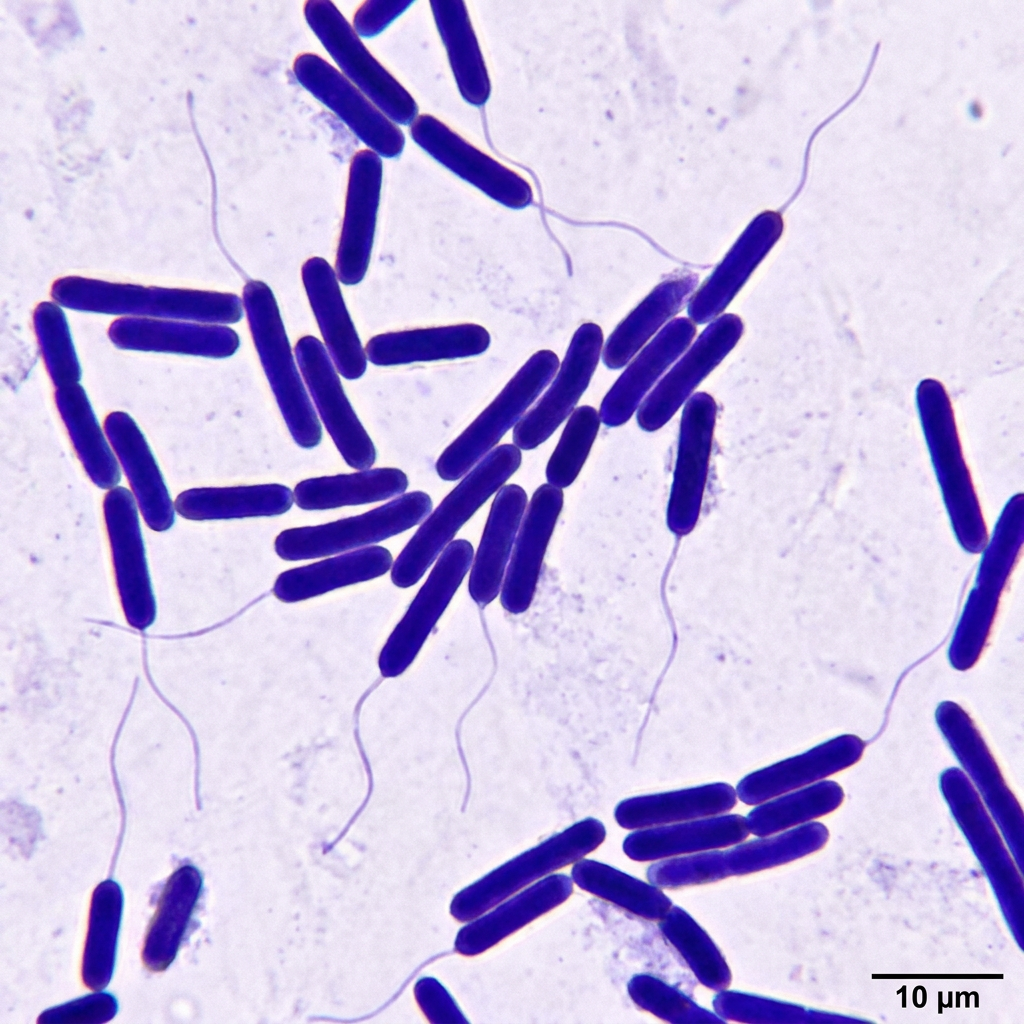
Bifidobacterium longum subsp. longum

Gram-positiveRodNon-motileAnaerobe

Kingdom

Bacillati

Phylum

Actinomycetota

Class

Actinomycetes

Order

Bifidobacteriales

Family

Bifidobacteriaceae

Genus

Bifidobacterium

Description

Bifidobacterium longum subsp. longum is a type of gram-positive, rod-shaped bacteria that thrives in a variety of environments. It is classified as a thermophilic microbe, preferring temperatures between 32°C and 40°C, making it well-suited to inhabit the human gut. In terms of metabolism, B. longum is a heterotroph, relying on the consumption of organic compounds for energy production. Specifically, it uses fermentation to break down complex carbohydrates, producing lactic acid and acetic acid as byproducts. As a gram-positive bacterium, B. longum has a thick peptidoglycan layer in its cell wall, which provides structural support and helps to maintain the cell's shape. The rod-shaped morphology of this microbe allows it to efficiently colonize and inhabit the crevices of the human gut. B. longum is found in all body sites, with a particular predilection for the gastrointestinal tract, where it plays a crucial role in the degradation of complex carbohydrates and the production of short-chain fatty acids. In terms of its oxygen tolerance, B. longum is an obligate anaerobe, meaning it cannot survive in the presence of oxygen. This is not surprising, given its ability to thrive in the low-oxygen environment of the gut. Despite this, B. longum is capable of fermenting complex carbohydrates in the presence of low levels of oxygen, allowing it to thrive in a variety of ecological niches. B. longum has been used as a probiotic in the treatment of various gastrointestinal disorders, including irritable bowel syndrome (IBS), inflammatory bowel disease (IBD), and antibiotic-associated diarrhea. Its ability to produce short-chain fatty acids and its stimulation of mucin production in the gut have been implicated in its therapeutic benefits. Additionally, B. longum has been shown to modulate the host immune response, reducing inflammation and improving the overall health of the gut microbiome. Its unique combination of characteristics make B. longum a valuable component of the human microbial ecosystem.

Taxonomy

KingdomBacillati
PhylumActinomycetota
ClassActinomycetes
OrderBifidobacteriales
FamilyBifidobacteriaceae
GenusBifidobacterium
SpeciesBifidobacterium longum
StrainNo strain

Profile

Physiology
Gram staining propertiesPositive
ShapeRod
MobilityNo
Flagellar presenceYes
Number of membranes1
Image of Bifidobacterium longum subsp. longum
AI-generated image based on bacteria physiology
Ecology, Host, and Life Cycle
Oxygen requirementsAnaerobe
Optimal temperature37
Temperature rangeMesophilic
HabitatHostAssociated
Biotic relationshipFree living
Host(s)Not Available
Cell arrangementClusters - Pairs - Singles
SporulationNot Available
Energy sourceNot Available
PathogenicityNot Available

Gene Summary

Adenine Count

502230 bp

Thymine Count

490261 bp

Guanine Count

741120 bp

Cytosine Count

753282 bp

Genome Length

2486893 bp

Protein-coding Genes

2036 genes

Non-Coding Genes

137 genes

# of Chromosomes/Plasmids

10

Genes

NameLocus TagUniProtStrandCoordinatesMolecular Weight
hypothetical proteinMCC10119_1514Not Available-1759682 - 176024520357.2
beta-1,3-exoglucanaseMCC10119_1515Not Available-1760311 - 176151646136.4
hypothetical proteinMCC10119_1516Not Available-1761527 - 176192815381.1
nucleotidyltransferaseMCC10119_1517Not Available-1761915 - 176220210581.7
beta-glucosidaseMCC10119_1518Not Available-1762650 - 176501084649.2
glycosyl hydrolases family 30MCC10119_1519Not Available-1765042 - 176539513147.6
glutamate--cysteine ligaseMCC10119_1520Not Available-1765488 - 176676548649.2
hypothetical proteinMCC10119_1521Not Available+1767331 - 1772130169289.0
hypothetical proteinMCC10119_1522Not Available+1772134 - 177297630219.0
activator of (r)-2-hydroxyglutaryl-coa dehydrataseMCC10119_1523Not Available-1773139 - 1778277186140.0

Displaying genes 1621 – 1630 of 21664 in total

Metabolites

14 records
Metabolite IDMetabolite nameStructureCAS number
BASm0000377(S)-malateC4H4O5Chemical structure of (S)-malateNot available
Average132.0716Da
Monoisotopic132.005873238Da
BASm00007164-methylsulfanyl-2-oxobutanoateC5H7O3SChemical structure of 4-methylsulfanyl-2-oxobutanoateNot available
Average147.17Da
Monoisotopic147.012138839Da
BASm0001279(6S)-5-methyl-5,6,7,8-tetrahydrofolateC20H23N7O6Chemical structure of (6S)-5-methyl-5,6,7,8-tetrahydrofolateNot available
Average457.4399Da
Monoisotopic457.1709815Da
BASm0001749terephthalateC8H4O4Chemical structure of terephthalateNot available
Average164.1161Da
Monoisotopic164.012055776Da
BASm0001865diphosphateHO7P2Chemical structure of diphosphateNot available
Average174.95Da
Monoisotopic174.9213971Da
BASm00019783-(4-hydroxyphenyl)pyruvateC9H7O4Chemical structure of 3-(4-hydroxyphenyl)pyruvateNot available
Average179.1495Da
Monoisotopic179.034433712Da
BASm0002002glyoxylateC2HO3Chemical structure of glyoxylateNot available
Average73.0275Da
Monoisotopic72.9925689Da
BASm0002906all-trans-octaprenyl diphosphateC40H65O7P2Chemical structure of all-trans-octaprenyl diphosphateNot available
Average719.8874Da
Monoisotopic719.4205525Da
BASm00031233',5'-cyclic CMPC9H11N3O7PNot availableNot available
Average304.175Da
Monoisotopic304.034010284Da
BASm0003389NADP(+)C21H25N7O17P3Chemical structure of NADP(+)Not available
Average740.386Da
Monoisotopic740.053624107Da

Displaying 1–10 of 14 metabolites