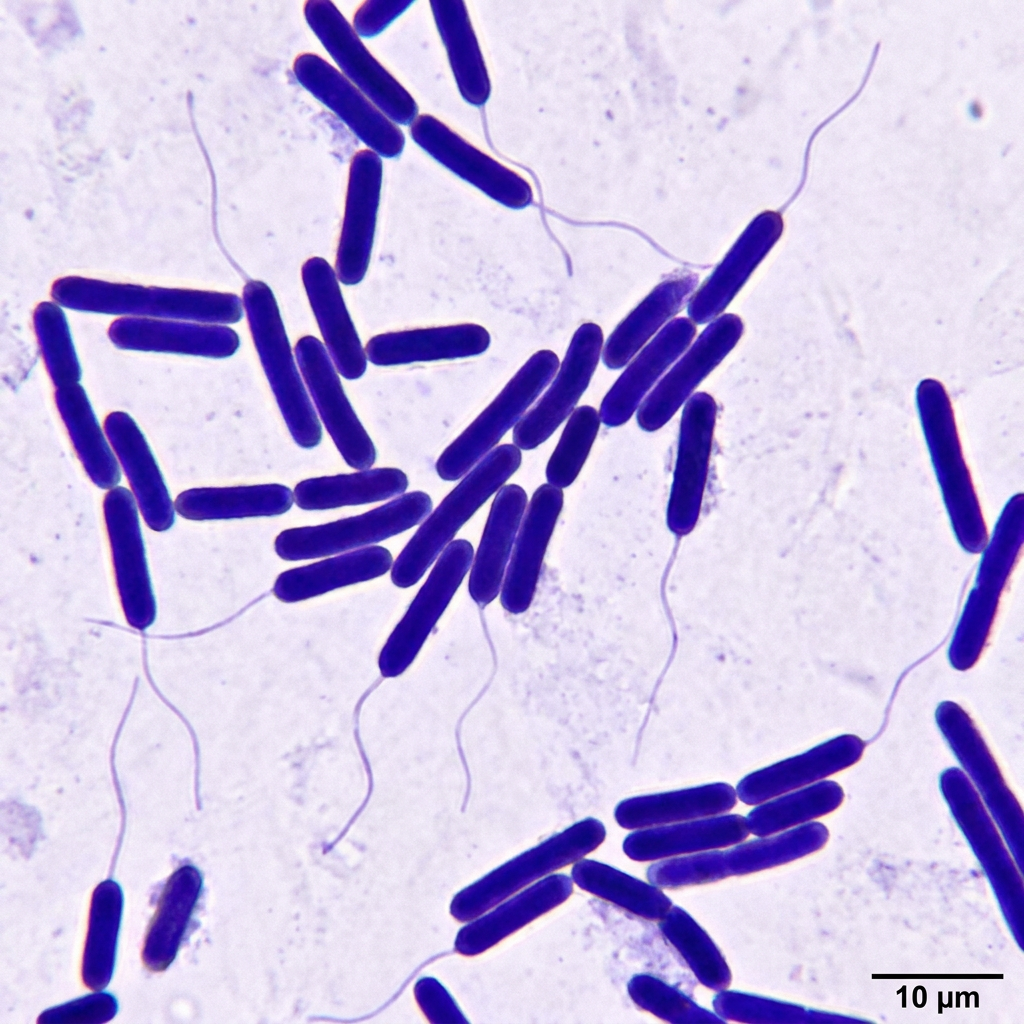
Kingdom
Bacillati
Phylum
Bacillota
Class
Bacilli
Order
Caryophanales
Family
Listeriaceae
Genus
Listeria
Description
Taxonomy
| Kingdom | Bacillati |
|---|---|
| Phylum | Bacillota |
| Class | Bacilli |
| Order | Caryophanales |
| Family | Listeriaceae |
| Genus | Listeria |
| Species | Listeria grayi |
| Strain | No strain |
Profile
| Physiology | |
|---|---|
| Gram staining properties | Positive |
| Shape | Not Available |
| Mobility | Yes |
| Flagellar presence | Not Available |
| Number of membranes | Not Available |
| Ecology, Host, and Life Cycle | |
|---|---|
| Oxygen requirements | Facultative anaerobe |
| Optimal temperature | Not Available |
| Temperature range | Not Available |
| Habitat | Not Available |
| Biotic relationship | Not Available |
| Host(s) | Not Available |
| Cell arrangement | Not Available |
| Sporulation | Not Available |
| Energy source | Not Available |
| Pathogenicity | Human; Non-pathogenic |
Genome Summary
Listeria grayi
Accession NumberUGPG00000000.1
Gene Summary
Adenine Count
Not Available
Thymine Count
Not Available
Guanine Count
Not Available
Cytosine Count
Not Available
Genome Length
Not Available
Protein-coding Genes
Not Available
Non-Coding Genes
Not Available
# of Chromosomes/Plasmids
2
Genes
| Name | Locus Tag | UniProt | Strand | Coordinates | Molecular Weight |
|---|---|---|---|---|---|
| gtp 3',8-cyclase moaa | EL241_RS00855 | Not Available | - | 167618 - 168619 | 37651.2 |
| moad/this family protein | EL241_RS00860 | Not Available | - | 168640 - 168885 | 8914.85 |
| molybdenum cofactor biosynthesis protein moae | EL241_RS00865 | Not Available | - | 168882 - 169292 | 15595.0 |
| respiratory nitrate reductase subunit gamma | EL241_RS00870 | Not Available | - | 169315 - 169995 | 25767.6 |
| nitrate reductase molybdenum cofactor assembly chaperone | EL241_RS00875 | Not Available | - | 169992 - 170570 | 22804.3 |
| nitrate reductase subunit beta | EL241_RS00880 | Not Available | - | 170563 - 172134 | 59648.3 |
| nitrate reductase subunit alpha | EL241_RS00885 | Not Available | - | 172124 - 175795 | 139015.0 |
| hesa/moeb/thif family protein | EL241_RS00890 | Not Available | + | 175907 - 176926 | 37855.6 |
| molybdenum cofactor biosynthesis protein b | EL241_RS00895 | Not Available | + | 176923 - 177405 | 17637.3 |
| cyclic pyranopterin monophosphate synthase moac | EL241_RS00900 | Not Available | - | 177625 - 178101 | 17242.1 |
Pathways
0 pathways
No pathways found
No metabolic pathways have been associated with this bacterium yet.