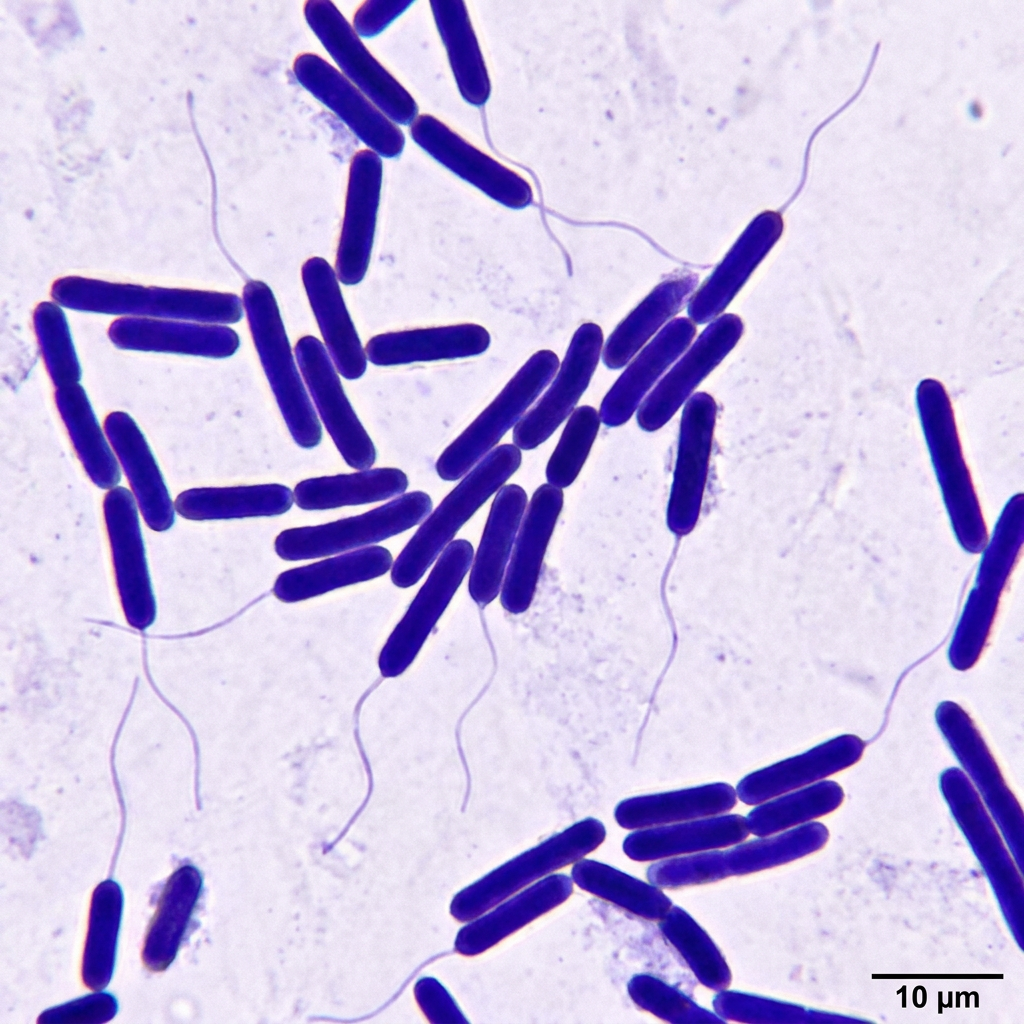
Paenibacillus polymyxa

Gram-positiveRodMotileFacultative anaerobe

Kingdom

Bacillati

Phylum

Bacillota

Class

Bacilli

Order

Caryophanales

Family

Paenibacillaceae

Genus

Paenibacillus

Description

Paenibacillus polymyxa is a type of Gram-positive, rod-shaped bacterium that thrives in a wide range of temperatures, classified as mesophilic, with a preference for temperatures between 20°C and 40°C. As a chemoheterotroph, it derives energy from the breakdown of organic compounds, using a respiratory metabolism to produce energy. This microbe is capable of fermenting a variety of substrates, including sugars, amino acids, and fatty acids, to produce ATP. The cells of P. polymyxa are typically slender, rod-shaped, and measure approximately 0.5-1.5 μm in width and 2-5 μm in length. They are capable of growing in a variety of environments, including soil, plant surfaces, and the human gut. In fact, P. polymyxa has been isolated from all body sites in all possible species, including skin, respiratory tract, gastrointestinal tract, and urogenital tract. P. polymyxa is an obligate aerobe, requiring oxygen to grow and survive. It is also a facultative anaerobe, able to tolerate low oxygen levels, but exhibits optimal growth in the presence of atmospheric oxygen. This bacterium is found in a variety of environments, including soil, decaying organic matter, and the surface of plants. Paenibacillus polymyxa has been recognized for its industrial applications, particularly in the production of enzymes and bioactive compounds. Its enzymes, such as amylases and proteases, have been used in various industries, including food processing, textile manufacturing, and bioremediation. Additionally, P. polymyxa has been investigated for its potential in the treatment of human diseases, including inflammatory bowel disease and cancer. Its unique characteristics, such as its ability to produce bioactive compounds and its tolerance to various environmental conditions, make it an attractive subject for further research and development.

Taxonomy

KingdomBacillati
PhylumBacillota
ClassBacilli
OrderCaryophanales
FamilyPaenibacillaceae
GenusPaenibacillus
SpeciesPaenibacillus polymyxa
StrainNo strain

Profile

Physiology
Gram staining propertiesPositive
ShapeRod
MobilityYes
Flagellar presenceYes
Number of membranesNot Available
Image of Paenibacillus polymyxa
Image source: Wikipedia/Wikimedia
Ecology, Host, and Life Cycle
Oxygen requirementsFacultative anaerobe
Optimal temperature37
Temperature rangeMesophilic
HabitatMultiple
Biotic relationshipFree living
Host(s)Gallus gallus, Viridiplantae, Triticum aestivum
Cell arrangementNot Available
SporulationSporulating
Energy sourceChemoheterotroph
PathogenicityNot Available

Genome Summary

Paenibacillus polymyxa strain ND24 Scaffold_9, whole genome

Gene Summary

Adenine Count

1442759 bp

Thymine Count

1448993 bp

Guanine Count

1209293 bp

Cytosine Count

1206751 bp

Genome Length

5307796 bp

Protein-coding Genes

3218 genes

Non-Coding Genes

0 genes

# of Chromosomes/Plasmids

2

Genes

NameLocus TagUniProt IDStrand OrientationGene Start/EndProtein Molecular Weight
hypothetical proteinA9P44_03500Not AvailableNegative141 - 116638756.3
glycosyl transferaseA9P44_03505Not AvailablePositive1536 - 270543772.6
hypothetical proteinA9P44_03510Not AvailableNegative2761 - 339323723.4
hypothetical proteinA9P44_03515Not AvailablePositive3956 - 41687899.52
hypothetical proteinA9P44_03520Not AvailableNegative4806 - 50187732.39
hypothetical proteinA9P44_03525Not AvailableNegative5234 - 557513072.1
hypothetical proteinA9P44_03530Not AvailablePositive5706 - 669537924.2
sam-dependent methyltransferaseA9P44_03535Not AvailablePositive7066 - 856857253.4
restriction endonucleaseA9P44_03540Not AvailablePositive8568 - 951535636.0
hypothetical proteinA9P44_03545Not AvailableNegative9583 - 1015823073.4

Displaying genes 1 – 10 of 3218 in total

Pathways

0 pathways

No pathways found

No metabolic pathways have been associated with this bacterium yet.

Metabolites

14 records
Metabolite IDMetabolite nameStructureCAS number
BASm0014437Fusaricidin BC42H76N10O11Chemical structure of Fusaricidin BNULL
Average897.129Da
Monoisotopic896.569503307Da
BASm0014885LI-F06aC43H78N10O11Chemical structure of LI-F06aNULL
Average911.156Da
Monoisotopic910.585153372Da
BASm0015501Polymyxin B5C56H98N16O13Chemical structure of Polymyxin B5NULL
Average1203.499Da
Monoisotopic1202.74992728Da
BASm0015634Fusaricidin DC46H76N10O12Chemical structure of Fusaricidin DNULL
Average961.172Da
Monoisotopic960.564417927Da
BASm0015957Fusaricidin CC45H74N10O12Chemical structure of Fusaricidin CNULL
Average947.145Da
Monoisotopic946.548767863Da
BASm0016054LI-F07aC46H76N10O11Chemical structure of LI-F07aNULL
Average945.173Da
Monoisotopic944.569503307Da
BASm0016395LI-F05aC42H76N10O11Chemical structure of LI-F05aNULL
Average897.129Da
Monoisotopic896.569503307Da
BASm0016476Polymyxin B6C56H98N16O14Not availableNULL
Average1219.498Da
Monoisotopic1218.7448419Da
BASm0016573LI-F05bC43H78N10O11Chemical structure of LI-F05bNULL
Average911.156Da
Monoisotopic910.585153372Da
BASm0016712LI-F08aC43H78N10O11Chemical structure of LI-F08aNULL
Average911.156Da
Monoisotopic910.585153372Da

Displaying 1–10 of 14 metabolites

Health Effects

No health effects information available for this bacterium.