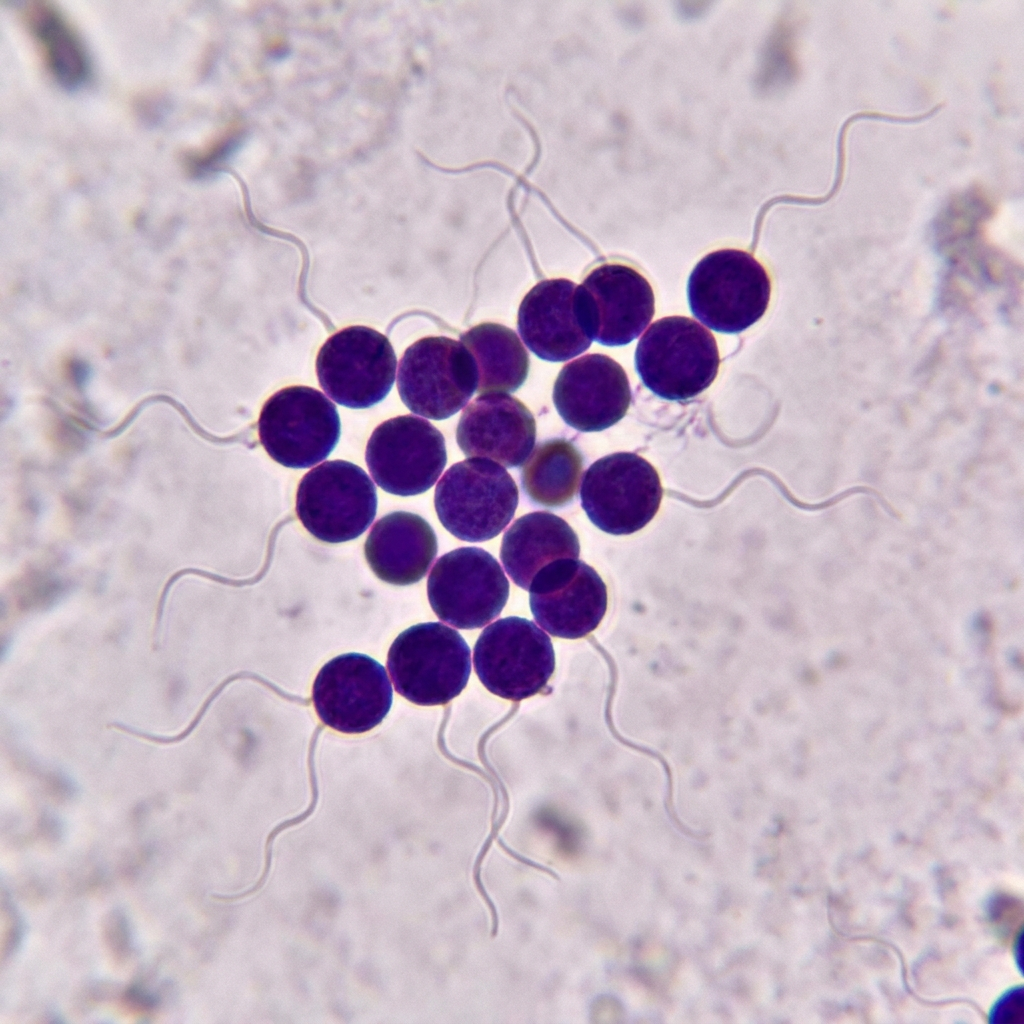
Staphylococcus carnosus

Gram-positiveCocciNon-motileFacultative anaerobe

Kingdom

Bacillati

Phylum

Bacillota

Class

Bacilli

Order

Caryophanales

Family

Staphylococcaceae

Genus

Staphylococcus

Description

Staphylococcus carnosus is a Gram-positive, coccus-shaped bacterium that thrives in environments with temperatures ranging from mesophilic to thermophilic, having a preference for temperatures between 25-45°C, categorizing it as a category 2 (mesophilic-thermophilic) temperature organism. This bacterium is a heterotroph, meaning it obtains its energy by breaking down complex organic molecules, specifically using a combination of fermentation and respiration to produce energy. As a facultative anaerobe, S. carnosus can tolerate the presence of oxygen, growing optimally in aerobic conditions, but can also survive in the absence of oxygen. This adaptability allows the microbe to inhabit various environments, from skin and mucous membranes to internal organs and wounds. Upon Gram staining, S. carnosus exhibits a positive reaction, indicating the presence of a thick peptidoglycan layer in its cell wall. The bacterium's coccus shape is typically arranged in clusters or grape-like formations, often observed in chains or scattered individuals. S. carnosus can be found inhabiting various body sites, including skin, mucous membranes, and respiratory, gastrointestinal, and genitourinary tracts. Its ability to adapt to different environments allows it to colonize a wide range of host niches. This microbe plays a crucial role in the development of skin and mucous membranes, and is also associated with various diseases, including skin infections, septicemia, and endocarditis. Research has also shown that S. carnosus is used as a model organism in biotechnological applications, such as the production of enzymes, antioxidants, and biosurfactants. Studies have also explored its potential as a probiotic, demonstrating its ability to modulate the host immune system and improve gut health. Staphylococcus carnosus has also been found to possess a remarkable ability to form biofilms, complex communities of microorganisms attached to surfaces, which provide protection against environmental stressors and host immune responses. This capacity has implications for the development of novel antimicrobial therapies and infection prevention strategies.

Taxonomy

KingdomBacillati
PhylumBacillota
ClassBacilli
OrderCaryophanales
FamilyStaphylococcaceae
GenusStaphylococcus
SpeciesStaphylococcus carnosus
StrainNo strain

Profile

Physiology
Gram staining propertiesPositive
ShapeCocci
MobilityNo
Flagellar presenceYes
Number of membranes1
Image of Staphylococcus carnosus
Ecology, Host, and Life Cycle
Oxygen requirementsFacultative anaerobe
Optimal temperatureNot Available
Temperature rangeMesophilic
Habitatfermented raw sausages; Harbin dry sausages; raw sausage
Biotic relationshipFree living
Host(s)Not Available
Cell arrangementClusters - Singles
SporulationNot Available
Energy sourceNot Available
PathogenicityNon-pathogenic

Genome Summary

Staphylococcus carnosus

Accession NumberUHCY00000000.1

Gene Summary

Adenine Count

Not Available

Thymine Count

Not Available

Guanine Count

Not Available

Cytosine Count

Not Available

Genome Length

Not Available

Protein-coding Genes

2520 genes

Non-Coding Genes

190 genes

# of Chromosomes/Plasmids

1

Genes

NameLocus TagUniProtStrandCoordinatesMolecular Weight
Orf042NCTC13826_01857Not Available-1818378 - 181878515947.7
Orf016NCTC13826_01858Not Available-1818952 - 181973730020.9
Orf012NCTC13826_01859Not Available-1819738 - 182050830024.1
Orf045NCTC13826_01860Not Available-1820501 - 182084813461.2
Hypothetical proteinNCTC13826_01861Not Available-1820841 - 182151526016.9
Hypothetical proteinNCTC13826_01862Not Available-1821527 - 182208421441.0
Hypothetical proteinNCTC13826_01863Not Available-1822112 - 182287928785.3
Hypothetical proteinNCTC13826_01864Not Available-1822880 - 182336518384.8
uncharacterised proteinNCTC13826_01865Not Available-1823365 - 18235748527.04
uncharacterised proteinNCTC13826_01866Not Available-1823638 - 18238207026.46

Displaying genes 41 – 50 of 2710 in total

Pathways

0 pathways

No pathways found

No metabolic pathways have been associated with this bacterium yet.

Metabolites

77 records
Metabolite IDMetabolite nameStructureCAS number
BASm00002512-dehydropantoateC6H9O4Chemical structure of 2-dehydropantoateNot available
Average145.1333Da
Monoisotopic145.050083776Da
BASm0000377(S)-malateC4H4O5Chemical structure of (S)-malateNot available
Average132.0716Da
Monoisotopic132.005873238Da
BASm0000387(6R)-5,10-methylene-5,6,7,8-tetrahydrofolateC20H21N7O6Chemical structure of (6R)-5,10-methylene-5,6,7,8-tetrahydrofolateNot available
Average455.432Da
Monoisotopic455.1564286Da
BASm0001035indole-3-pyruvateC11H8NO3Chemical structure of indole-3-pyruvate35656-49-6
Average202.1861Da
Monoisotopic202.0504181Da
BASm0001697(S)-4,5-dihydroxypentane-2,3-dioneC5H8O4Chemical structure of (S)-4,5-dihydroxypentane-2,3-dioneNot available
Average132.1146Da
Monoisotopic132.042258744Da
BASm0001717fumarateC4H2O4Chemical structure of fumarateNot available
Average114.0563Da
Monoisotopic113.9953086Da
BASm0001779orotateC5H3N2O4Chemical structure of orotateNot available
Average155.09Da
Monoisotopic155.0098302Da
BASm0001865diphosphateHO7P2Chemical structure of diphosphateNot available
Average174.95Da
Monoisotopic174.9213971Da
BASm0001921(S)-3-methyl-2-oxopentanoateC6H9O3Chemical structure of (S)-3-methyl-2-oxopentanoate1460-34-0
Average129.1339Da
Monoisotopic129.0551692Da
BASm0002198beta-D-ribofuranoseC5H10O5Chemical structure of beta-D-ribofuranose50-69-1
Average150.1299Da
Monoisotopic150.05282343Da

Displaying 1–10 of 77 metabolites