Kingdom
Bacillati
Phylum
Bacillota
Class
Clostridia
Order
Eubacteriales
Family
Oscillospiraceae
Genus
Hominimerdicola
Description
Taxonomy
| Kingdom | Bacillati |
|---|---|
| Phylum | Bacillota |
| Class | Clostridia |
| Order | Eubacteriales |
| Family | Oscillospiraceae |
| Genus | Hominimerdicola |
| Species | Hominimerdicola alba |
| Strain | No strain |
Profile
| Physiology | |
|---|---|
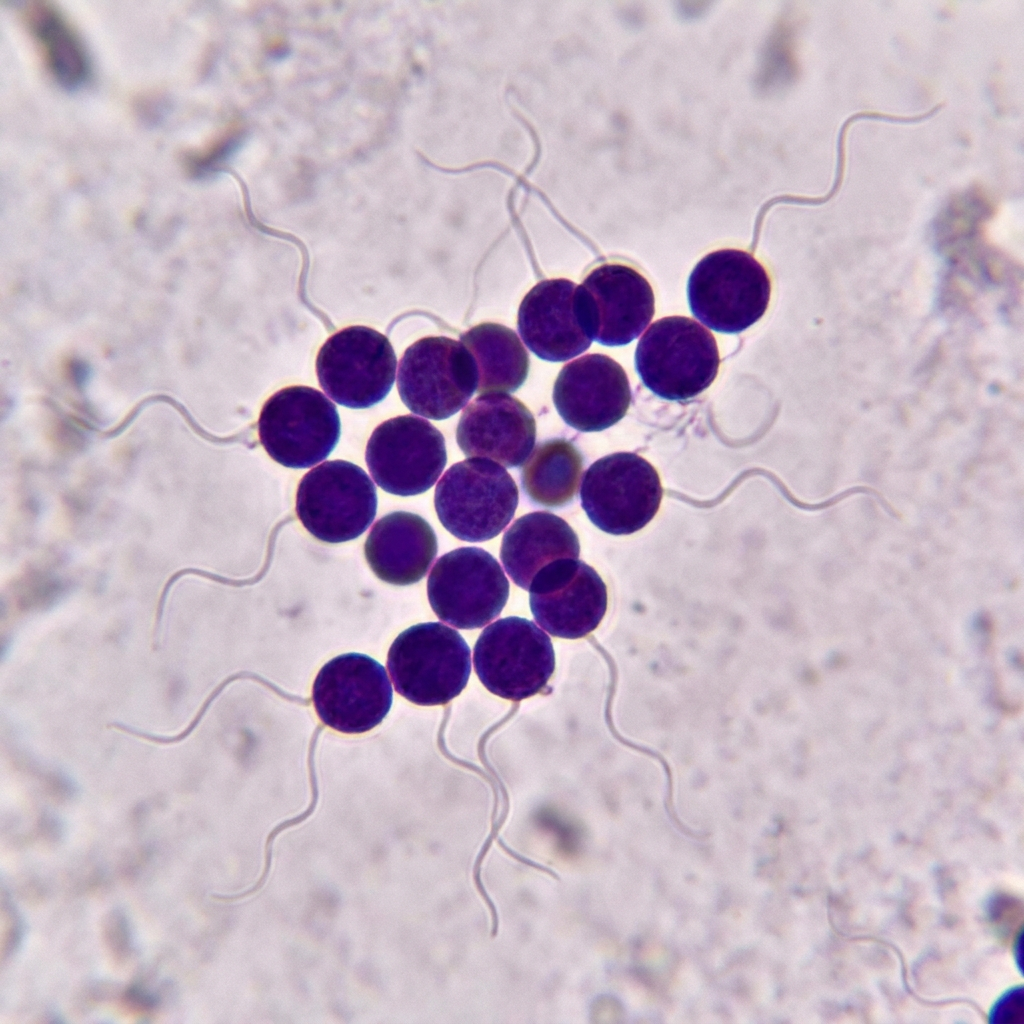
| Gram staining properties | Positive |
| Shape | Cocci |
| Mobility | No |
| Flagellar presence | Yes |
| Number of membranes | 1 |
| Ecology, Host, and Life Cycle | |
|---|---|
| Oxygen requirements | Anaerobe |
| Optimal temperature | Not Available |
| Temperature range | Mesophilic |
| Habitat | HostAssociated |
| Biotic relationship | Free living |
| Host(s) | Not Available |
| Cell arrangement | Not Available |
| Sporulation | Nonsporulating |
| Energy source | Not Available |
| Pathogenicity | Not Available |
Genome Summary
Hominimerdicola alba
Accession NumberFOKQ00000000.1
Gene Summary
Adenine Count
Not Available
Thymine Count
Not Available
Guanine Count
Not Available
Cytosine Count
Not Available
Genome Length
Not Available
Protein-coding Genes
0 genes
Non-Coding Genes
0 genes
# of Chromosomes/Plasmids
1
Genes
| Name | Locus Tag | UniProt | Strand | Coordinates | Molecular Weight |
|---|---|---|---|---|---|
| abc-2 type transport system atp-binding protein | SAMN02910406_00096 | Not Available | + | 117009 - 117968 | 35378.0 |
| abc-2 type transport system permease protein | SAMN02910406_00097 | Not Available | + | 117983 - 118714 | 28135.2 |
| abc-type uncharacterized transport system | SAMN02910406_00098 | Not Available | + | 118731 - 120236 | 55810.9 |
| protein of unknown function | SAMN02910406_00099 | Not Available | + | 120233 - 121642 | 52395.7 |
| endo-1,4-beta-xylanase | SAMN02910406_00100 | Not Available | + | 122124 - 124886 | 100769.0 |
| diguanylate cyclase (ggdef) domain-containing protein | SAMN02910406_00101 | Not Available | - | 125029 - 126450 | 53941.2 |
| dna-binding response regulator, ompr family, contains rec and winged-helix (whth) domain | SAMN02910406_00102 | Not Available | + | 126643 - 127302 | 24000.2 |
| abc-2 type transport system atp-binding protein | SAMN02910406_00103 | Not Available | + | 127381 - 128295 | 33626.0 |
| hypothetical protein | SAMN02910406_00104 | Not Available | + | 128288 - 129052 | 28223.3 |
| hypothetical protein | SAMN02910406_00105 | Not Available | + | 129061 - 129933 | 32815.7 |
Pathways
0 pathways
No pathways found
No metabolic pathways have been associated with this bacterium yet.