Kingdom
Bacillati
Phylum
Bacillota
Class
Clostridia
Order
Eubacteriales
Family
Oscillospiraceae
Genus
Hominimerdicola
Description
Taxonomy
| Kingdom | Bacillati |
|---|---|
| Phylum | Bacillota |
| Class | Clostridia |
| Order | Eubacteriales |
| Family | Oscillospiraceae |
| Genus | Hominimerdicola |
| Species | Hominimerdicola alba |
| Strain | No strain |
Profile
| Physiology | |
|---|---|
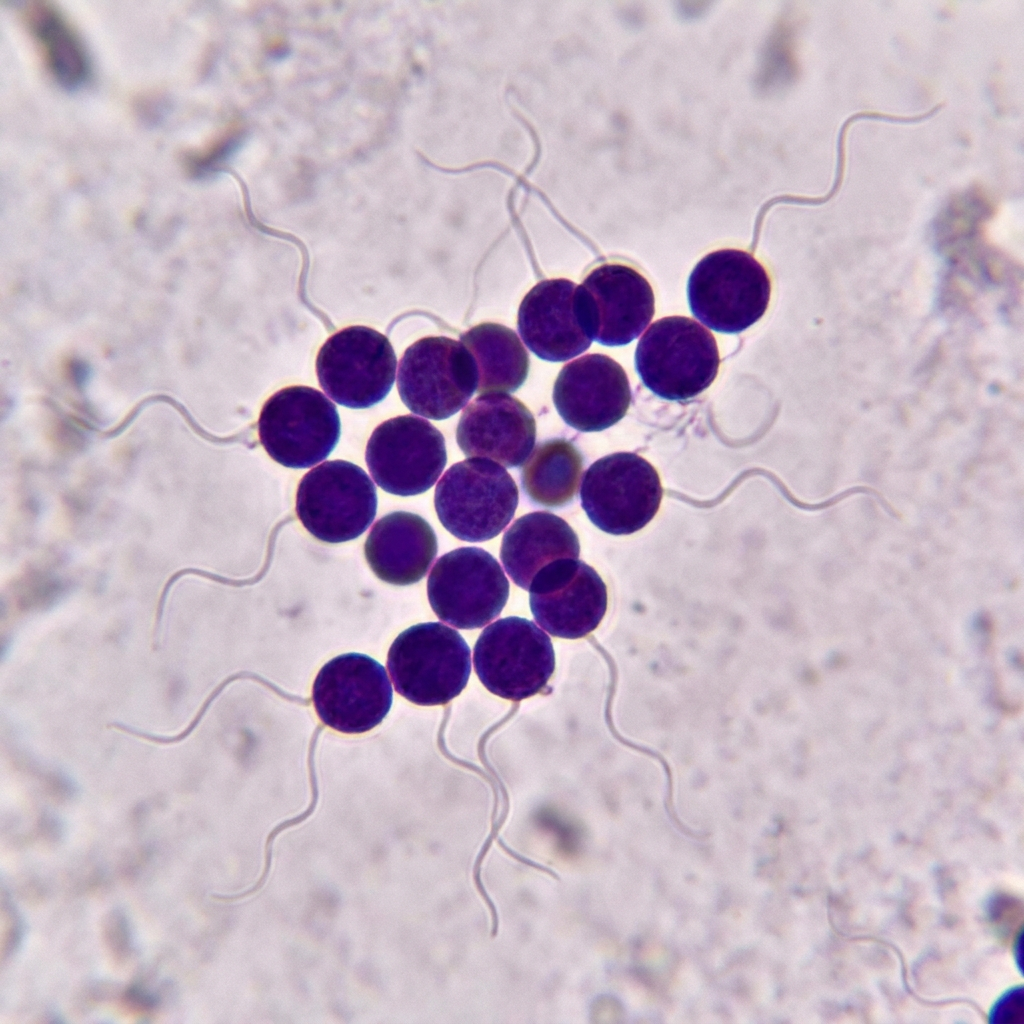
| Gram staining properties | Positive |
| Shape | Cocci |
| Mobility | No |
| Flagellar presence | Yes |
| Number of membranes | 1 |
| Ecology, Host, and Life Cycle | |
|---|---|
| Oxygen requirements | Anaerobe |
| Optimal temperature | Not Available |
| Temperature range | Mesophilic |
| Habitat | HostAssociated |
| Biotic relationship | Free living |
| Host(s) | Not Available |
| Cell arrangement | Not Available |
| Sporulation | Nonsporulating |
| Energy source | Not Available |
| Pathogenicity | Not Available |
Genome Summary
Hominimerdicola alba
Accession NumberFOKQ00000000.1
Gene Summary
Adenine Count
Not Available
Thymine Count
Not Available
Guanine Count
Not Available
Cytosine Count
Not Available
Genome Length
Not Available
Protein-coding Genes
0 genes
Non-Coding Genes
0 genes
# of Chromosomes/Plasmids
1
Genes
| Name | Locus Tag | UniProt | Strand | Coordinates | Molecular Weight |
|---|---|---|---|---|---|
| putative redox-active protein (c_gcaxxg_c_c) | SAMN02910406_00427 | Not Available | - | 507741 - 508109 | 13249.3 |
| transcriptional regulator, laci family | SAMN02910406_00428 | Not Available | - | 508161 - 509162 | 37615.2 |
| hypothetical protein | SAMN02910406_00429 | Not Available | - | 509481 - 510752 | 47796.3 |
| camp-binding domain of crp or a regulatory subunit of camp-dependent protein kinases | SAMN02910406_00430 | Not Available | - | 510879 - 511526 | 23437.1 |
| ribonucleoside-triphosphate reductase class iii catalytic subunit | SAMN02910406_00431 | Not Available | + | 511702 - 513873 | 82602.3 |
| diamine n-acetyltransferase | SAMN02910406_00432 | Not Available | + | 513901 - 514341 | 16706.9 |
| hypothetical protein | SAMN02910406_00433 | Not Available | + | 514370 - 514813 | 17067.2 |
| anaerobic ribonucleoside-triphosphate reductase activating protein | SAMN02910406_00434 | Not Available | + | 514848 - 515372 | 19724.7 |
| dna-binding transcriptional regulator, xre-family hth domain | SAMN02910406_00435 | Not Available | - | 515414 - 515854 | 16808.0 |
| aspartate kinase | SAMN02910406_00436 | Not Available | + | 516095 - 517414 | 48078.4 |
Pathways
0 pathways
No pathways found
No metabolic pathways have been associated with this bacterium yet.