Kingdom
Bacillati
Phylum
Bacillota
Class
Tissierellia
Order
Tissierellales
Family
Peptoniphilaceae
Genus
Finegoldia
Description
Taxonomy
| Kingdom | Bacillati |
|---|---|
| Phylum | Bacillota |
| Class | Tissierellia |
| Order | Tissierellales |
| Family | Peptoniphilaceae |
| Genus | Finegoldia |
| Species | Finegoldia magna |
| Strain | No strain |
Profile
| Physiology | |
|---|---|
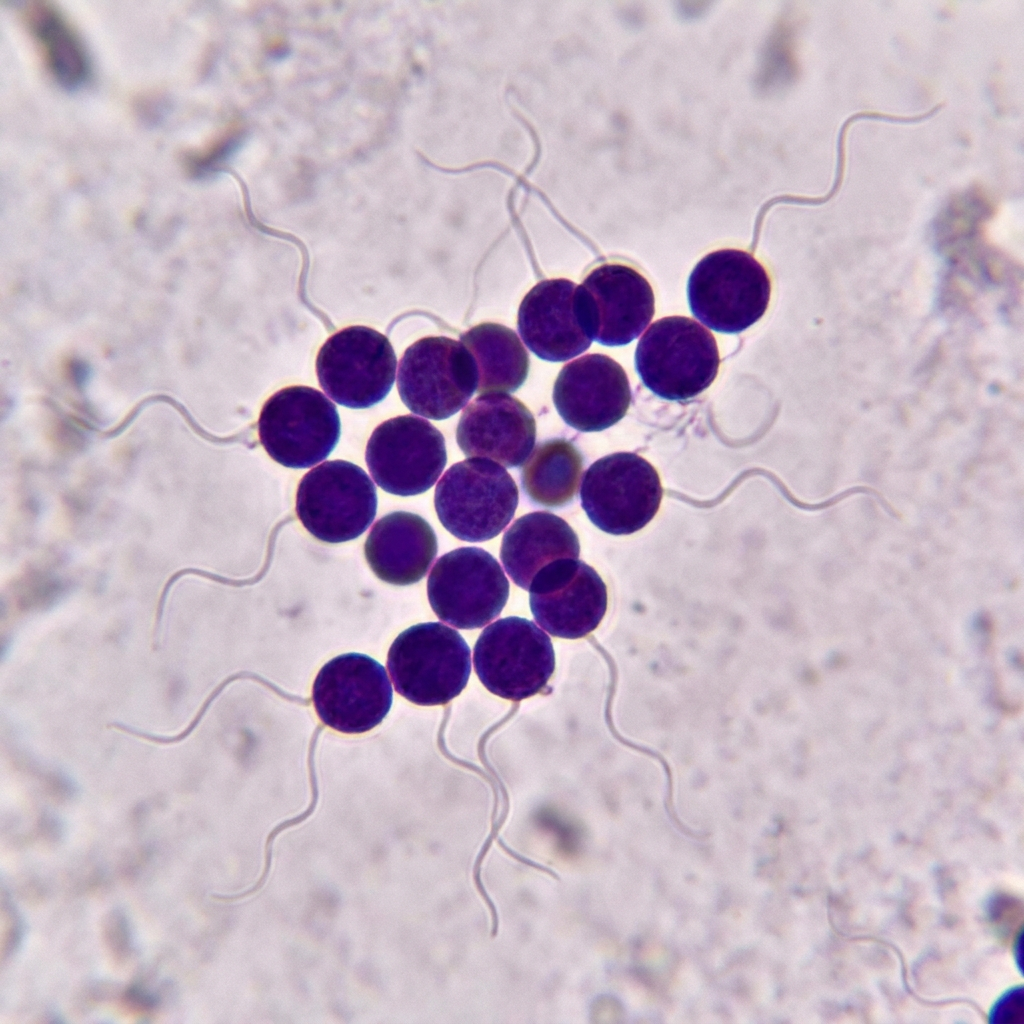
| Gram staining properties | Positive |
| Shape | Cocci |
| Mobility | No |
| Flagellar presence | Yes |
| Number of membranes | 1 |
| Ecology, Host, and Life Cycle | |
|---|---|
| Oxygen requirements | Anaerobe |
| Optimal temperature | Not Available |
| Temperature range | Mesophilic |
| Habitat | Multiple |
| Biotic relationship | Free living |
| Host(s) | Not Available |
| Cell arrangement | Not Available |
| Sporulation | Not Available |
| Energy source | Not Available |
| Pathogenicity | Not Available |
Genome Summary
Finegoldia magna
Accession NumberNDYI00000000.1
Gene Summary
Adenine Count
Not Available
Thymine Count
Not Available
Guanine Count
Not Available
Cytosine Count
Not Available
Genome Length
Not Available
Protein-coding Genes
1765 genes
Non-Coding Genes
46 genes
# of Chromosomes/Plasmids
3
Genes
| Name | Locus Tag | UniProt | Strand | Coordinates | Molecular Weight |
|---|---|---|---|---|---|
| selenoprotein b, glycine/betaine/sarcosine/d-proline reductase domain protein | HMPREF3217_00248 | Q9R4G8 | + | 240555 - 240788 | 8393.36 |
| glycine reductase complex component c, beta subunit | HMPREF3217_00249 | P54935 | + | 240828 - 242375 | 56139.0 |
| fatty acid/phospholipid synthesis protein plsx | HMPREF3217_00250 | Q47878 | + | 242386 - 243531 | 41179.0 |
| hypothetical protein | HMPREF3217_00251 | Not Available | - | 243659 - 244531 | 31695.9 |
| phosphomethylpyrimidine kinase | HMPREF3217_00253 | Not Available | - | 244633 - 245418 | 29444.5 |
| udp-n-acetylmuramate--l-alanine ligase | HMPREF3217_00252 | Q181B7 | + | 245396 - 246949 | 59016.2 |
| linear amide c-n hydrolase, choloylglycine hydrolase family protein | HMPREF3217_00254 | Not Available | + | 246939 - 247889 | 36655.5 |
| transporter, dicarboxylate/amino acid:cation na+/h+ symporter family protein | HMPREF3217_00255 | P54596 | - | 248037 - 249317 | 45772.6 |
| mate efflux family protein | HMPREF3217_00256 | Not Available | - | 249653 - 251020 | 49966.1 |
| edd domain protein, degv family | HMPREF3217_00257 | Q97IL6 | - | 251040 - 251885 | 31302.9 |
Pathways
0 pathways
No pathways found
No metabolic pathways have been associated with this bacterium yet.