
Neisseria meningitidis

Gram-negativeCocciNon-motileAerobe

Kingdom

Pseudomonadati

Phylum

Pseudomonadota

Class

Betaproteobacteria

Order

Neisseriales

Family

Neisseriaceae

Genus

Neisseria

Description

Neisseria meningitidis is a gram-negative, diplococci bacterium that thrives at human body temperature, classifying it as a mesophile. It is a chemoheterotroph, obtaining its energy from organic compounds and relying on host-derived nutrients. This pathogen is primarily found in the nasopharynx of healthy carriers, but it can also colonize the throat and can be present in the bloodstream and cerebrospinal fluid in cases of infections. As a gram-negative organism, N. meningitidis possesses a thin peptidoglycan layer surrounded by an outer membrane rich in lipopolysaccharides. This structural feature contributes to its virulence, as it can evade the immune response and establish infections. The characteristic diplococci shape allows the bacterium to adhere to epithelial surfaces in the nasopharynx, where it can colonize and spread. Its mesophilic nature enables it to thrive in the human body, where temperatures are around 37°C, creating an optimum environment for its growth and reproduction. As a chemoheterotroph, N. meningitidis relies on complex organic substances for energy and carbon, often utilizing glucose and other sugars present in host tissues. Its classification as a microaerophile indicates that it requires lower levels of oxygen than what is present in the atmosphere, making it well-adapted to the oxygen-limited conditions of the nasopharynx. N. meningitidis is notorious for causing serious diseases, including bacterial meningitis and meningococcemia, which can lead to rapid onset and high mortality if not treated promptly. Vaccination is available and has significantly reduced the incidence of these diseases in many populations, but the bacterium still poses a public health risk, particularly in crowded environments like colleges and military barracks. Its ability to form biofilms and its genetic diversity contribute to its enduring presence and occasional outbreaks.

Taxonomy

KingdomPseudomonadati
PhylumPseudomonadota
ClassBetaproteobacteria
OrderNeisseriales
FamilyNeisseriaceae
GenusNeisseria
SpeciesNeisseria meningitidis
StrainNo strain

Profile

Physiology
Gram staining propertiesNegative
ShapeCocci
MobilityNo
Flagellar presenceYes
Number of membranes2
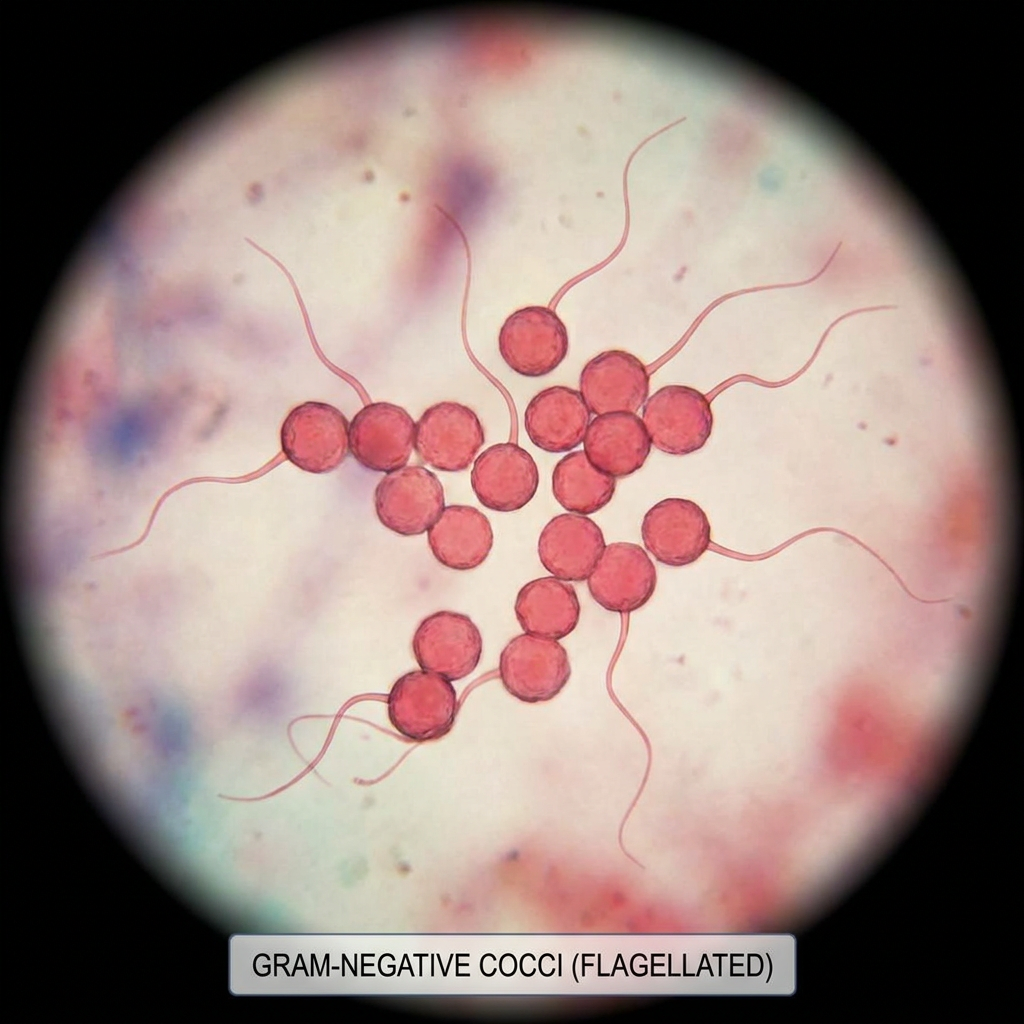
Image of Neisseria meningitidis
Image source: Wikipedia/Wikimedia
Ecology, Host, and Life Cycle
Oxygen requirementsAerobe
Optimal temperature35
Temperature rangeMesophilic
HabitatHostAssociated
Biotic relationshipFree living
Host(s)Not Available
Cell arrangementPairs
SporulationNot Available
Energy sourceNot Available
PathogenicityNot Available

Gene Summary

Adenine Count

500829 bp

Thymine Count

493977 bp

Guanine Count

537251 bp

Cytosine Count

543300 bp

Genome Length

2075515 bp

Protein-coding Genes

1935 genes

Non-Coding Genes

94 genes

# of Chromosomes/Plasmids

8

Genes

NameLocus TagUniProtStrandCoordinatesMolecular Weight
potassium transporter peripheral membrane proteinERS040961_01611E1V6C6-1606024 - 160743651068.6
fumarate hydrataseERS040961_01612P14407-1607534 - 160905754941.0
abc transporter periplasmic histidine-binding protein precursorERS040961_01613Q06758-1609364 - 161017029031.4
uncharacterised proteinERS040961_01614Not Available-1610222 - 16104739548.13
uncharacterised proteinERS040961_01615Not Available+1610573 - 161133428723.0
putative o-succinylhomoserine sulfhydrolaseERS040961_01616P55218+1611674 - 161284341969.2
protein of uncharacterised function (duf2788)ERS040961_01617Not Available+1612938 - 16131447533.74
ribosomal rna small subunit methyltransferase jERS040961_01618A9M1A6-1614338 - 161509027244.6
two component response regulatorERS040961_01619Q00934-1615194 - 161566117513.1
two component sensor kinaseERS040961_01620Not Available-1615713 - 161723056512.8

Displaying genes 1591 – 1600 of 17770 in total

Pathways

22 pathways

No pathways found

No metabolic pathways have been associated with this bacterium yet.
Metabolites

116 records
Metabolite IDMetabolite nameStructureCAS number
BASm0000237(R)-4'-phosphopantothenateC9H18NO8PChemical structure of (R)-4'-phosphopantothenateNot available
Average299.2149Da
Monoisotopic299.0770031Da
BASm00002512-dehydropantoateC6H9O4Chemical structure of 2-dehydropantoateNot available
Average145.1333Da
Monoisotopic145.050083776Da
BASm00002543-hydroxy-2-methylpropanoateC4H7O3Chemical structure of 3-hydroxy-2-methylpropanoateNot available
Average103.098Da
Monoisotopic103.0400677Da
BASm0000377(S)-malateC4H4O5Chemical structure of (S)-malateNot available
Average132.0716Da
Monoisotopic132.005873238Da
BASm0000387(6R)-5,10-methylene-5,6,7,8-tetrahydrofolateC20H21N7O6Chemical structure of (6R)-5,10-methylene-5,6,7,8-tetrahydrofolateNot available
Average455.432Da
Monoisotopic455.1564286Da
BASm0000401(S)-2-succinylamino-6-oxoheptanedioateC11H12NO8Chemical structure of (S)-2-succinylamino-6-oxoheptanedioateNot available
Average286.218Da
Monoisotopic286.0579371Da
BASm00005275-oxopentanoateC5H7O3Chemical structure of 5-oxopentanoateNot available
Average115.109Da
Monoisotopic115.040067665Da
BASm0000642S-adenosyl-4-methylsulfanyl-2-oxobutanoateC15H19N5O6SChemical structure of S-adenosyl-4-methylsulfanyl-2-oxobutanoateNot available
Average397.406Da
Monoisotopic397.105604055Da
BASm00008763-hydroxypyruvateC3H3O4Chemical structure of 3-hydroxypyruvateNot available
Average103.054Da
Monoisotopic103.003682157Da
BASm0000976enol-oxaloacetateC4H2O5Chemical structure of enol-oxaloacetateNot available
Average130.056Da
Monoisotopic129.9913203Da

Displaying 1–10 of 116 metabolites