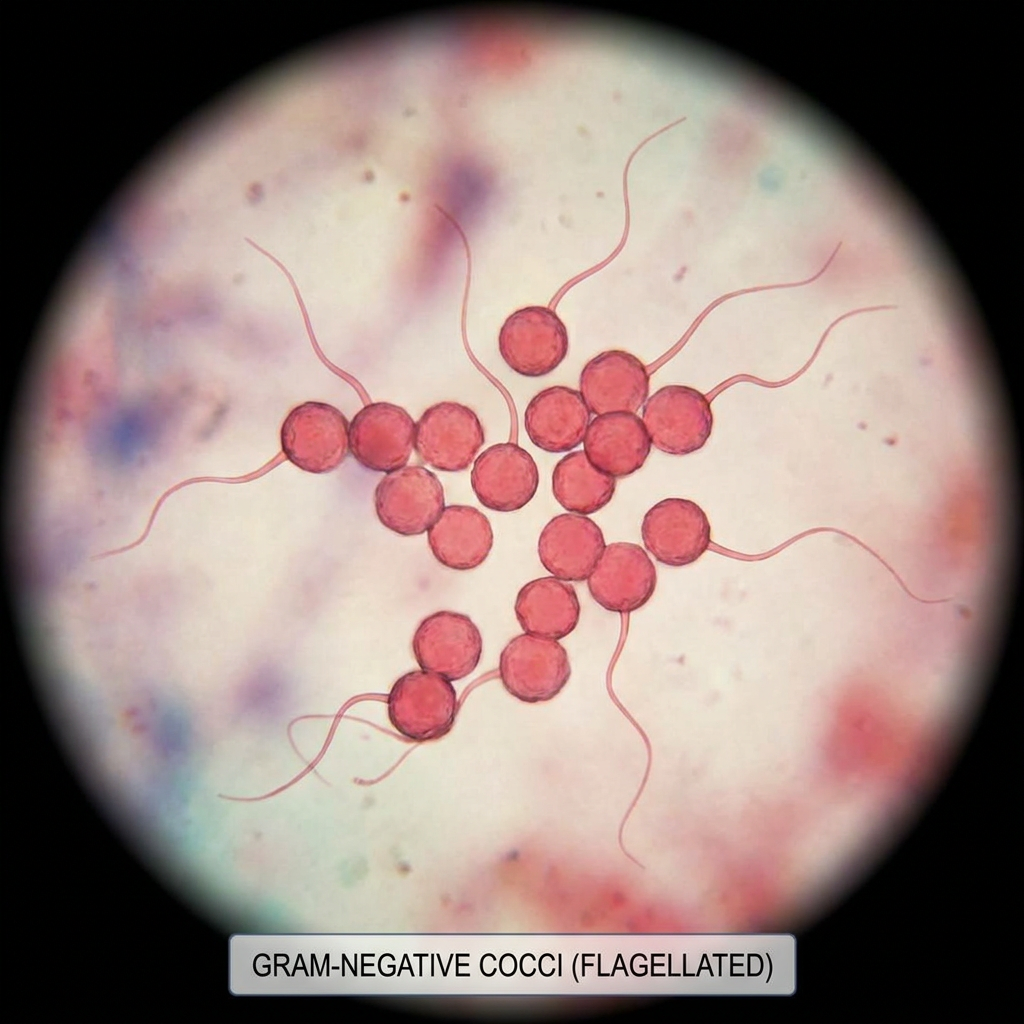
Neisseria flavescens

Gram-negativeAerobe

Kingdom

Pseudomonadati

Phylum

Pseudomonadota

Class

Betaproteobacteria

Order

Neisseriales

Family

Neisseriaceae

Genus

Neisseria

Description

Neisseria flavescens is a gram-negative, oxidase-positive bacterium that thrives in a mesophilic temperature range, preferring temperatures between 25°C and 37°C. As a chemoheterotroph, it relies on organic compounds as its primary source of energy and carbon, broken down through a respiratory process. Specifically, it produces energy through the process of aerobic respiration, utilizing oxygen as its electron acceptor. The bacterium's Gram stain characteristics denote its gram-negative status, meaning that the outer membrane lacks the peptidoglycan layer, composed of a lipid bilayer and lipopolysaccharides. In terms of shape, Neisseria flavescens is a curved, rod-shaped bacterium, often appearing as a diplococcus, with two coccoid cells connected by a thin bridge. Neisseria flavescens has been isolated from various body sites, including the oropharynx, Nasopharynx, and throat, in humans and other primates. It is an obligate aerobe, requiring the presence of oxygen to survive and grow, and is therefore typically found in environments with adequate oxygen levels. In addition to its physiological characteristics, Neisseria flavescens is an opportunistic pathogen, capable of causing infections in immunocompromised individuals, particularly in those with compromised respiratory function. It is also known to coexist with other commensal flora in the human respiratory tract, highlighting its adaptability to diverse environmental conditions. When growing in culture, Neisseria flavescens displays a distinctive yellowish or golden pigmentation, which is thought to be due to the presence of carotenoid pigments, such as lycopene. Its ability to form a biofilm, a complex community of microorganisms attached to a surface, has been implicated in the pathogenesis of respiratory infections. Overall, Neisseria flavescens is an important species in the human microbiome, highlighting the complex interplay between microorganisms and their host environment.

Taxonomy

KingdomPseudomonadati
PhylumPseudomonadota
ClassBetaproteobacteria
OrderNeisseriales
FamilyNeisseriaceae
GenusNeisseria
SpeciesNeisseria flavescens
StrainNo strain

Profile

Physiology
Gram staining propertiesNegative
ShapeNot Available
MobilityNot Available
Flagellar presenceNot Available
Number of membranesNot Available
Ecology, Host, and Life Cycle
Oxygen requirementsAerobe
Optimal temperatureNot Available
Temperature rangeNot Available
Habitatduodenum
Biotic relationshipNot Available
Host(s)Not Available
Cell arrangementNot Available
SporulationNot Available
Energy sourceNot Available
PathogenicityNot Available

Genome Summary

Neisseria flavescens

Accession NumberLAEH00000000.1

Gene Summary

Adenine Count

560489 bp

Thymine Count

582372 bp

Guanine Count

580667 bp

Cytosine Count

530399 bp

Genome Length

2253927 bp

Protein-coding Genes

1953 genes

Non-Coding Genes

49 genes

# of Chromosomes/Plasmids

2

Genes

NameLocus TagUniProtStrandCoordinatesMolecular Weight
exodeoxyribonuclease v, alpha subunitTV01_1086P04993+8900 - 1066364894.7
hypothetical proteinTV01_1087Not Available+10760 - 1195944953.9
rna-binding s4 domain proteinTV01_1088P0ACH0-12054 - 1245515469.5
acetyl-coa carboxylase, carboxyl transferase, alpha subunitTV01_1089A9LZ61+12659 - 1361835676.7
trna(ile)-lysidine synthaseTV01_1090Q9JUE9+13707 - 1416817277.9
trna(ile)-lysidine synthaseTV01_1091Not Available+14138 - 1503134763.0
rna polymerase sigma factor rpoeTV01_1092Q06198+15251 - 1585023249.6
putative anti-rna polymerase sigma factor sigeTV01_1093Not Available+15856 - 1640419673.0
rna methyltransferase, trmh familyTV01_1094P74261+16514 - 1731429278.2
yeca family proteinTV01_1095Not Available+17349 - 1800825309.1

Displaying genes 11 – 20 of 4046 in total

Pathways

23 pathways

Metabolites

401 records
Metabolite IDMetabolite nameStructureCAS number
BASm0000237(R)-4'-phosphopantothenateC9H18NO8PChemical structure of (R)-4'-phosphopantothenateNot available
Average299.2149Da
Monoisotopic299.0770031Da
BASm00002512-dehydropantoateC6H9O4Chemical structure of 2-dehydropantoateNot available
Average145.1333Da
Monoisotopic145.050083776Da
BASm0000377(S)-malateC4H4O5Chemical structure of (S)-malateNot available
Average132.0716Da
Monoisotopic132.005873238Da
BASm0000387(6R)-5,10-methylene-5,6,7,8-tetrahydrofolateC20H21N7O6Chemical structure of (6R)-5,10-methylene-5,6,7,8-tetrahydrofolateNot available
Average455.432Da
Monoisotopic455.1564286Da
BASm0000401(S)-2-succinylamino-6-oxoheptanedioateC11H12NO8Chemical structure of (S)-2-succinylamino-6-oxoheptanedioateNot available
Average286.218Da
Monoisotopic286.0579371Da
BASm00005275-oxopentanoateC5H7O3Chemical structure of 5-oxopentanoateNot available
Average115.109Da
Monoisotopic115.040067665Da
BASm0000642S-adenosyl-4-methylsulfanyl-2-oxobutanoateC15H19N5O6SChemical structure of S-adenosyl-4-methylsulfanyl-2-oxobutanoateNot available
Average397.406Da
Monoisotopic397.105604055Da
BASm00008001,8-diazacyclotetradecane-2,9-dioneC12H22N2O2Chemical structure of 1,8-diazacyclotetradecane-2,9-dioneNot available
Average226.32Da
Monoisotopic226.168127956Da
BASm00008763-hydroxypyruvateC3H3O4Chemical structure of 3-hydroxypyruvateNot available
Average103.054Da
Monoisotopic103.003682157Da
BASm0000989GlycerolC3H8O3Chemical structure of Glycerol56-81-5
Average92.0938Da
Monoisotopic92.04734412Da

Displaying 1–10 of 401 metabolites